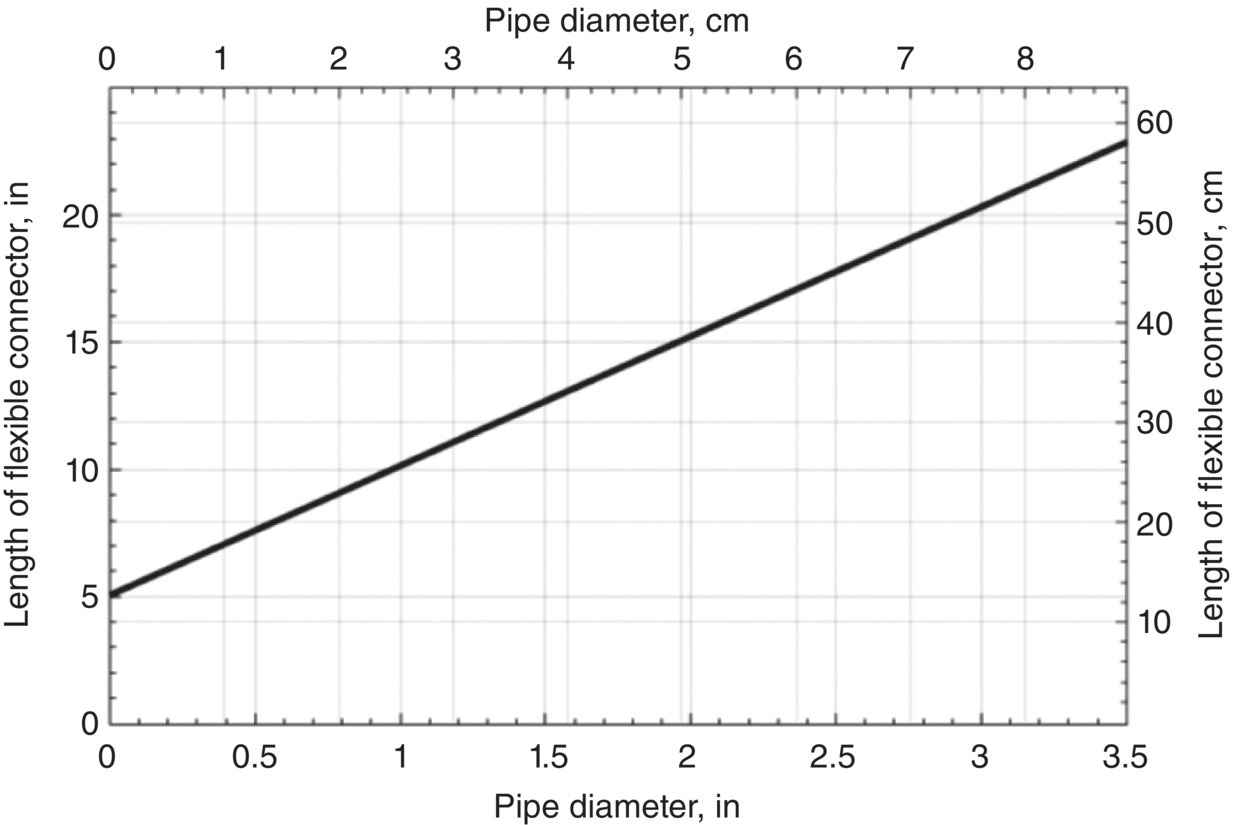
Because a machine mounted on vibration isolators is subjected to large amplitude motions, all connections to the machine from piping, wiring, and ductwork should be flexible enough so as not to restrict the movement of the machine or allow significant amounts of noise and vibration to pass through the connections into the building structure. In order to achieve these requirements, commercially available flexible connectors are commonly used. In many cases, however, the fluid in a pipe or duct short‐circuits such a flexible connector. For example, this is particularly true for metal types, which do not reduce significantly fluid‐borne vibration from pumps. Similarly, flexible duct connectors are usually ineffective in providing good isolation of air pulsations from fans. The length of the connector required for adequate isolation may be obtained from Figure 13.41.
EXAMPLE 13.7
Find the recommended length of flexible pipe connector needed to provide adequate vibration isolation for pipes of diameter (a) 2.5 cm (1 in.) and (b) 5.0 cm (2 in.), and (c) 7.5 cm (3 in.)
SOLUTION
From Figure 13.41, the flexible pipe connector lengths are: (a) 25 cm (10 in.), (b) 37.5 cm (15 in.), and (c) 50 cm (20 in.).
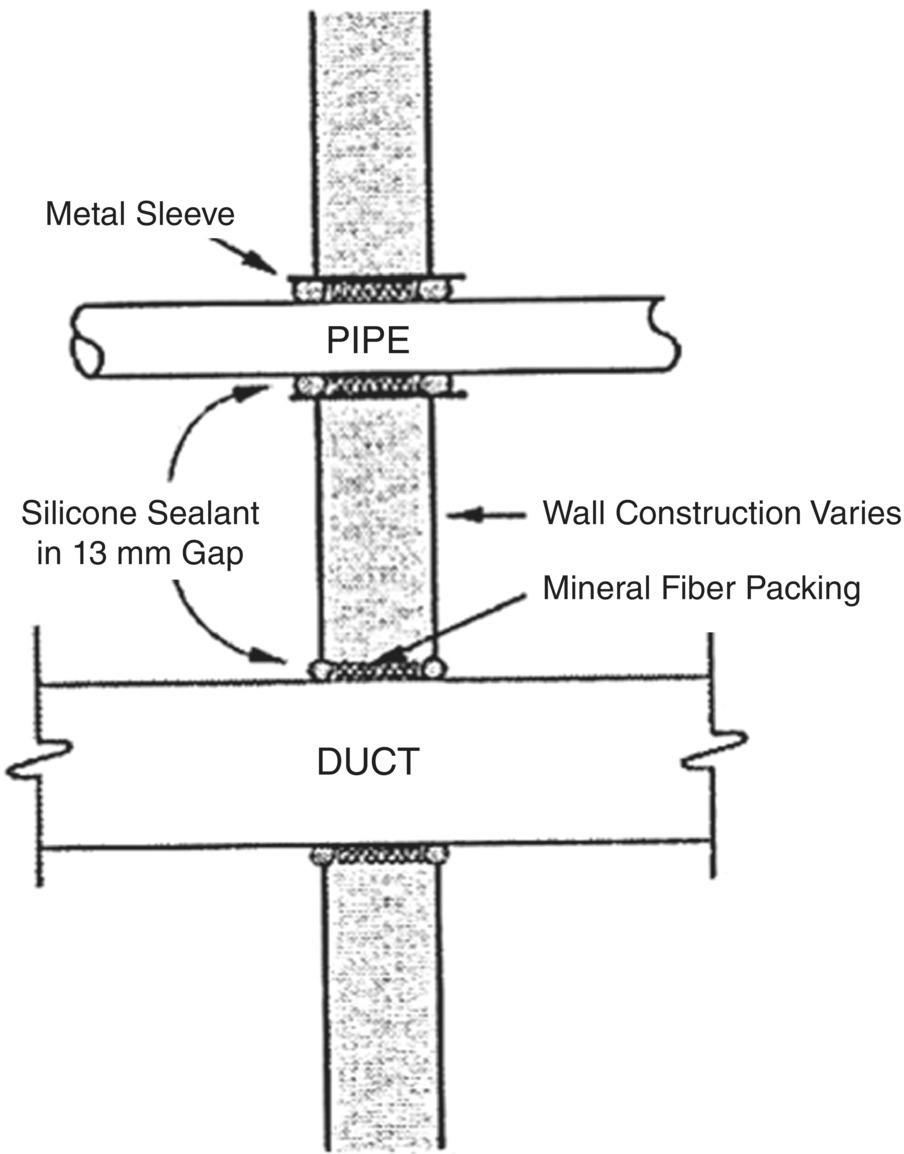
If ducts and pipes pass through the walls of a mechanical room, great care should be taken to prevent leaks that would allow transmission of airborne noise. Sealing material should not be too rigid or vibration transmission can also occur. Figure 13.42 shows the penetration of pipes and ducts through walls and floors and how noise and vibration transmission can be minimized.
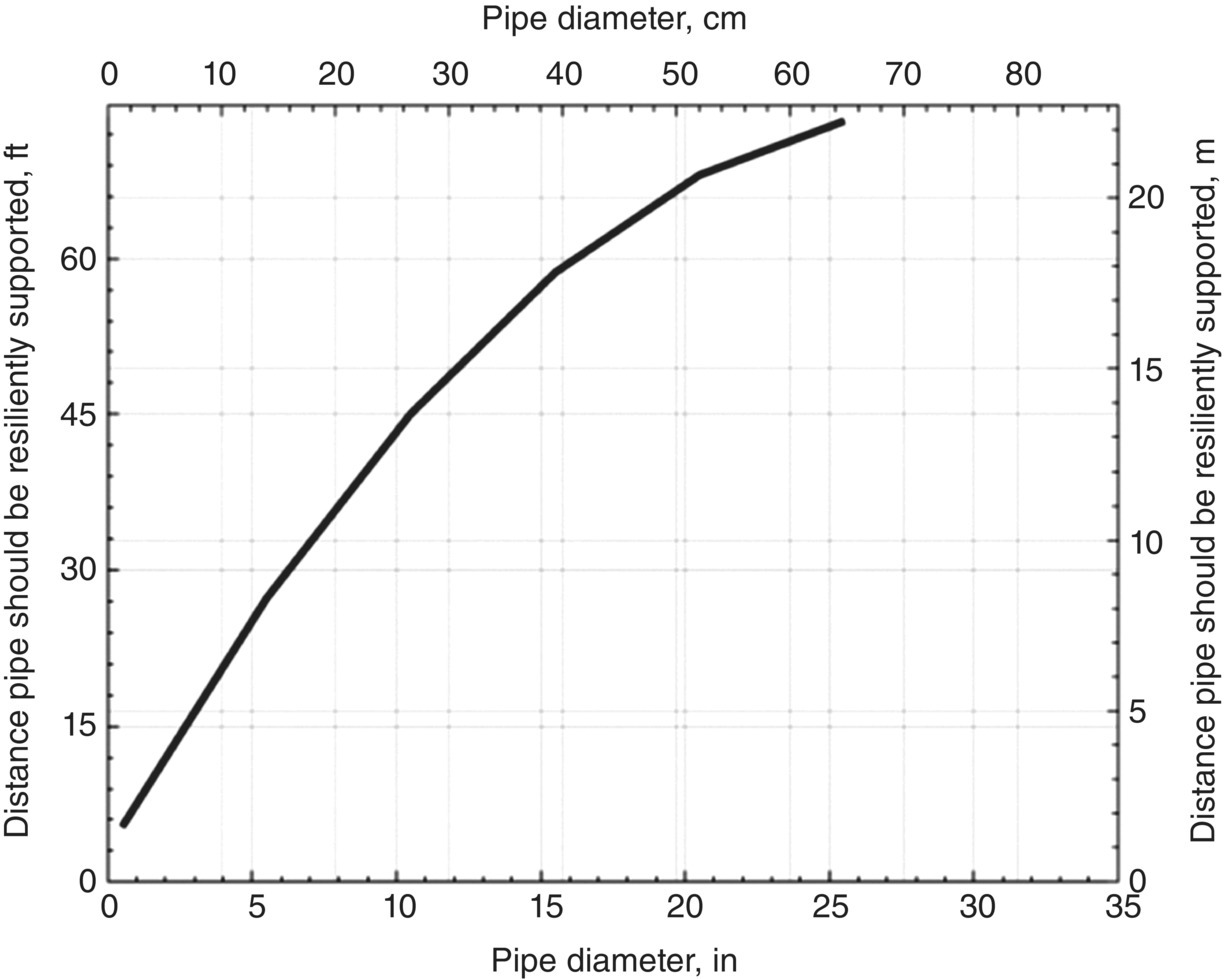
Resilient vibration‐isolation hangers are often very effective in reducing the amount of such vibration being transmitted into the building structure from pipes and ducts. Hangers used close to a piece of isolated equipment (i.e. the first few hangers) should have a static deflection equal to or greater than that of the main machine isolators, in order not to restrict the machine movement. The remaining hangers should be selected to have either 2.5 cm (1 in.) static deflection or one‐half the static deflection of the isolated equipment, whichever is the lesser. These hangers should be spaced at least 15 pipe diameters apart and should be continued for a distance, as shown in Figure 13.43. Spring hangers should also be able to take a 15° angular misalignment without binding. All wiring connections to vibration‐isolated units should be provided with flexible wire with a 360° loop.
EXAMPLE 13.8
Pipes are connected to equipment, which has undesirable vibration particularly during start up and shut down. Determine the distance from the equipment that should be resiliently supported for pipe diameters: (a) 2.5 cm (1 in.) and (b) 5.0 cm (2 in.), and (c) 7.5 cm (3 in.)
SOLUTION
From Figure 13.43, the pipe lengths that should be resiliently supported are: (a) 2.5 m (7.5 ft); (b) 4 m (12 ft), and (c) 5 m (16.5 ft).
Leave a Reply