It may be necessary to measure noise and/or vibration for various reasons. Before beginning any measurement program, the objectives should be defined. For instance, it may be desired to measure noise to determine if a noise problem exists, whether the noise output of a machine is within its specifications, to determine the main sources of noise on a machine or in a vehicle or building. In the case of vibration, the reasons for measurement can include determining whether vibration of structures may result in unwanted sound generation, or in the case of intense vibration, machine wear and condition, and even the danger of structural fatigue and failure.
Since about 1920, most sound and vibration measurement systems have made extensive use of electrical networks. From that time, the electrical amplification of signals has made possible several measurement techniques that were previously impossible to use. When measurements are made of noise or vibration, it is usually necessary to combine several different types of instruments into one measurement system. The individual components of the measuring system utilized will depend on the particular measurements needed. A generalized system is shown in Figure 7.1. To design a system to make useful measurements, it is desirable for one to have a good understanding of the phenomena being investigated and to have a reasonable understanding of the functioning of the instrumentation and signal processing.
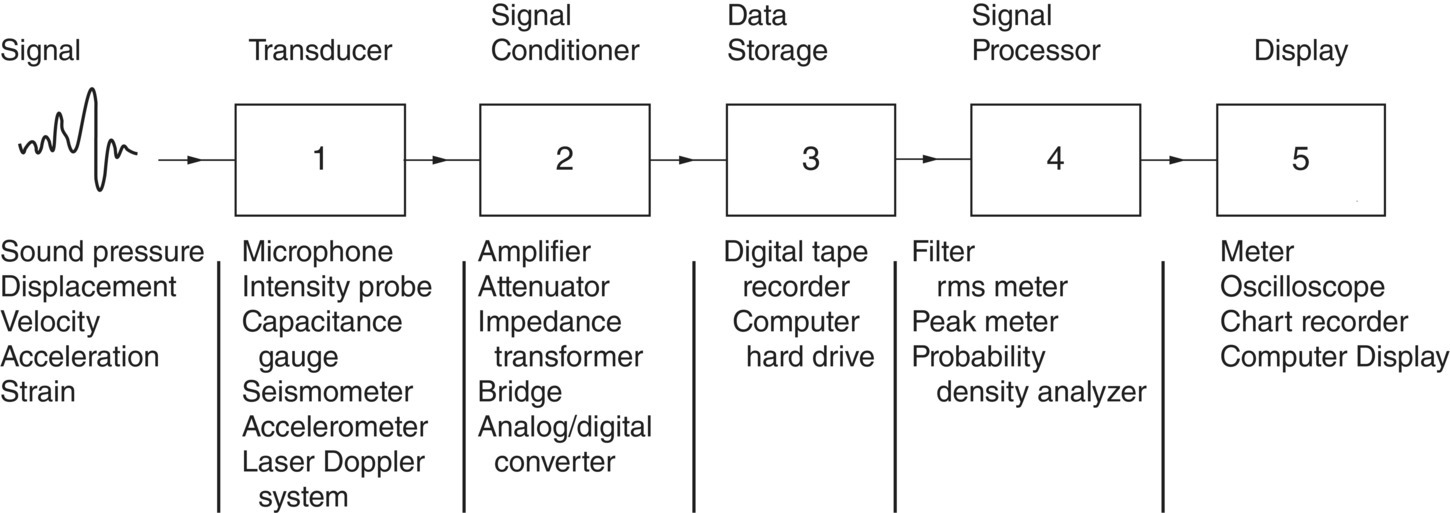
The first item in any noise or vibration‐measuring system is the transducer. As its name implies, this instrument converts a signal in one physical form into another; that is, a transducer converts a sound pressure signal or a vibration signal into an electrical signal. Normally, the electrical signal obtained from a transducer is not suitable for direct analysis or read‐out, and a signal conditioner is then used to amplify, attenuate, or transform the signal using analog‐to‐digital (A/D) conversion. It is optional at this stage to include a data storage item in the system before the signal is passed to a signal processor (See Figure 7.1.)
The signal processor may consist of a narrow‐ or wide‐band filter, a root mean square (rms) detector, a probability density analyzer, and the like. The last item in the system is usually the display unit, a read‐out unit, or a digital computer, which is used to perform some post‐processing of the signal. Analog and/or digital meters, oscilloscopes, and other units can all be used to display signals. Also, a data storage item or data distribution system can be included in the main measurement system at this stage instead of earlier, so that the data can be analyzed or shared with others later.
Leave a Reply