In high‐velocity systems, the flow of air through the various elements (such as ducts, elbows, take‐offs, mixing boxes, and grilles) can produce high noise levels. This type of flow‐generated noise is often neglected by system designers who are later surprised to find that some areas of a building are much noisier than they had estimated from fan sound power and system attenuation data alone. This generated noise is mainly caused by air turbulence and vortex shedding. Indeed, it is quite common to find a condition in which the generated noise level in part of the system (i.e. an elbow) is far in excess of the naturally attenuated sound from the fan. Since the number of high‐velocity ventilation and air‐conditioning systems in use continues to increase, it is essential to be able to obtain a reasonably accurate estimate of the sound power level of such generated noise at common points within the system. Of these, the most important points are found to be elbows, branch take‐offs, and grilles (see Figure 13.5).
13.8.1 Elbow Noise
In order to transport air from the fan plenum chamber system to all areas of a building, it is necessary to incorporate bends and take‐offs in the supply ductwork (see Figure 13.5). These may be smooth radius or sharp‐angled bends. The latter types are of extreme concern because of the turbulence and noise they generate. Although a great deal of research has been done on jet noise, there has been relatively little work on noise generation by turbulent flow in ducts. This is because duct noise is very much more complex than jet noise since it is affected by many parameters, of which some are unknown or unavailable. For example, the noise spectrum generated is very dependent upon the coupling between the turbulent airflow and the duct walls, and the flow is also greatly influenced by the duct geometry and wall conditions. A detailed analytical study would require information about the turbulent flow structure in the duct and this is usually not available to the system design engineer. Various workers have attempted to observe, through experiments, empirical relationships between the noise level generated and several physical variables such as airflow velocity and duct geometry.
The generated noise level spectrum is generally found to be [27]:
- Proportional to a power of the flow velocity between the fifth and seventh
- Practically independent (±l dB) of the angle of the bend
- Practically independent of the aspect ratio of the duct (i.e. width/breadth) except at very low frequencies (i.e. 63 Hz) where the sound power generated may increase by 10 dB for a change of aspect ratio from 1 : 1 to 1 : 4
- Strongly proportional to the area of the duct elbow at low frequencies but only slightly at high frequencies.
The general features concerning noise levels and frequency spectra are presented in Figure 13.61. In order to reduce turbulence at elbows and take‐offs, turning vanes are often placed in the airflow. These are found to reduce the very low and high frequency noise levels. The reduction can be as much as 3–5 dB above about 2000 Hz and 5–10 dB or more below 250 Hz. These reductions can be important in reducing rumble at low frequency and hiss at high frequency. See Figure 13.61. The turning vanes do not provide any reduction in noise in the mid‐frequency range, 500–2000 Hz, however.
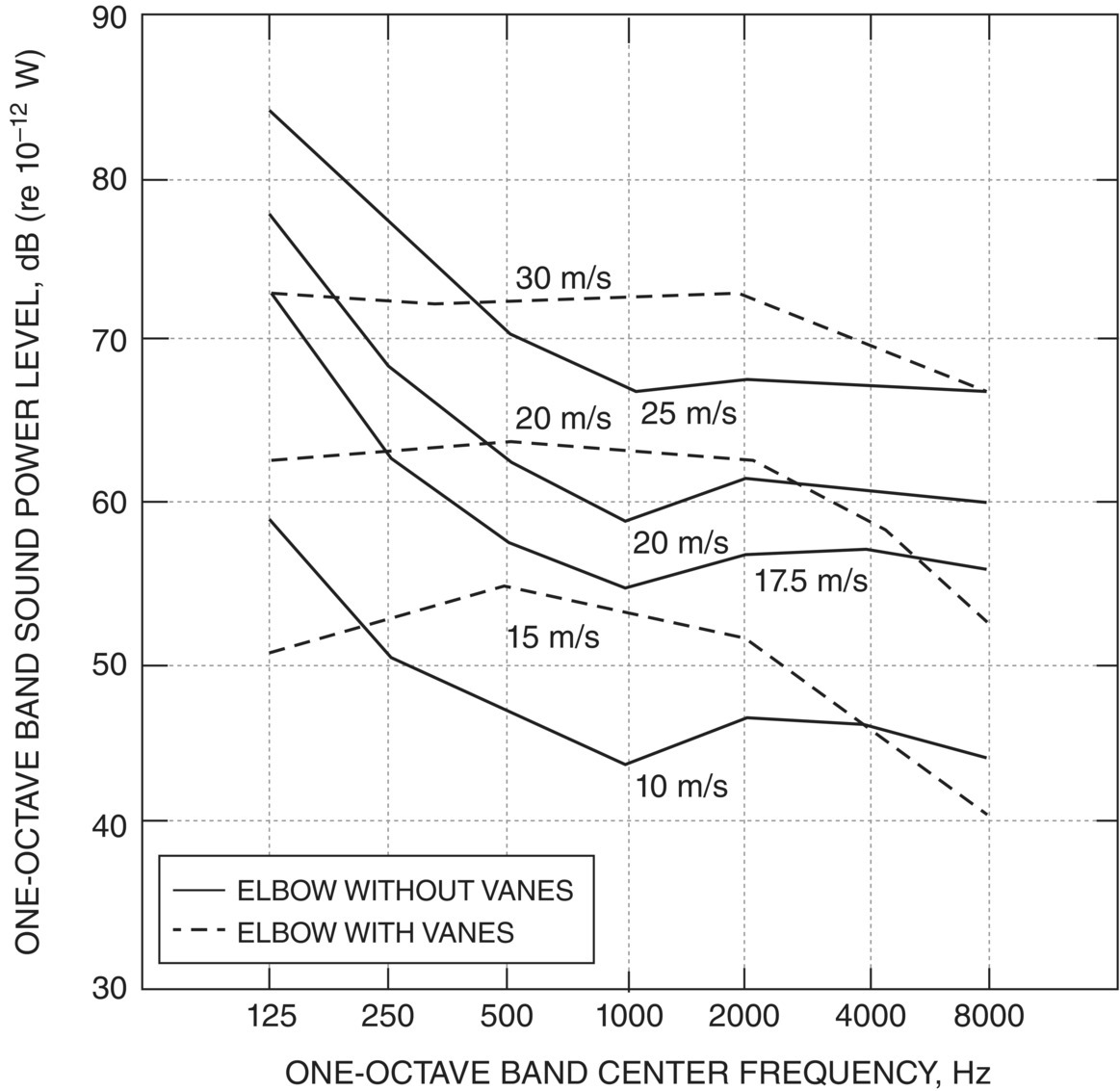
Some detailed empirical methods of computing flow‐generated noise levels in elbows with and without turning vanes have been proposed, and these should be consulted when accuracies of within ±5 dB are required. Price and Crocker give an empirical equation in Reference [27] for use with turning vanes in rectangular duct elbows. Both the equation and measured results use the foot‐pound system.
13.8.2 Take‐off Noise
Aerodynamically generated noise resulting from turbulence at abrupt round or square take‐offs can be of particular importance when small lengths of duct are taken off the main supply duct from the fan and fed directly to rooms. In such cases, the generated noise cannot be attenuated by the duct system, and often excessive noise is radiated from the room grille.
It is usually found that a round edge tee produces significantly higher sound power levels than a square edge tee for low velocity flow, but less sound is generated at high velocities. The round edge tee also has less velocity dependence than the sharp edge branch. Once again, an exact analysis of such a problem is extremely complex and empirical relationships have been proposed [27]. These depend upon the velocity at the branch and the main upstream duets. The following empirical relations have been found to give good estimates of tee‐branch generated noise:
- Square edge branch tee(13.19a)
 where V2, A2 = velocity in and area of downstream main duct in ft/min and ft2, and V3, A3 = velocity in and area of tee branch in ft/min and ft2, or(13.19b)
 where V2, A2 = velocity in and area of downstream main duct in m/s and m2, and V3, A3 = velocity in and area of tee branch in m/s and m2.
 - Round edge branch tee(13.20a)
 or(13.20b)
 if V2 and V3 are in m/s.
Note the lower dependence on V3, the tee branch velocity in Eq. (13.20). It can be seen from the above discussion and from Eqs. (13.19) and (13.20) that the noise level generated is strongly dependent upon velocity and that it increases by some 10–20 dB for each doubling of both the downstream and tee branch flow velocities. Therefore, it might seem logical at first glance to use large size ducts wherever possible in order to reduce high flow velocities and corresponding generated noise. However, the extra cost involved in using large ducts far exceeds the cost of using small high‐velocity ducts in conjunction with special sound attenuation devices.
13.8.3 Grille Noise
Reduction of grille noise is very important in the successful acoustical design of a mechanical system in the mid‐ to high‐frequency range, but it is of little or no importance at low frequencies where fan noise is the most objectionable source. It is found that certain types of grilles produce more noise than others for the same conditions of static pressure drop and airflow velocity. For example, grilles producing a wide angled spread of airflow tend to produce some 10–15 dB more sound power than equivalent narrow spread units. Grilles consisting of a perforated plate give a small amount of spread and are usually the quietest type (Figure 13.62).
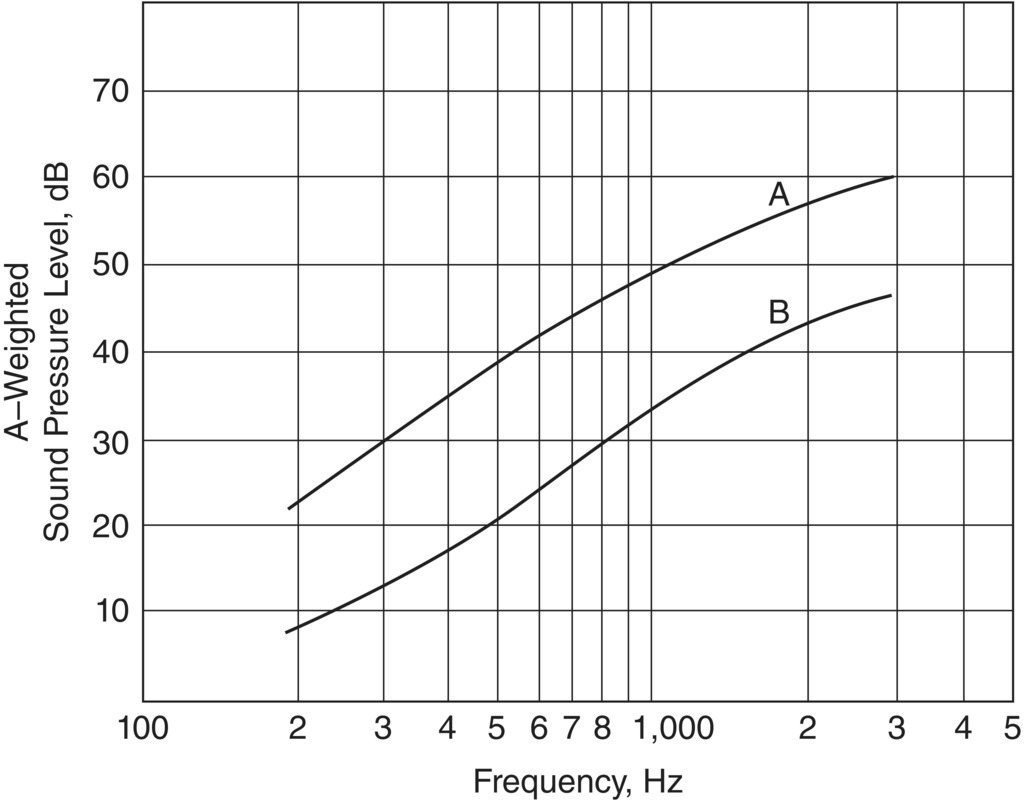
Although a comprehensive analysis of the mechanism is difficult, it is useful to note that at low frequencies the generated sound power levels are dependent upon the volume flow of air passing through the grille, the grille shape, and its open area. At high frequencies, the sound power is proportional to the grille area, the pressure drop across it, and the velocity of the air leaving it. In the ease of a widespread grille, it should be remembered that the velocity of the air leaving certain parts may be well in excess of the main duct airflow velocity.
An approximate value for the generated sound power level, LW, produced by a narrow spread grille can be obtained from:
(13.21a)
where S = grille area, ft2; P = static pressure drop, inches of water; and f is the one‐octave band center frequency, or
(13.21b)
where S = grille area, m2 and P = static pressure drop, pascals.
The location of a grille in a room also affects the effective sound power emitted from it. For example, a grille placed at the junction of a wall and ceiling (but not a corner) will produce 3 dB more sound power than if the grille were in the center of the ceiling. This can be compared to the mirror image effect in optics. Similarly, a grille placed in a corner of a room at the ceiling will effectively produce 6 dB more sound power than if it is at the center of the ceiling. It is, therefore, desirable to place grilles at the center of a wall or ceiling, or at least near the center of the edge at which the ceiling and wall join.
If there is more than one grille in a room, then the total sound power fed into the space is found by adding the individual sound power levels logarithmically using LWT = 10 log ∑ (10 Lw/10). For example, if there were n grilles, each contributing a sound power level LW, then the net sound power would be (LW + 10 log n) dB.
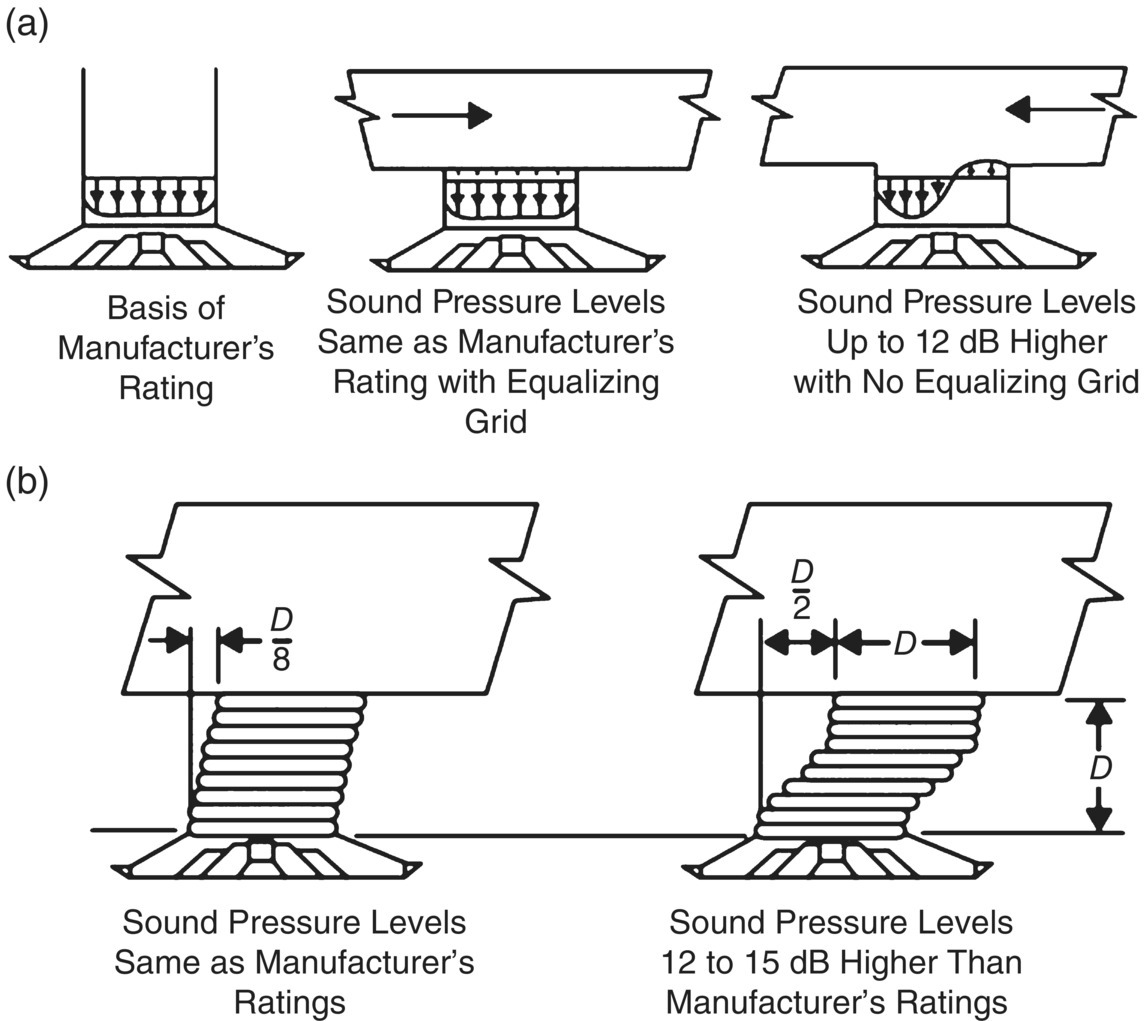
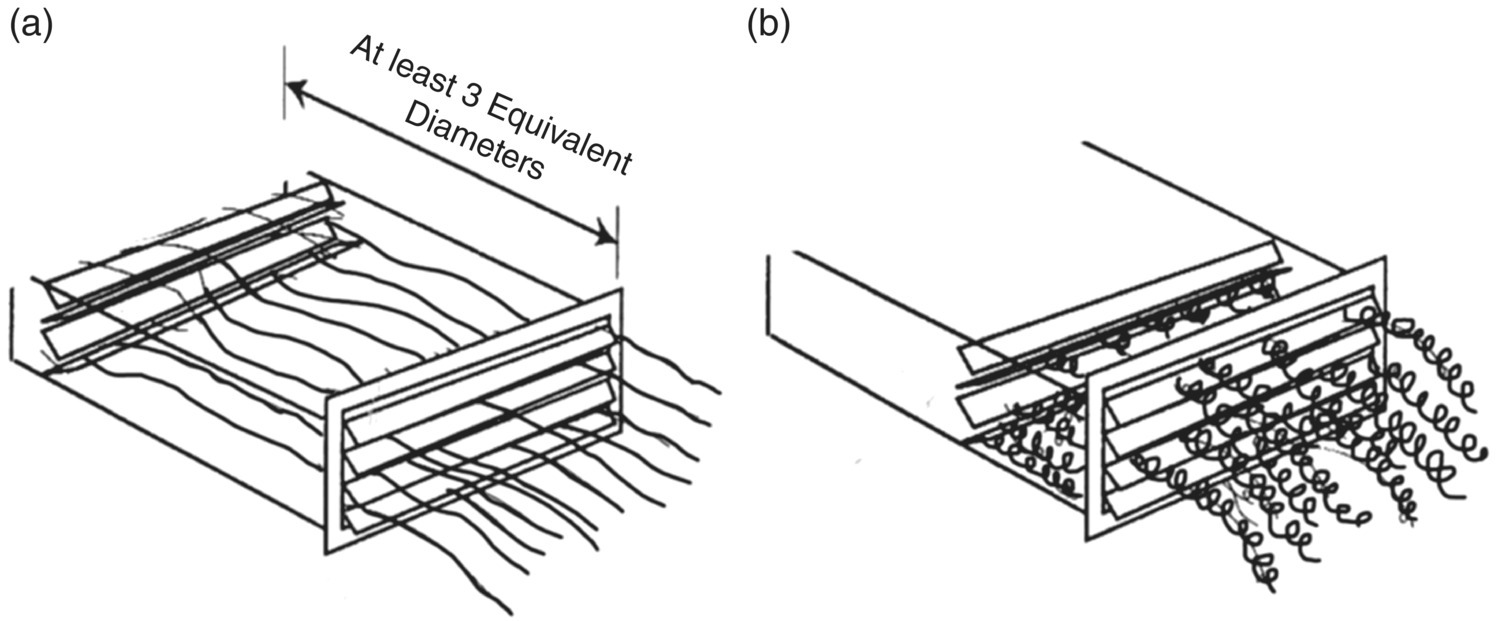
Figure 13.63a shows the effect of proper and improper airflow conditions into the grille. Figure 13.63b shows that misalignment of a flexible connector can increase turbulence and noise by as much as 12–15 dB. The importance of installing an equalizing grid before the grille is seen in Figure 13.63a. Excessive bends present in the flexible duct connector before the grille can increase noise levels by 12–15 dB or more.
13.8.4 Diffuser Noise
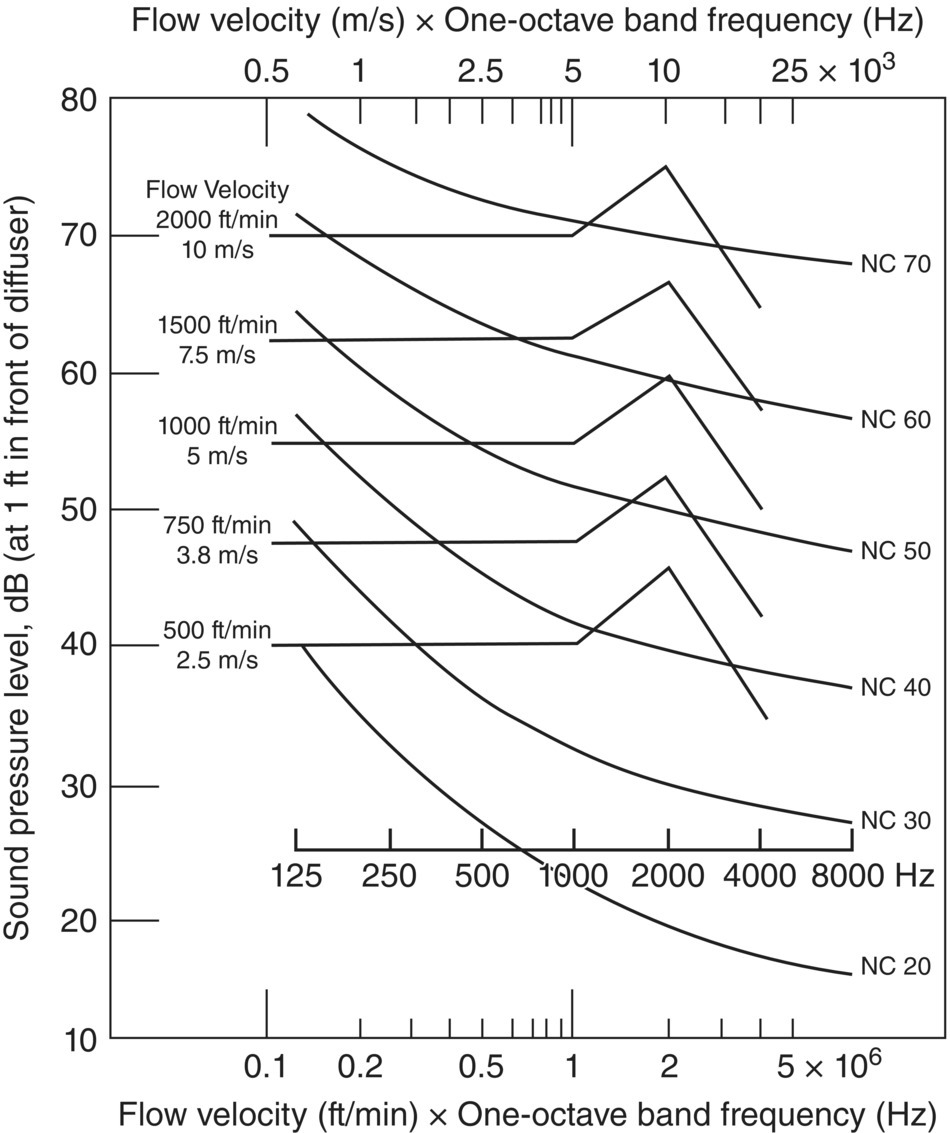
This is a very similar in character to grille noise but usually tends to be at a slightly higher level for the same air velocity and open area. It is furthermore characterized by a broad peak in the frequency spectrum in the range 1000–2500 Hz. The position of this peak tends to move toward higher frequencies as the neck airflow velocity is increased. This phenomenon and the strong velocity dependence are shown in Figure 13.64.
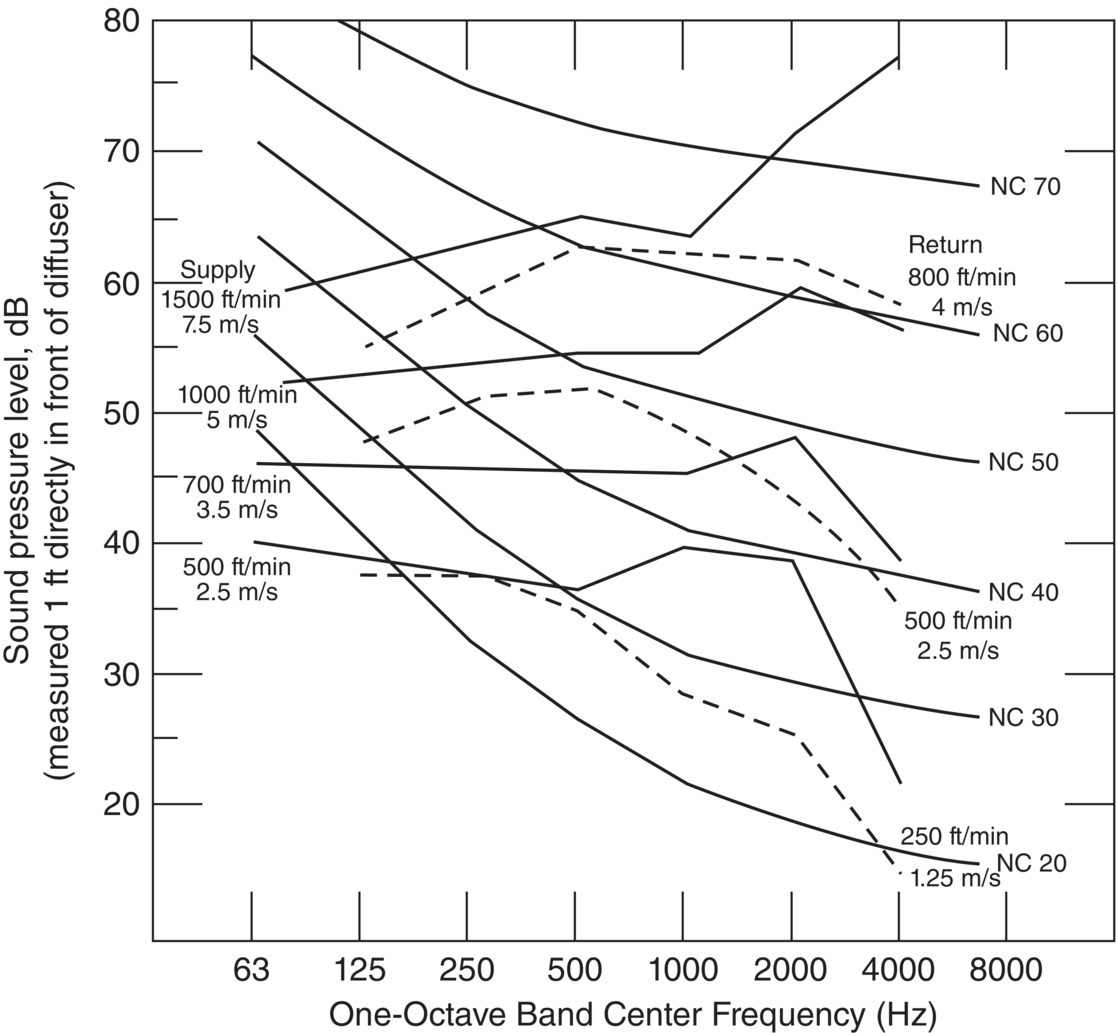
Once again, making an exact analysis is extremely complicated. However, a good indication of supply diffuser generated sound pressure levels, within ±5 dB, may be obtained from the use of Figure 13.65.
13.8.5 Damper Noise
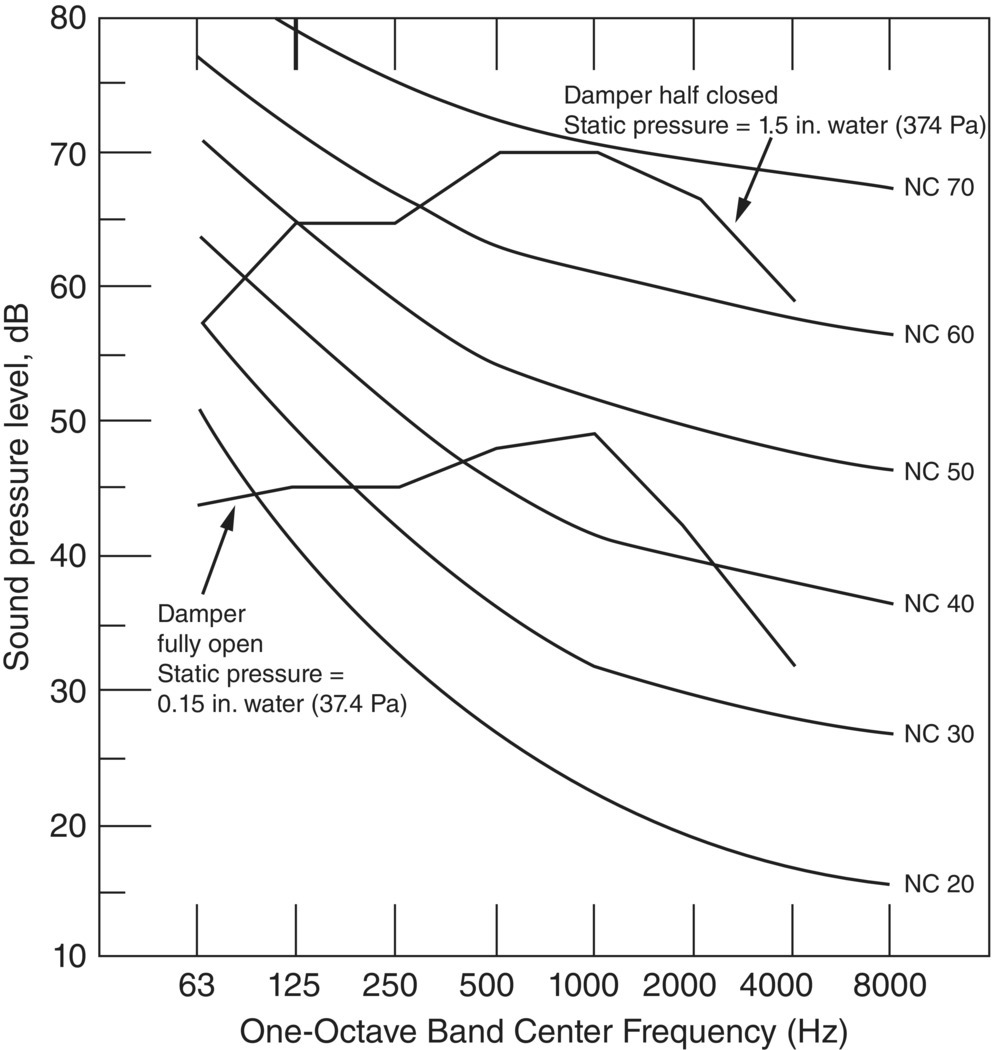
In order to achieve a correctly aerodynamically balanced ventilation system, the flow of air at various outlets has to be regulated after the system has been installed. To achieve design objectives for air volume flow rates, site adjustments are usually made by the regulation of system dampers. Very often it becomes necessary to significantly close the opposed blades on these dampers, thus altering the effective open area. This decrease in open area results in an increase in airflow velocity which causes a sharp rise (10–15 dB) in the generated sound power level. This increase can be calculated from the static pressure drop across the unit:
(13.22)
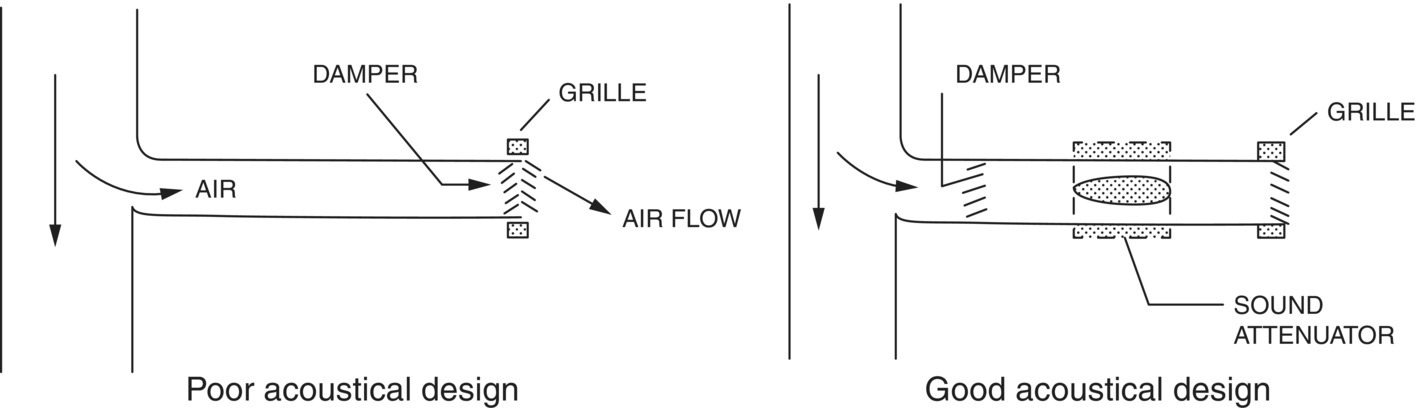
where Pc = static pressure drop, damper partially closed; and P0 = static pressure drop, damper fully open. The effect of partially closing the damper on a supply grille is shown in Figures 13.66 and 13.67. This suggests strongly that, if possible, dampers should be placed away from the terminal grille (Figures 13.67 and 13.68) so that there is enough space to insert a sound attenuator after the damper, if this should be required. See Figure 13.69.
![Velocity-generated sound of 60 cm by 60 cm volume damper [20].](https://learning.oreilly.com/api/v2/epubs/urn:orm:book:9781118496428/files/images/c13f068.gif)
Leave a Reply