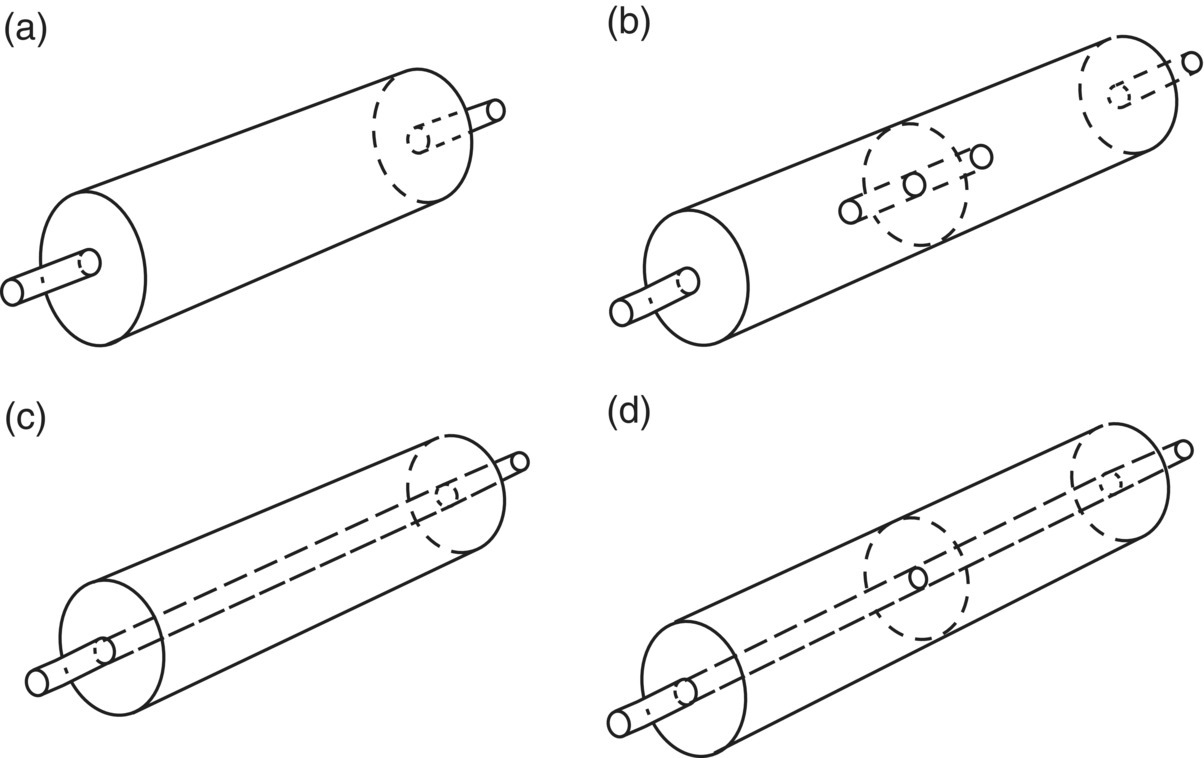
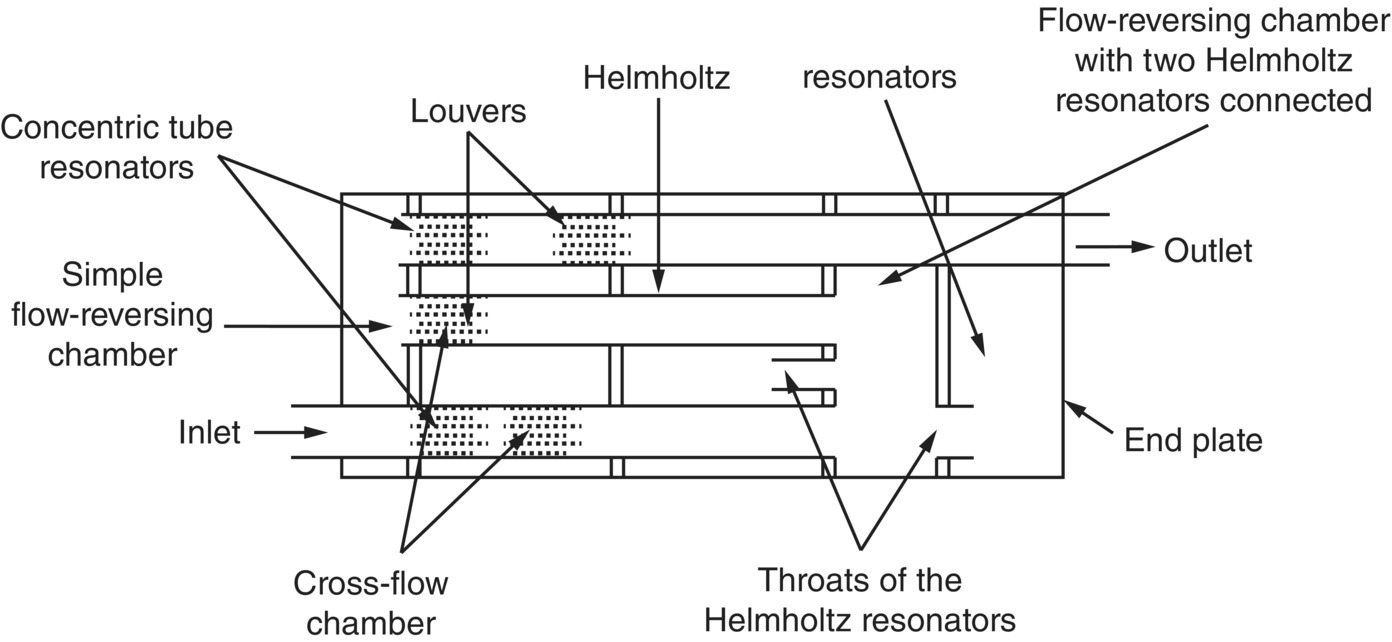
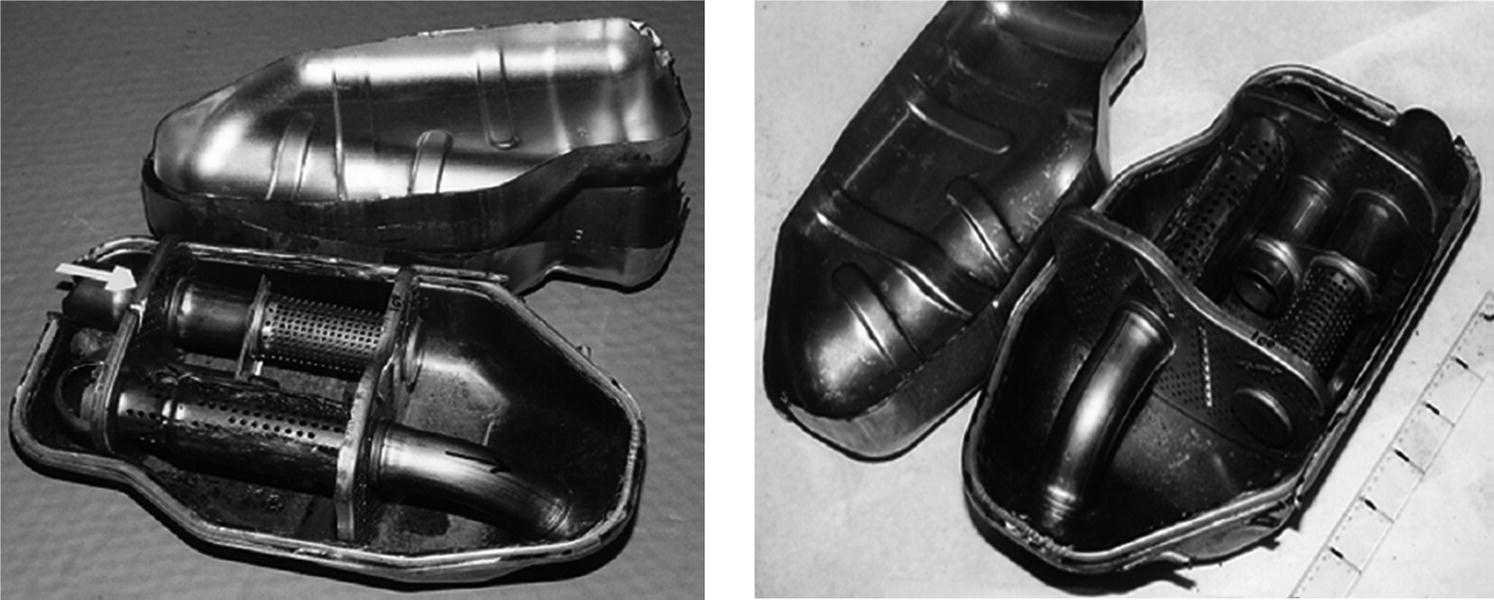
Reactive mufflers can be subdivided into straight‐through and reverse‐flow types [4, 5]. Figure 10.2 shows some typical straight‐through types. These mufflers are usually comprised mainly of expansion chambers (chambers in which the area is suddenly increased then decreased) and concentric tube resonators (side‐branch Helmholtz resonators). Reverse‐flow types can be built in many different configurations. A typical reverse‐flow muffler is shown in Figure 10.3. Figure 10.4 shows two commercial perforated mufflers. As shown, such mufflers consist of several chambers connected by straight pipes. There are usually two end chambers in which the flow is reversed and one or more large low‐frequency Helmholtz resonators. Sometimes louver patches are used to produce side‐branch Helmholtz resonators (which reflect high‐frequency noise). In addition, cross flow is often allowed to occur and attenuation is then created by interference of sound traveling over different path lengths. Most automobile mufflers are of the reverse‐flow type, although trucks can use either reverse‐flow or straight‐through mufflers.
Leave a Reply