- Wood: It is the most commonly used and easily available natural fuel. It has been used for cooking and other purposes over centuries. The important constituents of wood are cellulose fibre and water. On burning, it gives ash, which is used for cleaning utensils in rural and even urban areas. The calorific value of wood varies with its type and moisture content. It ignites easily at about 250°C and is used for igniting other fuels.
- Peat: It is a mixture of water and decayed vegetable matter. It contains a large amount of moisture and requires drying in sun for about one to two months before use. It is the first stage in the formation of coal from wood.
- Lignite: It is transformed from peat. It is brown in colour and is also known as brown coal. Air-dried lignite contains 10%–20 % moisture. It is used as low-grade fuel. It is non–caking and burns with a large smoky flame.
- Bituminous coal: It is transformed from lignite. It has a shining, black appearance and comes in caking and non–caking varieties. It ignites easily and burns with a long yellow and smoky flame.
- Anthracite coal: It is transformed from bituminous coal. It is hard, brittle, and lustrous in appearance. It is non–caking and burns without smell, smoke, or flame. It is difficult to ignite. This coal has minimum ash, volatile matter, and moisture. Its calorific value is the highest and is suitable for steam generation in thermal power plants.
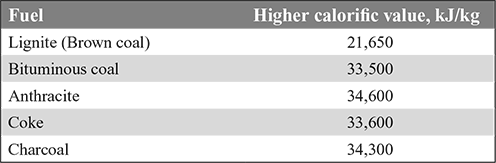
The calorific value of solid fuels is given in Table 1.2.
Table 1.2 Calorific value of solid fuels
Leave a Reply