The concentration NOx in the exhaust is closely related to the peak cycle temperature. There are different methods by which peak cycle temperature can be reduced and NOx emission can be controlled.
There are mainly three methods which are commonly used as follows: catalyst (which is already discussed), water injection (rarely used), and exhaust gas recirculation (EGR) method. EGR is commonly used to reduce NOx. This method is used in petrol as well as diesel engines. In SI engines, about 10% recirculation reduces NOx emission by 50%. Unfortunately, the consequently poorer combustion directly increases hydrocarbon emission and calls for mixture enrichment to restore combustion regularity which gives a further indirect increase of both HC and CO.
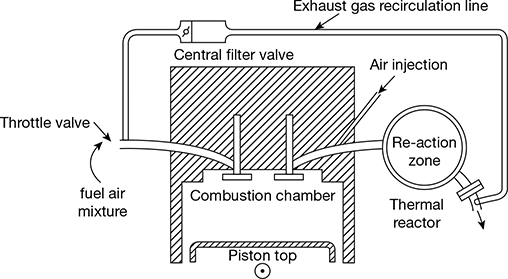
Figure 11.27 shows the arrangement of an EGR system. A portion of the exhaust gases is recirculated to the cylinder intake charge. This reduces the quantity of O2 available for combustion.
The exhaust gas for recirculation is taken as shown in Fig. 11.27 through an orifice and passed through the control valve for the regulation of the quantity of recirculation.
The effect of A:F ratio on NOx emission takes EGR as a parameter as shown in Fig. 11.28. It can be seen that maximum emission of NOx occurs during lean mixture when gas recirculation is the least effective. On the other hand, for less emission of CO and HC, a lean mixture is preferred. About 15% recycling reduces NOx by 80% but increases HC and CO by 50%−80%. These are conflicting requirements of this emission control system, and can be solved by adopting a package system to control all emissions.
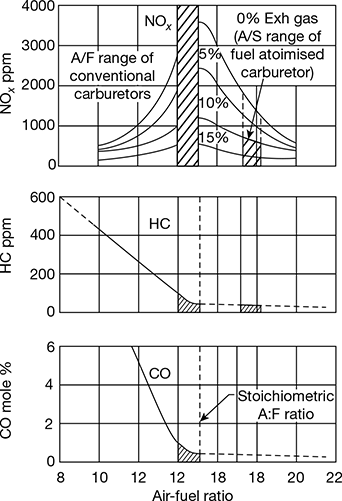
Figure 11.28 Effect of recycling of gas on NOx concentration
Leave a Reply