Impact noise is other major sound transmission problem in buildings. Although transmission of airborne sound is probably the major problem, the secondary problem of sound transmission from impacts such as footsteps, doors slamming, hammering and other forms of construction, etc. has concerned acousticians for many years. Footsteps are the main source. There are two main problems in the investigation of impact noise: (i) the noise sources are impulsive in nature, and this causes problems with measurement procedures designed to measure steady‐state or continuous noises, (ii) the partition under consideration, instead of merely consisting of one passive element in the transmission system in the case of airborne sound, now plays an active role as part of the noise source.
Although it has been shown theoretically that the airborne sound transmission loss (insulation) can be related to the impact insulation the majority of efforts on impact sound transmission seem to have been made in experimental investigations.
12.9.1 Laboratory and Field Measurements of Impact Transmission
As early as 1932, Reiher [94] built an impact machine to simulate footstep noise. This consisted or a single wooden hammer of 280 g which fell 30 mm at time intervals corresponding to footsteps. However, it was unsuccessful because it was difficult to measure the impulsive noise produced, and the level was too low. In 1938, an improved machine was built which consisted of five brass hammers each weighing 500 g which each fell 40 mm producing 10 impacts per second. The problems with Reiher’s earlier machine were overcome, and a similar impact machine has since been incorporated in an international standard for laboratory [95] and field [96] measurements of impact sound insulation of floors. The same type of standard tapping machine is used in the corresponding ASTM standards for laboratory [97] and field [98] measurements. Laboratory test methods call for highly diffuse sound fields and the suppression of flanking sound transmission in the receiving room of laboratory.
It has been found that the force spectrum of the standardized tapping machine is dominated by higher frequencies, which is not comparable with real impact noise sources in buildings. International standards for measuring impact sound isolation [96, 99] include a modified tapping machine and a standardized rubber ball as alternative sources to the ISO tapping machine [100]. For many years, tires and rubber balls have been used as low‐frequency impact noise sources (between 50 and 630 Hz one‐third octave bands) in Japan and Korea to simulate children jumping and running in apartment buildings [101]. The modified tapping machine is intended to make its dynamic source characteristics similar to those of a person walking barefoot and a heavy/soft impact source with dynamic source characteristics similar to those of children jumping.
Basically, in these standards the impact sound source is placed near the center of the floor/ceiling under investigation. With the impact sound source in operation, the space‐averaged sound pressure levels are measured in the receiving room directly below the floor specimen. Sound pressure level measurements are conducted in one‐third octave bands at several measurement positions either by use of fixed or moving microphones. The ISO standard covers the range 100–5000 Hz, while the ASTM standard covers the range 100–3150 Hz.
The impact sound source is moved to three other locations on the floor, and the one‐third octave band level for the four sets of readings, are averaged at each frequency. Finally, the normalized impact sound pressure level Ln at each frequency band is obtained from
(12.82)
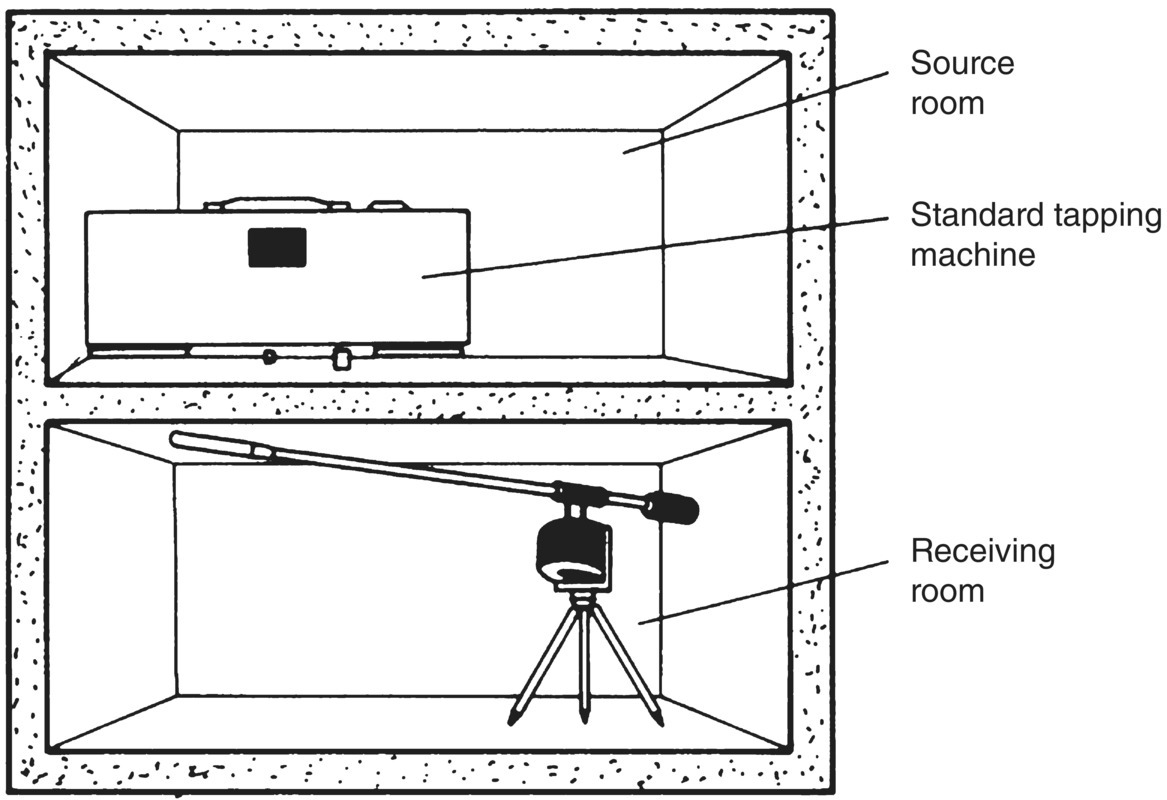
where 〈L0〉 is the impact space‐averaged sound pressure level in the receiving room, A0 is the reference absorption area, 10 sabins (m2) or 108 sabins (ft2), and A is the measured absorption area in the receiving room, sabins (m2). Note that there is no need to normalize the sound pressure level to the surface area of the test element as with the TL. Figure 12.46 illustrates the impact sound transmission measurement procedure using a tapping machine.
EXAMPLE 12.21
A room of dimensions 4 × 5 × 7 m has a reverberation time of 0.85 second. A standard tapping machine is used at four different positions to excite the floor above the room. The average sound pressure levels measured in a third‐octave band in the receiving room are 82 dB, 85 dB, 79 dB, and 80 dB. Find the normalized impact sound pressure level in this frequency band.
SOLUTION
The impact space‐averaged sound pressure level in the receiving room is

The total absorption area in the receiving room is obtained from the Sabine equation (see Section 3.14.3 of this book): A = 0.161 × V/TR = 0.161 × (4 × 5 × 7)/0.85 = 26.52 sabins (m2). Then, replacing the numerical values in Eq. (12.82) we obtain

When measurements are made in the field (real buildings) instead of the laboratory, flanking transmission and different floor sizes alter the results. In addition, the room sound field might not approximate to a reverberant diffuse field. The laboratory results can only be used as an approximate guide to the results expected in practice. Field measurement of impact sound insulation of floors is described in both ISO [96] and ASTM [98] standards. In both standards, the levels are normalized by the reverberation time instead of the absorption area.
For field measurements, the sound pressure levels are normalized with a reverberation time of 0.5 second and the metric is called now reverberation time normalized impact sound pressure level ( RTNISPL ) defined as
(12.83)
where ISPL is the space‐averaged impact sound pressure level in the receiving room, and TR is the measured reverberation time in the receiving room, in seconds. RTNISPL is intended for small rooms that can be expected to have a reverberation time of 0.5 second when furnished normally. RTNISPL is known as the standardized impact sound pressure level (L′nT) in Europe and in ISO standards.
For measuring low frequency (50, 63, and 80 Hz one‐third octave bands) impact noise it is needed to take into consideration the effects of small rooms (less than 25 m3). For this, ISO defines a similar procedure to improve measurement repeatability as in the case of measuring sound transmission loss through a set of room corner measurements. In addition, ISO also defines how operators can measure the sound field using a hand‐held microphone or a sound level meter [74].
12.9.1.1 Rating of Impact Sound Transmission
Just as in the case of rating the airborne isolation of partitions (see Section 12.8), there are several ways of rating the impact sound transmission of floor/ceiling structures. The methods are similar and involve comparing the measured normalized sound pressure levels in the receiving room against a standard contour. Measurements should comply with the standard E492 [97] or E1007 [98] according to the ASTM standard [102]. For the international standard [103], measurements should comply with ISO 10140‐3 [95] or ISO16283‐2 [96], although measurements carried out in accordance with the outdated standard ISO140‐7 [105] are also allowed.
The ISO and ASTM standard contours for one‐third octave bands are identical (see Figure 12.47 [20]) although there are some differences between the ISO and ASTM procedures of rating the impact sound transmission. These are the two rating standards most frequently used in building codes.
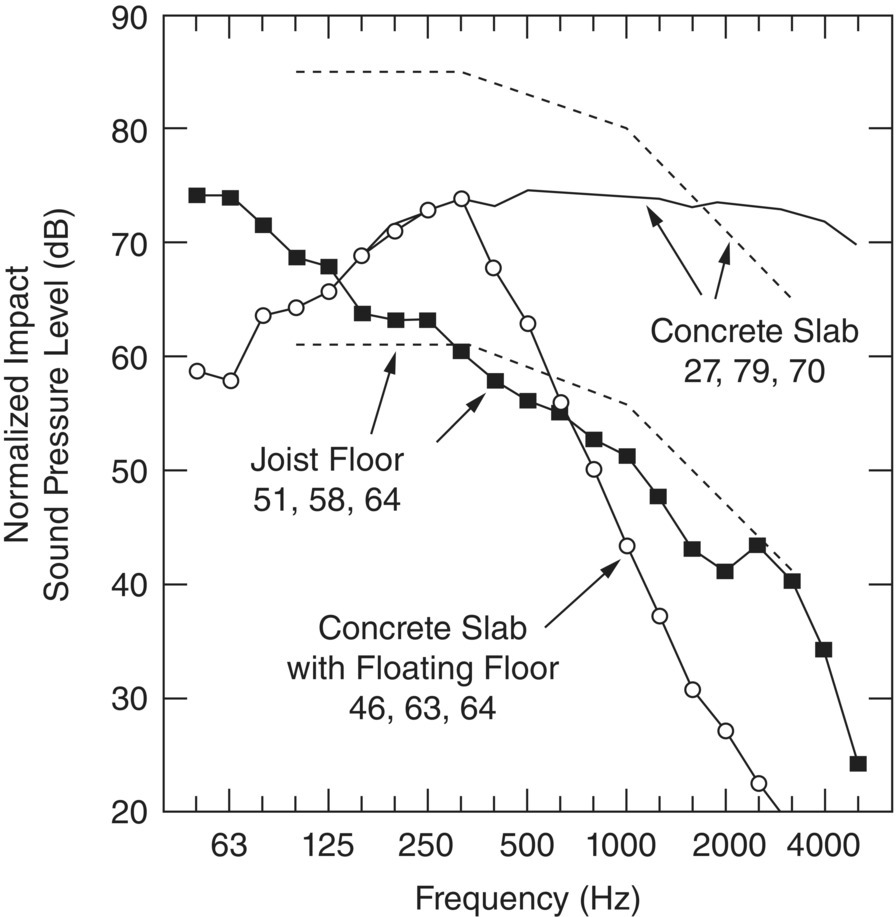
In the ASTM procedure, the impact insulation class IIC, of the floor/ceiling construction is the value of the standard contour at 500 Hz when it has been shifted vertically so as to comply with the following: (l) the sum of positive differences between the measured data and the fitted standard contour for all frequencies is less than or equal to 32 dB, and (2) the greatest of the unfavorable deviations does not exceed 8 dB at any one‐third octave frequency band. Note that the IIC rating, like STC and Rw, increases as the impact sound insulation improves. The field impact insulation class FIIC rating is the same as the IIC rating except that it is used to rate the impact sound insulation performance of in‐situ floor/ceiling assemblies and is used in conjunction with the ASTM E1007 [98] test method (see Section 12.9.1).
The ASTM procedure just described gives a value of IIC roughly comparable in magnitude to the STC of a floor or partition. This is of considerable advantage to an architect who may now specify a floor to have, say, STC = 50 and IIC = 50 for a particular application (see Section 12.11).
In the ISO system, the procedure yields a single number rating termed the weighted normalized impact sound pressure Ln,w. This single‐number can be determined from one‐third octave (100–3150 Hz) or octave band (125–2000 Hz) measurements. The ISO rating procedure for impact sound insulation is also similar to the ASTM procedure (for one‐third octave band measurements), but ISO does not apply the 8‐dB rule. Instead, the ISO standard suggests the use of a spectrum adaptation term, Ci, to deal with low‐frequency noise typical of that generated below a lightweight joist floor. The rating suggested, Ln,w + Ci, is just the unweighted sum of the energy in the one‐third octave bands from 125 to 2500 Hz minus 15 dB. The 50, 63, and 80 Hz one‐third octave band center frequencies may also be included. For additional details on the procedure the reader must consult Annex A of the ISO standard [103].
The relationship between the two ratings is IIC = 110 − Ln,w if the 8‐dB rule has not been invoked [20]. In order to make a distinction between values with and without flanking transmission, primed symbols (e.g. R′, L′nT or L′n,w) are used in the ISO standard to denote values obtained with flanking transmission [91].
A disadvantage of the use of the weighted normalized impact sound pressure index is that floors/ceilings with higher values of Ln,w, transmit more impact noise. However, the ranking of structures with airborne sound is opposite, since structures with higher values of averaged TL, NR, or STC transmit less airborne sound. This opposite ranking is confusing to architects and laymen.
It should be noted that a floor’s impact insulation can usually be improved rather easily by installing a soft resilient layer on the surface (such as a carpet, or, better still, a carpet with an underlay). Other, more durable, resilient materials than carpet are available and preferred for industrial or heavy wear. While the use of resilient materials can improve the IIC of a floor/ceiling considerably, they have very little effect on airborne sound transmission loss and STC (or Rw). If impact noise must be reduced even further, consideration should be given to the use of a floating floor construction.
EXAMPLE 12.22
Consider a room with a ceiling assembly which has a normalized impact sound pressure level Ln = 51 dB in the 250 Hz one‐octave band. The total absorption in the room is 25 sabins (m2). A standard tapping machine can make impacts on the floor above the room. (a) What impact space‐averaged sound pressure level would the standard tapping machine produce in the room in the 250 Hz band? (b) If an impact space‐averaged sound pressure level less than 41 dB is required in the room, how much equivalent sound absorption area has to be added to the room?
SOLUTION
From Eq. (12.82) we have that 〈L0〉 = Ln + 10 log(A0/A) = 51 + 10 log(10/25) = 47 dB.
- From Eq. (12.82) we find that
 . Therefore, A = 10 × 10(51−41)/10 = 100 sabins (m2).
 - Then, an absorption treatment in the room must add 75 sabins (m2) in the 250 Hz band to meet the requirement.
12.9.2 Measured Airborne and Impact Sound Transmission (Insulation) Data
Laboratories, organizations and manufacturers in several countries have measured, collected, and published data on the measured airborne and impact sound transmission loss data of partitions and floor/ceiling assemblies [105–107]. In the U.S., the National Bureau of Standards (NBS) and NIOSH have published such reports in the past [108, 109].
In 1967 a large report was prepared by the Federal Housing Administration (FHA) [110]. This report is considered one of the most comprehensive compilations of laboratory measurements on interior walls and floor/ceilings. Sound insulation data were presented for 137 wall constructions and 111 ceiling/floor structures. In addition, 345 detailed architectural drawings were included to show the proper construction and installation of wall and floor assemblies required for adequate sound insulation, noise control and privacy in multifamily dwellings. Although the FHA report may be partly outdated, it is still widely used. Another comprehensive report on exterior walls and windows which is still consulted by architects is the one published by Sabine et al. [61] In Canada, the National Research Council has published collections of conventional laboratory test results for wall and floor assemblies evaluated according to ASTM [111–115]. Additional data can be found in some reference books [5, 107, 116, 117].
More recently, manufacturers have published a large amount of TL and impact insulation data that have been measured in the laboratory according to the recommendations by ASTM and ISO standards discussed in Sections 12.7.1 and 12.9.1. In addition, some data have been incorporated in insulation prediction software [118, 119]. It has to be noticed that there is scatter in the data measured by different laboratories of similar partitions. The data presented in the reports should be used as an approximate guide to the insulation properties to be expected of different partitions. Representative values of transmission class and impact isolation class for different types of constructions are given in Table 12.1 [120].
Table 12.1 Representative transmission and impact isolation class data for walls, doors, windows, and floors.
Source: Adapted from Ref. [120].
| Single number rating | ||
|---|---|---|
| Construction | STC/Rw | IIC/LnTw |
| 24‐g Metal Studs | ||
| 16‐mm GBa each side of 65‐mm studs at 600‐mm centers, no absorption | 40 | |
| 16‐mm GB each side of 65‐mm studs at 600‐mm centers, 40‐mm FGb | 45 | |
| 2‐ × 16‐mm GB each side of 65‐mm studs at 600‐mm centers 40‐mm FG | 55 | |
| 2‐ × 16‐mm GB each side of 90‐mm studs 600 o.c.,c no absorption between studs | 50 | |
| 2 × 16‐mm +1‐ × 16‐mm GB on 65‐mm studs 600 o.c., 80‐mm FG between studs | 55 | |
| 2 × 16‐mm GB each side of 90‐mm studs 600 o.c., 80‐mm FG between studs | 55 | |
| 3 × 16‐mm GB each side of 90‐mm studs 600 o.c., 80‐mm FG between studs | 60 | |
| 20‐g Metal Studs | ||
| 2‐ × 16‐mm GB each side of 90‐mm studs 600 o.c., 80‐mm FG between studs | 50 | |
| As above with resilient channels on one side | 60 | |
| Wood Studs | ||
| 16‐mm GB each side of 50‐ × 100‐mm studs at 600‐mm centers, no absorption | 35 | |
| As above but with 80‐mm FG and resilient channels on one side | 50 | |
| As above but with 2‐ × 16‐mm GB on each side of studs and 50‐mm FG | 60 | |
| Brick | ||
| Single brick | 45 | |
| Double brick | 50 | |
| Cavity brick | 55 | |
| Concrete Block | ||
| 100‐mm hollow lightweight | 45 | |
| As above with 13 mm render both sides | 50 | |
| 100‐mm hollow lightweight with 16‐mm GB on resilient channels | 55 | |
| 150‐mm solid concrete with 40‐mm FG + 16‐mm GB on 50‐mm wood furring | 60 | |
| Windows | ||
| 3 mm, fixed glazing | 25 | |
| 6 mm, fixed glazing | 30 | |
| 10 mm, laminated, fixed | 35 | |
| Double glazing (4‐mm glass, 50‐mm airspace, 4‐mm glass) | 40 | |
| Doors | ||
| Hollow core, no seal/gasket | 15 | |
| Solid (35 mm) without seals | 20–25 | |
| Solid (35 mm) with seals | 25–30 | |
| Concrete slab | ||
| 150 mm thick | 55 | 25(85) |
| 150 mm thick with carpet and underlay | 55 | 85(25) |
| 150 mm thick with 50‐mm slab on isolation pads | 60 | <70 (>40) |
| 150 mm thick with wood on furring on pads | 60 | 65(45) |
a GB = gypsum board or similar.
b FG = fiberglass batt or similar.
c On centerline.
12.9.2.1 Gypsum Board Walls
Gypsum board walls are the most commonly used partitions in homes and apartments in the U.S. and Europe. They normally consist of two layers of gypsum board supported by studs and separated by an air gap. If the air gap is filled with an absorbing batt, then the sound insulation is increased [121, 122]. If the studs supporting the facing and backing walls are rigidly attached in some way, the insulation is decreased. Staggering the facing and backing wall studs and/or mounting the walls to the studs using resilient clips or channels reduces “short‐circuiting” of the two walls and increases the insulation.
Differences in construction methods normally account for the differing sound insulation properties and costs of such walls. Unless such walls are properly designed, the cost may increase as additional noise control features are added, with no resulting improvement in sound insulation and STC/Rw rating. There is a considerable scatter in STC/Rw ratings of partitions for the same cost, suggesting inadequate acoustical knowledge is available to partition designers. Table 12.1 gives some examples of the STC/Rw ratings of some typical partitions which are commercially available. For full construction details, readers should consult the original sources or manufacturers’ catalogs [61, 64, 105–115].
Figure 12.48 shows four different gypsum double wall constructions and illustrates the different internal designs which will give rise to different STC values. The four partitions contain absorbing material in the cores.
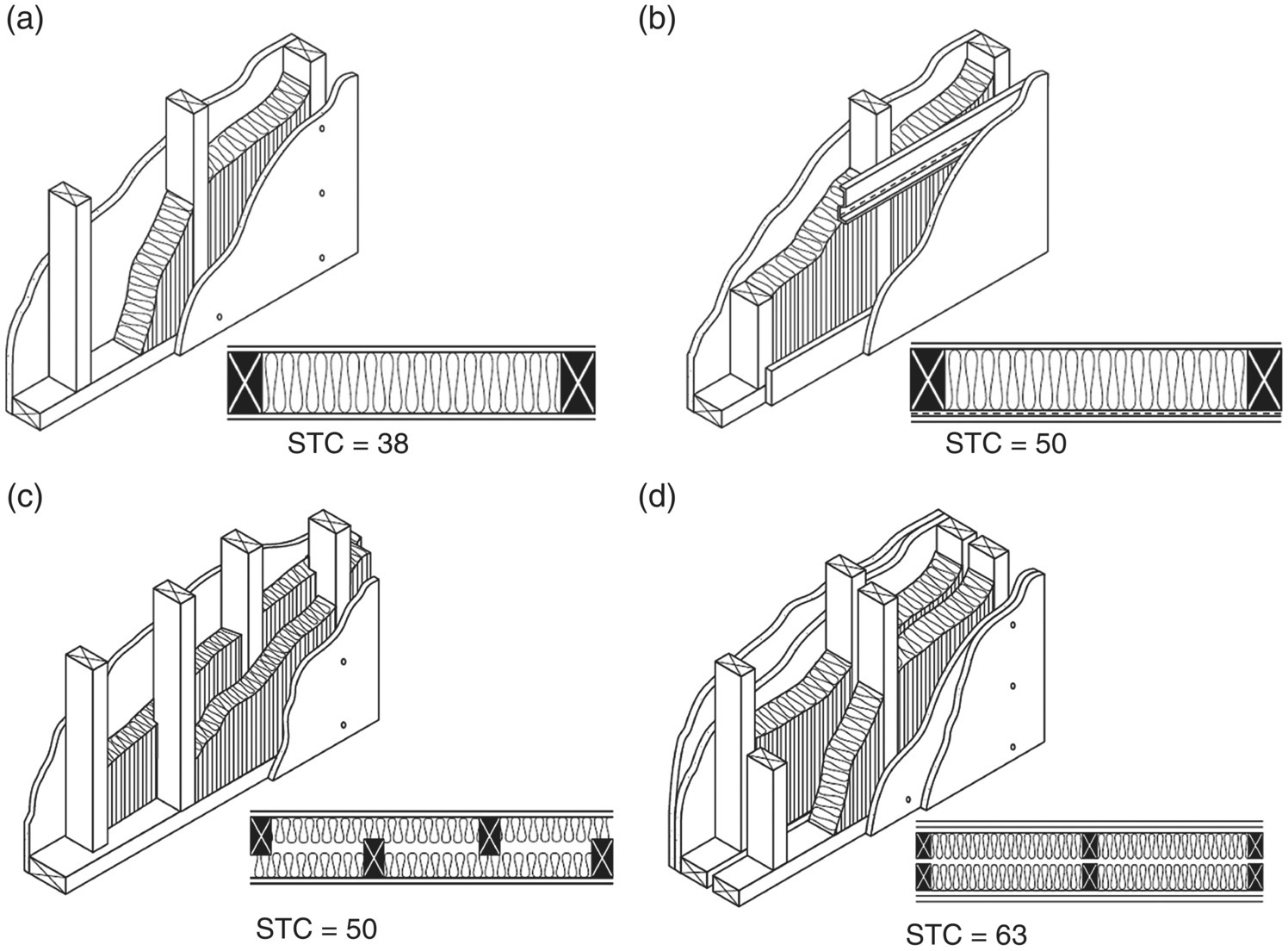
Note that, although the first two single wood‐stud walls shown in Figure 12.48 have somewhat similar geometries and constructions, they have different values of STC. The effect of the resilient channel which reduces the direct contact between the studs and the gypsum boards is apparent in the second partition and the STC is significantly increased. The third partition has staggered wood studs which produced the same STC as the second wall. The fourth partition is a double wood stud wall with a particularly thick core which shows the best STC rating and improved TL mostly at low frequency.
12.9.2.2 Masonry Walls
Masonry walls are usually made from concrete block or brick and mortar and designed to carry building loads (in the U.S.). In European countries it is common, in some areas, to build homes completely from brick or concrete blocks. Because of their large mass per unit area, masonry walls normally have high values of TL and STC/Rw [115, 124, 125]. Double‐masonry walls (with an air gap) have an even higher TL than single‐masonry walls. Sometimes such double walls are connected together with metal ties which tend to increase structural strength but diminish TL and STC/Rw. Some values of airborne sound transmission loss ratings of masonry walls are given in Table 12.1.
12.9.2.3 Airborne and Impact Insulation of Floors
Two types of floors are commonly used: concrete and wood. Examples of typical constructions are shown in Figure 12.49. Concrete floors are usually quite heavy and provide high TL to airborne sound (see Figure 12.49c); however, they are usually poor insulators of impact sound, unless precautions are taken to use a special resilient surface (finish). The airborne and impact insulation of a concrete floor can also be improved if the floor is vibration‐isolated in some way, as discussed earlier. Such vibration‐isolated floors are termed “floating floors.” For further discussion on floating floors, see Chapter 13, Section 13.6.1.
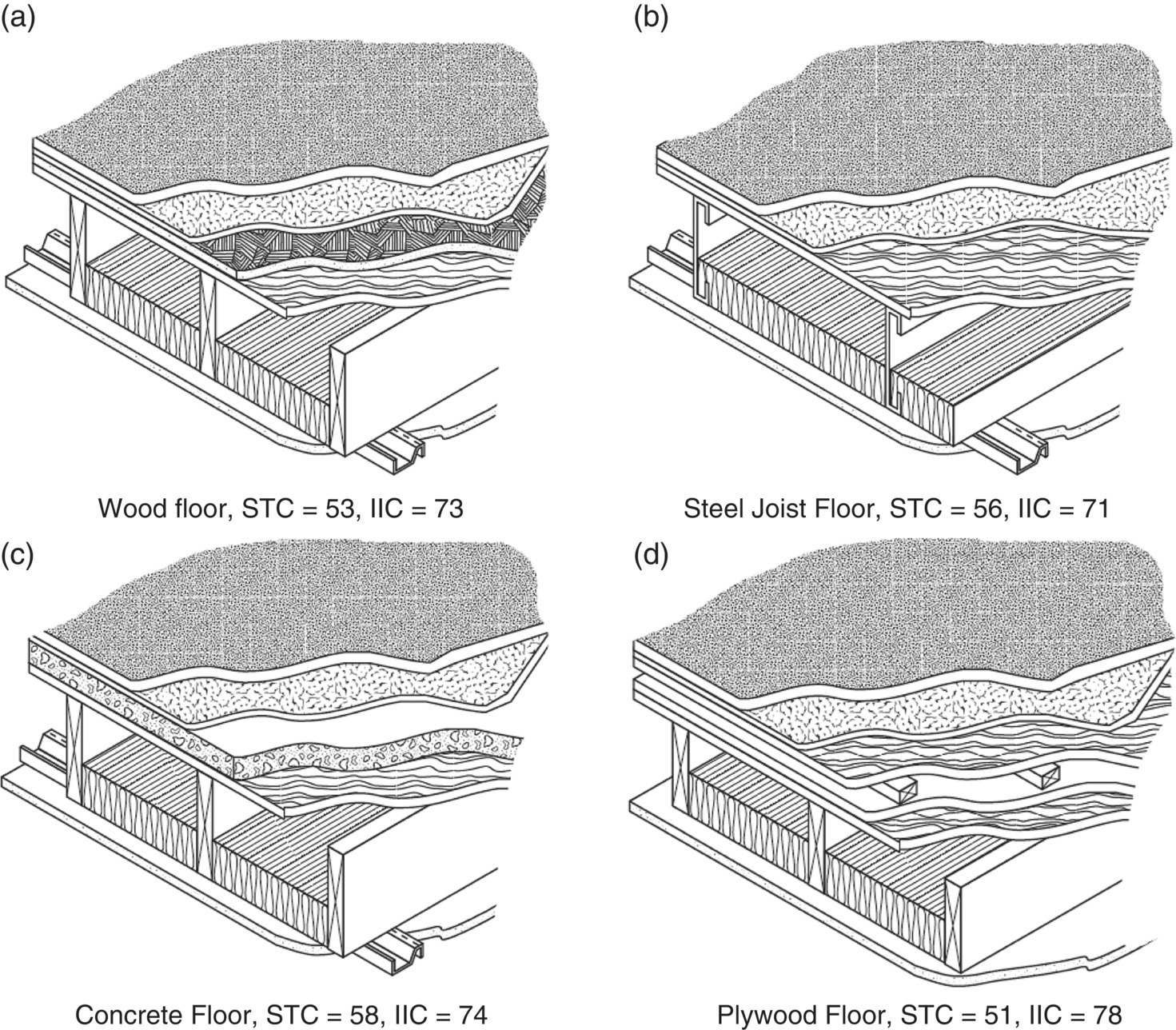
Wood floor‐ceiling assemblies are usually much lighter than concrete floors. However, with careful design, despite their low weight, wood floors can have airborne and impact insulation properties almost as good as much heavier concrete floors (compare Figure 12.49a with Figure 12.49c). The impact isolation of a wood floor is usually better than that of a concrete floor when neither has surface finishes. It should be noted that when a resilient surface finish is applied to either a concrete or wood floor, the impact sound insulation is usually improved considerably, although there is little improvement in the airborne sound insulation.
For each floor‐ceiling assembly, the values of airborne transmission loss and impact insulation ratings are given in Table 12.1 and Figure 12.49. The methods for measuring airborne transmission loss, impact sound pressure levels and the procedures for computing single number ratings are described in Sections 12.8 and 12.9.
a) Floating Floors
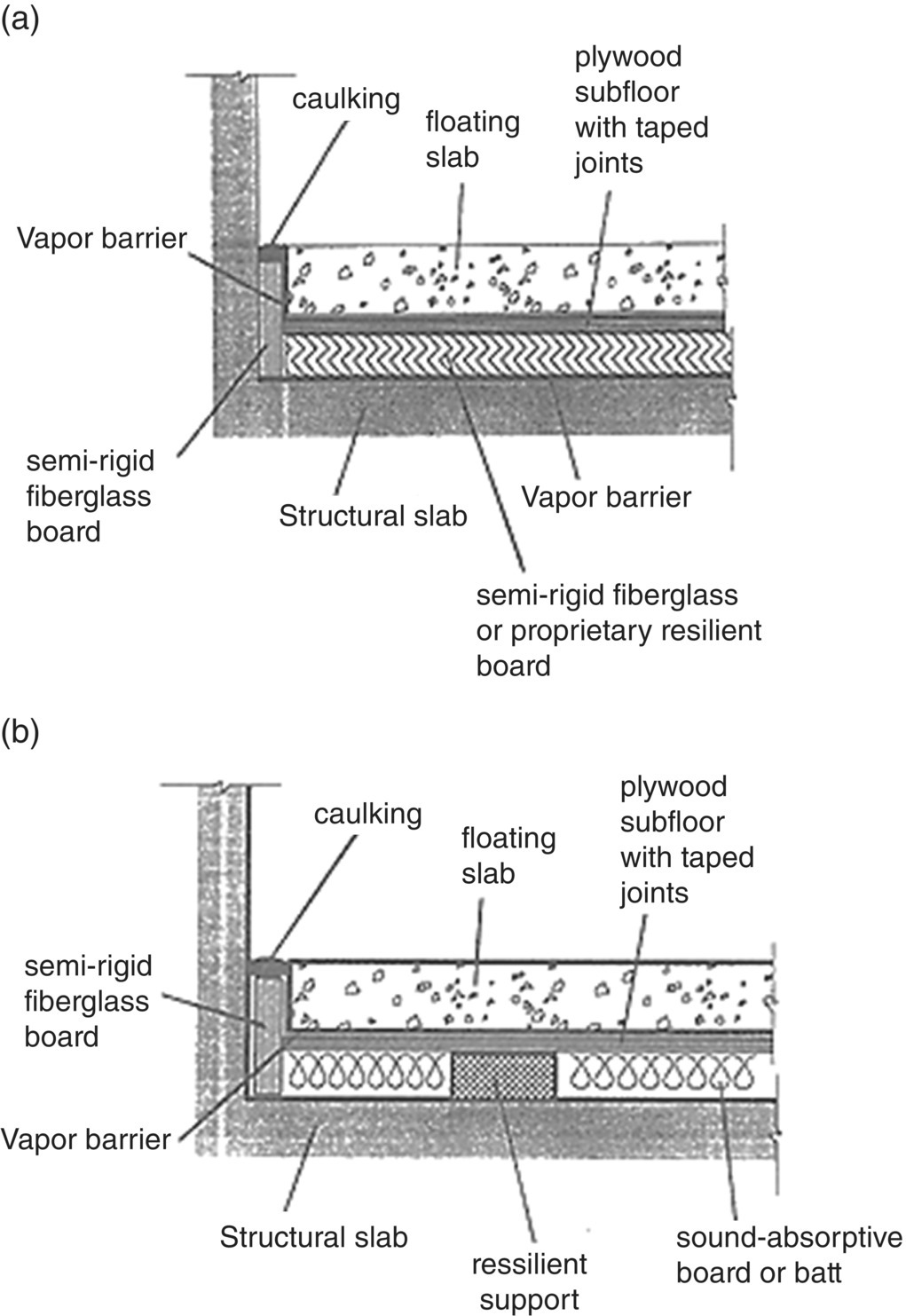
Floating floors are very useful in reducing the transmission of airborne sound and structure‐borne vibration to spaces below. A second layer is placed above the main structure slab to the floor and separated from it by an air space. The upper layer (floating floor) is supported by and isolated from the structural slab. This is done by pouring the floating concrete floor on plywood panels, which are resiliently mounted on the structural slab. The resilient support might be a precompressed layer of rock wool, fiberglass, foamed plastics, polyurethane, or the like (Figure 12.49a). For further discussion, see Chapter 13, Section 13.6.1.
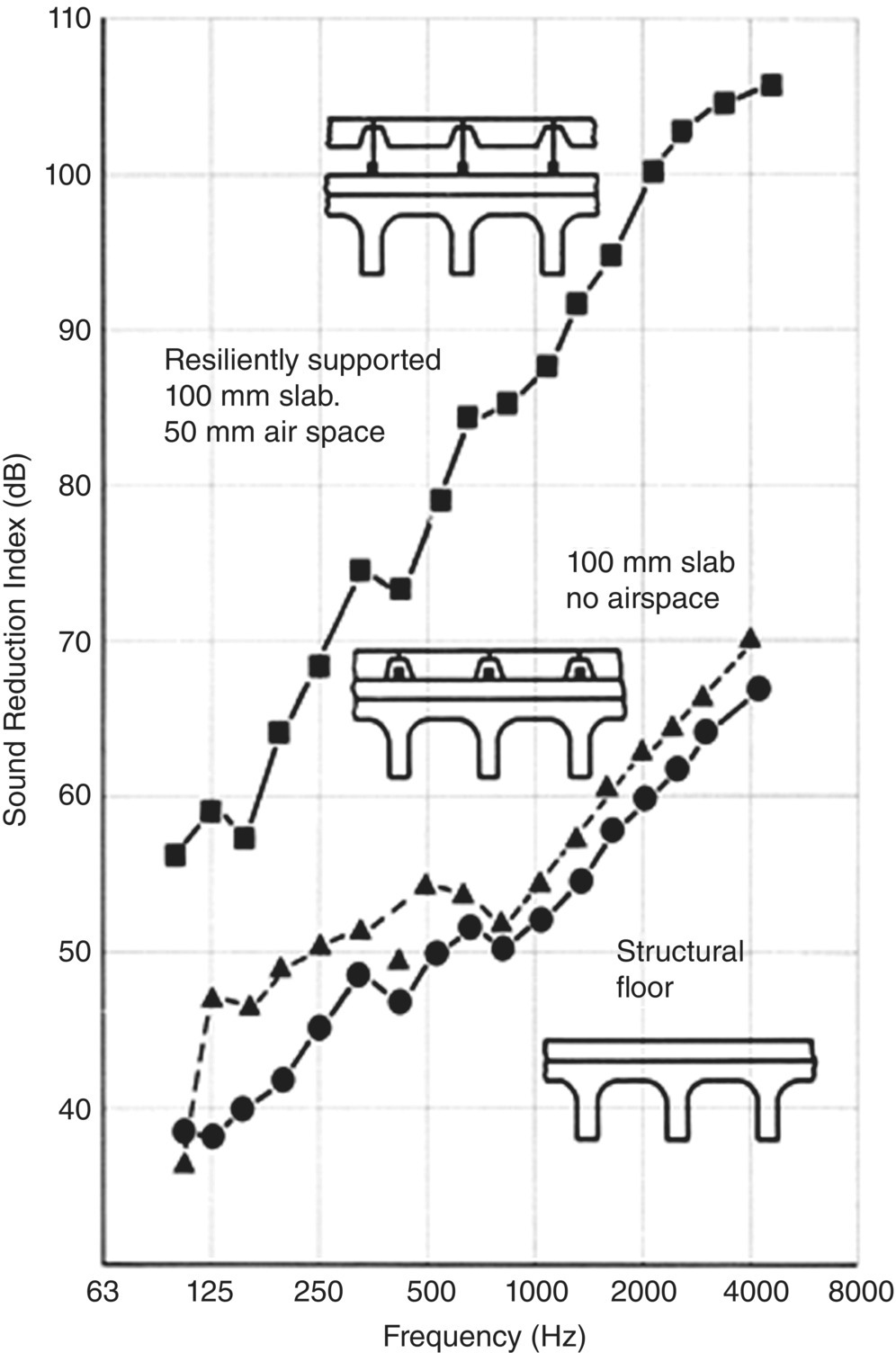
Instead of a continuous resilient layer, an array of resilient pads may be used and the cavity between the floating slab and the structural floor filled with soft sound‐absorbing material (see Figure 12.50b and Figures 13.32 and 13.33). Some thin floating floors are comprised of resilient layers about 4–12 mm thick finished with a layer of hardwood, about 12 mm thick. These can increase IIC values by as much as 20 points. The floating floors shown in Figure 12.50 can increase the transmission loss between 125 and 4000 Hz by as much as 20–30 dB. The STC rating can also be increased by a similar amount compared with a standard and structural floor (see Figure 12.51).
A floating floor has a fundamental natural frequency that is determined by the mass per unit area of the floating floor and the dynamic stiffness per unit area of the resilient support. The latter consists of the dynamic stiffness per unit area of the material and that of the enclosed air, which includes the effects of airflow resistivity [20]. A test set‐up to determine the dynamic stiffness of an elastic material used under a floating floor has been specified in standard ISO 9052‐1 [126, 127]. Typical values of dynamic stiffness per unit area of resilient materials are given by Hopkins [5]. They range from 10 MN/m3 (rock wool 30‐mm thick and 60 kg/m3) to 28 MN/m3 (glass wool 13‐mm thick and 36 kg/m3). Thin resilient layers made of nanostructured polymers have been recently shown to exhibit comparable values of dynamic stiffness per unit area [128].
Above the fundamental natural frequency, the improvement in the impact sound transmission of a floating floor varies from between 30 dB per octave for resonantly reacting floors (usually the type used in mechanical rooms) to 40 dB per octave for locally reacting floors. In buildings, if flanking transmission in the walls is not controlled, these improvements may not be achieved.
Apart from increasing the airborne transmission loss and the impact noise rating, a floating floor has one more extremely important advantage. It considerably reduces the amount of acoustical and vibrational energy flowing into the mechanical room structural slab and hence into the whole building structure. In modern concrete multistory buildings, energy can be propagated to all parts of the building with very little attenuation and then easily re‐radiated. Hence, the attenuation of this energy must be increased and the floating floor meets this requirement extremely well. Of course, the use of floating floors is not confined to mechanical rooms, and they are often employed in other areas of a building. For example, with music practice rooms or with pedestrian malls which may pass over low noise areas, floating floors can be used to considerably reduce impact and airborne noise to such an extent that it is undetectable below.
Some typical floating floor perimeter and dividing wall structural details are shown in Chapter 13. See Figures 13.32 and 13.34.
12.9.2.4 Doors and Windows
Doors and windows are usually the acoustical “weak links” between rooms in buildings and between interiors of buildings and exterior noise. If a high TL is desired for doors and windows, it is essential that a good positive seal is obtained. Inside many residential buildings, some leaks around doors are usually accepted as necessary to provide a path for return air for ventilation systems. However, with external doors and with windows, such leaks must be avoided or poor sound insulation will result (as already discussed in Section 12.6).
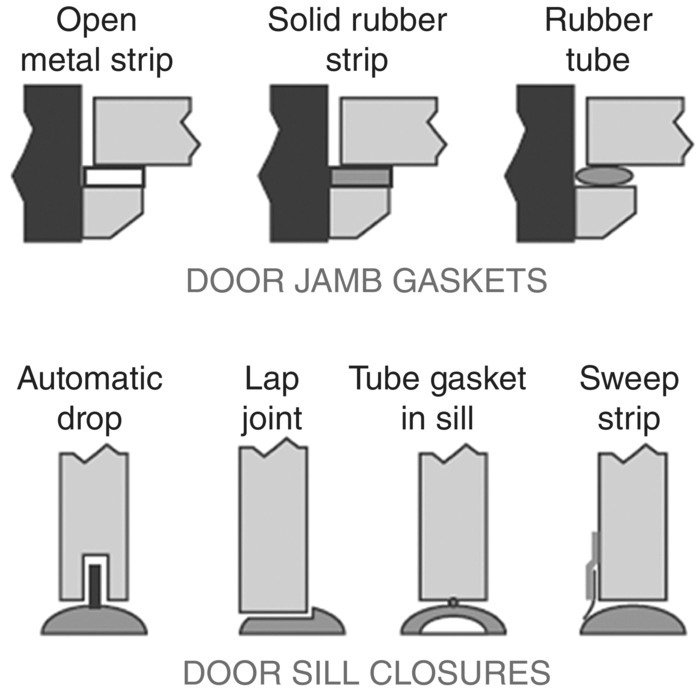
Doors are usually made of wood or steel. The sound insulation of a door can be improved if it is made of more than one, at least partly‐isolated layers with the air cavities filled with acoustical absorbing material. Extreme care must be taken to provide a positive seal around the edge of the door and the door frame. Many different door seal designs exist; the more commonly used is the gasket type (see Figure 12.52). Unless a good seal is provided and maintained, even the thickest, heaviest door will have a poor TL.
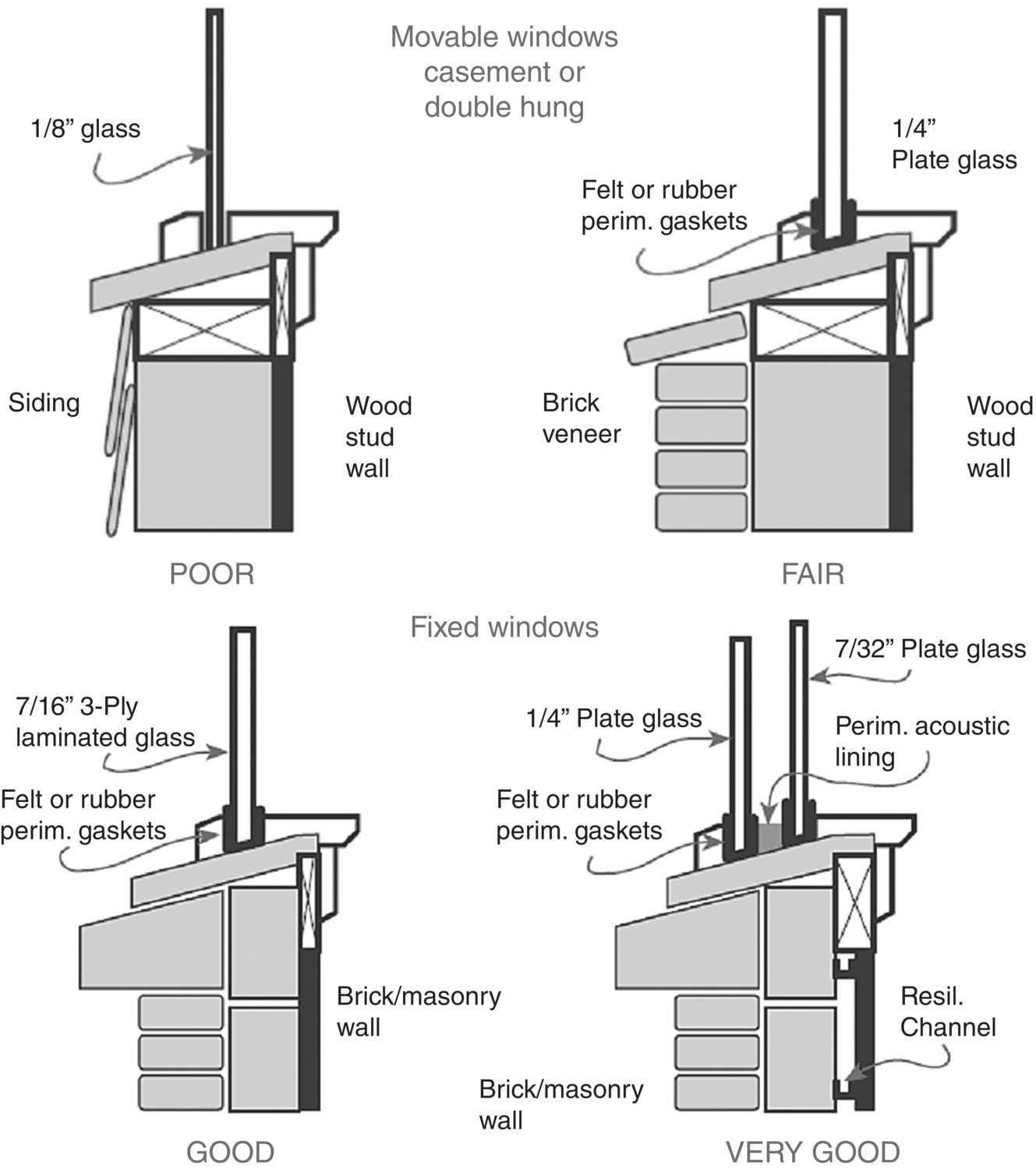
Windows are normally responsible for transmitting most of the acoustical and thermal energy into or out of buildings. However, with careful design, the acoustical and thermal transmission of energy through a window can be considerably reduced. The sound insulation of a window is usually improved if dual glazing (i.e. double windows with an air gap) is used instead of single glazing [130, 131]. A wider air gap between the window panels increases TL (particularly at low frequencies) (see Section 12.3). Acoustical absorbing material such as fiberglass packed into the edges of the air gap also improves insulation. Sometimes laminated glass is used to increase the internal damping and reduce the TL dip near the critical coincidence frequency.
According to Warnock [20] for single panes with thicknesses of 13 mm or less, STC (or Rw) may be calculated from STC = 0.61 × t + 27.9 for solid panes, or STC = 0.47 × t + 31.5 for laminated panes, where t is the total thickness of the pane including the lamination (mm). Also, use of two different thicknesses of glass in double windows gives different critical frequencies and smooths out the coincidence dip. Examples of outdoor noise insulation provided by windows are shown in Figure 12.53.
Some typical values of STC and Rw ratings are presented for doors and windows in Table 12.1. It should be noted that there is considerable scatter in manufacturers’ test results, obviously resulting from different internal design details, care in sealing and measurement procedures and facilities. The values of STC and Rw given may be used as a rough guide of possible values to be expected of different constructions.
12.9.3 Sound Insulation Requirements
Several criteria have been developed for walls, floors, doors, etc. for use in different buildings. Building codes and standards usually contain requirements for sound insulation, aimed at meeting the demands of different functions of rooms and buildings. Architects and acousticians can use such criteria and select walls and floors with suitable STC/Rw or IIC/Ln,w ratings for use in different buildings from information such as that given in Section 12.10, other handbooks, software, or partition manufacturers’ catalogs. Some of the ratings used to assess the acceptability of interior ambient sound in rooms and indoor noise criteria are discussed in detail in Chapter 6 of this book.
Recommended criteria for partitions have been presented in several countries, usually as “building technical codes” and they are discussed in several references [3, 4, 7, 10]. A real challenge for any country is the adoption of simple building standards and of a simple procedure to check whether standards have been met in practice. Some building technical codes include constructional details and recommended wall and floor/ceiling assemblies that are known to satisfy the corresponding building code and have been checked in recognized laboratories.
The International Code Council every three years publishes the International Building Code (IBC). This document is intended to present model building code regulations to protect public health, safety and welfare. Chapter 12 of the 2015 version of the IBC [132] deals with the interior environment and section 1207 defines the minimum standards for noise insulation in buildings. For airborne sound transmission at wall and floor/ceilings assemblies, the minimum rating is STC = 50 (or FSTC = 45). For impact noise at floor/ceiling assemblies, the minimum rating is IIC = 50 (or FIIC = 45). For more details, the reader should always consult the criteria for a particular application. A discussion on noise control in U.S. building codes is given by Tocci [133]. Rasmussen [92] presented a comprehensive review on the airborne and impact sound insulation between dwellings required by building codes in European countries. It is suggested that readers involved in building design or who are sufficiently interested should obtain the latest versions or these criteria or similar ones recommended by their own countries. An example of one of such criteria is presented in the following.
One of these criteria was recommended by the U.S. FHA and it continues to be referenced as the primary source standard for sound insulation requirements in condominiums, townhouses and other multi‐unit residential housing [111]. These recommendations are summarized here. Three grades of construction are specified (Grade II is considered to be the fundamental guide, and constructions which satisfy this criterion should be suitable for most multifamily dwellings in the U.S.):
- Grade I (luxury rating) applies to quiet suburban and peripheral suburban residential areas where nighttime exterior A‐weighted levels do not exceed 35–40 dB. The recommended interior noise environment is NC 20–25. (see Chapter 6 of this book for a definition of NC)
- Grade II (average rating) is the most important category and applies to urban and suburban residential areas with average noise environments. The nighttime exterior levels are probably about 40–45 dB, and the interior noise environment should not exceed NC 25–30.
- Grade III (minimum rating) applies to noisy urban areas, and constructions meeting these criteria are regarded as having minimal insulation. Nighttime exterior A‐weighted levels might be 55 dB or more, and the interior noise environment should not exceed NC 35.
Note that the IBC establishes only minimum standards of construction, which sometimes mirror the FHA Grade III minima. Minimum ratings are provided for many combinations of adjacent spaces, depending on room use. The partitions chosen for the following applications should have STC and IIC ratings equal to or greater than those listed depending upon the noise environment.
Table 12.2 gives STC values in more detail for partitions separating dwelling units in multifamily buildings. If possible, such buildings should be planned so that partitions separate rooms with similar functions (e.g. kitchen from kitchen, bathroom from bathroom, etc.). Where such layouts are not possible, then the partitions need greater sound insulation properties. See Chapter 13, Section 13.5 for further discussion on space planning and building layouts.
Table 12.2 Criteria for airborne sound insulation of wall partitions between dwelling units.
| Partition function between dwellings | Luxury Grade I | Average Grade II | Minimum Grade III | |
|---|---|---|---|---|
| Apt. A | Apt. B | STC | STC | STC |
| Bedroom | to Bedroom | 55 | 52 | 48 |
| Living room | to Bedroom | 57 | 54 | 50 |
| Kitchen | to Bedroom | 58 | 55 | 52 |
| Bathroom | to Bedroom | 59 | 56 | 52 |
| Corridor | to Bedroom | 55 | 52 | 48 |
| Living room | to Living room | 55 | 52 | 48 |
| Kitchen | to Living room | 55 | 52 | 48 |
| Bathroom | to Living room | 57 | 54 | 50 |
| Corridor | to Living room | 55 | 52 | 48 |
| Kitchen | to Kitchen | 52 | 50 | 46 |
| Bathroom | to Kitchen | 55 | 52 | 48 |
| Corridor | to Kitchen | 55 | 52 | 48 |
| Bathroom | to Bathroom | 52 | 50 | 46 |
| Corridor | to Bathroom | 50 | 48 | 46 |
Table 12.3 gives STC and IIC ratings for floor‐ceiling assemblies separating dwellings in multifamily buildings. Again, such buildings should be planned, where possible, with floors separating like rooms: bedroom above bedroom, living room above living room, etc.; otherwise undesirable situations will occur, and the insulation properties of the floor‐ceiling assemblies must be increased. Dwelling units should not be placed next to mechanical equipment rooms (including furnace rooms, elevator shafts, garages, transformers, emergency power generators, trash shoots, etc.). If this situation is unavoidable, the STC rating of partitions between such mechanical rooms and sensitive areas in dwellings should be: STC ≥ 65, STC ≥ 62, and STC ≥ 58 for Grades I, II, and III: or STC ≥ 60, STC ≥ 58, and STC ≥ 54 for Grades I, II, and III for partitions between mechanical rooms and less sensitive dwelling areas (kitchens, family rooms, etc.).
Table 12.3 Criteria for airborne and impact sound insulation of floor/ceiling assemblies between dwelling units.
| Partition function between dwellings | Luxury Grade I | Average Grade II | Minimum Grade III | ||||
|---|---|---|---|---|---|---|---|
| Apt. A | Apt. B | STC | IIC | STC | IIC | STC | IIC |
| Bedroom | above Bedroom | 55 | 55 | 52 | 52 | 48 | 48 |
| Living Room | above Bedroom | 57 | 60 | 54 | 57 | 50 | 53 |
| Family Room | above Bedroom | 60 | 65 | 56 | 62 | 52 | 58 |
| Corridor | above Bedroom | 55 | 65 | 52 | 62 | 48 | 48 |
| Bedroom | above Living Room | 57 | 55 | 54 | 52 | 50 | 48 |
| Living Room | above Living Room | 55 | 55 | 52 | 52 | 48 | 48 |
| Kitchen | above Living Room | 55 | 60 | 52 | 57 | 48 | 53 |
| Family Room | above Living Room | 58 | 62 | 54 | 60 | 52 | 56 |
| Corridor | above Living Room | 55 | 60 | 52 | 57 | 48 | 53 |
| Bedroom | above Kitchen | 58 | 52 | 55 | 50 | 52 | 46 |
| Living Room | above Kitchen | 55 | 55 | 52 | 52 | 48 | 48 |
| Kitchen | above Kitchen | 52 | 55 | 50 | 52 | 46 | 48 |
| Bathroom | above Kitchen | 55 | 55 | 52 | 52 | 48 | 48 |
| Family Room | above Kitchen | 55 | 60 | 52 | 58 | 48 | 54 |
| Corridor | above Kitchen | 50 | 55 | 48 | 52 | 46 | 48 |
| Bedroom | above Family Room | 60 | 50 | 56 | 48 | 52 | 46 |
| Living Room | above Family Room | 58 | 52 | 54 | 50 | 52 | 48 |
| Kitchen | above Family Room | 55 | 55 | 52 | 52 | 48 | 50 |
| Bathroom | above Bathroom | 52 | 52 | 50 | 50 | 48 | 48 |
| Corridor | above Corridor | 50 | 50 | 48 | 48 | 46 | 46 |
If possible, dwelling units should not be placed adjacent to business premises (such as restaurants, bars and laundries) in the same buildings. If this situation cannot be avoided, then the partition ratings should exceed STC ≥ 60, STC ≥ 58, and STC ≥ 56 and IIC ≥ 65, IIC ≥ 63, and IIC ≥ 61 for Grades I, II, and III if living areas in dwellings are placed below business premises.
Table 12.4 gives suggested criteria for airborne insulation requirements for partitions separating rooms in the same dwelling unit. Again, sensible planning can avoid the use of expensive partitions or the creation of insufficient sound insulation between rooms. See Chapter 13, Section 13.5.
Table 12.4 Criteria for airborne sound insulation within a dwelling unit.
| Partition function between rooms | Luxury Grade I | Average Grade II | Minimum Grade III | |
|---|---|---|---|---|
| STC | STC | STC | ||
| Bedroom | to Bedroom | 48 | 44 | 40 |
| Living room | to Bedroom | 50 | 46 | 42 |
| Bathroom | to Bedroom | 52 | 48 | 45 |
| Kitchen | to Bedroom | 52 | 48 | 45 |
| Bathroom | to Living room | 52 | 48 | 45 |
As mentioned above, walls and floor‐ceiling assemblies separating rooms from mechanical equipment rooms within buildings must be considered carefully to meet sound insulation requirements [135, 136]. It is common practice for architects to locate mechanical equipment rooms on upper floors of multistory buildings where they are often supported by lightweight flexible structural slabs and positioned directly over critical areas requiring low noise levels. Since most mechanical rooms in buildings usually contain many pieces of equipment apart from the fans (such as boilers, chillers, and pumps), the noise and vibration levels are accordingly very high, and often the floors need to provide over 50 dB transmission loss at low frequencies in order to achieve acceptable conditions in spaces below. Such a transmission loss cannot be economically obtained at low frequencies by a single layer floor slab.
Since vibration in the audible frequency range can easily be transformed directly into noise or propagated to some other part of the building and then re‐radiated as noise, it is of extreme importance to control all vibration in the mechanical room to within tolerable limits. Ideally, the mechanical room should be located well away from critical areas in the building, but when this is not possible, even greater care must be taken with the control of vibration. Although it might seem that the best approach should be to furnish all pieces of equipment with vibration isolators, this is not necessarily so. The first line of attack should be to ensure that each piece of equipment is selected to produce minimum noise and is operated under its specified conditions. For example, one should choose, where possible, rotating equipment in preference to the equivalent reciprocating unit since, in general, the latter type produces much more objectionable noise. Furthermore, it is extremely important to see that each piece of equipment is balanced, both statically and dynamically, to within the recommended tolerances. See Chapter 13 for further discussion on equipment balancing.
All building equipment radiating excessive noise in mechanical rooms should be adequately silenced, if at all possible. For example, some or all of the following noise control techniques may be implemented:
- Adding acoustical absorption to the walls and ceilings near large centrifugal fans (this may be necessary for hearing conservation and communication)
- Fitting of silencers at air intakes to forced draft fans which are open to the room
- Installation of acoustically lined plenum chambers around high power centrifugal fans
- Installation of resilient mounts and hangers to isolate piping, duct work, wiring, conduit, etc. from the building structure
- Acoustical enclosures around reciprocating refrigeration machines.
After the sound pressure levels within the mechanical room have been adequately and economically reduced, the next step is to introduce a massive layer between the room and the nearby critical areas. Unfortunately, most of the building mechanical room equipment (especially large centrifugal fans) radiate noise strongly at low frequencies, which causes a problem for the design engineer. Indeed, sound pressure levels in excess of 110 dB in the 63 and 125 Hz octave bands are quite common [132].
A completely continuous floating floor is not always necessary, and in some cases a floating base beneath certain noisy pieces of mechanical room equipment may be sufficient. When the sound pressure level in a fan plenum chamber far exceeds that from the surrounding mechanical room equipment, then the whole plenum chamber should be mounted on a floating floor. Figure 12.54 shows an example of typical noise control techniques implemented in a mechanical equipment room in a dwelling unit. Noise in HVAC systems is treated in Chapter 13 of this book.
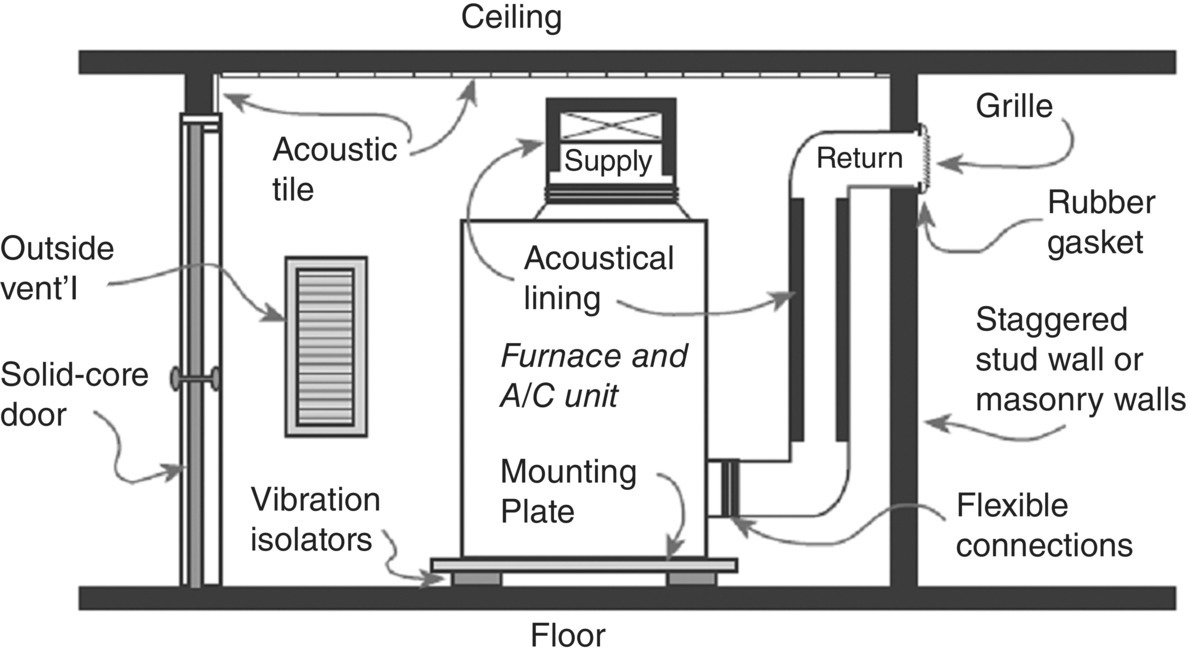
A major concern to the design engineer is to avoid resonances both in the equipment, in its supports, and in the building structure. At resonance, a large vibration amplitude is developed which may be accompanied by excessive radiated noise and stress. The stresses set up during the resonance may ultimately lead to fatigue in equipment or its support, or – even more disastrously – in the building structure (i.e. the floor)! One should, therefore, carefully check whether any equipment is to be operated close to (±25%) any critical speed in the machine, structural resonance in its support, or building structural resonance. Since the floor resonances and machine critical speeds are usually fixed, the operating speeds must be chosen to be well away from both of these. The only concern, then, is the support. In general, support resonances may be avoided by making the support very much less flexible than the flexibility that would result in resonance or by using a separate isolator with much higher flexibility. Such an increase in flexibility automatically means increased static deflection (see Chapter 2).
EXAMPLE 12.23
In a bank, a mechanical equipment room needs to be located adjacent to a large room which will be used as an open‐plan office. The dimensions of the common wall are 3 m × 7 m. The wall is made of concrete (TL = 50 dB in the 500 Hz octave band) and it has an access door of 2 m × 1 m (TL = 25 dB in the 500 Hz octave band) and a leak under the door 1‐cm high. It is estimated that the amount of absorption in the receiving room will be 52 sabins (m2) at 500 Hz. After a sound‐absorbent treatment of the walls of the large room, the absorption is estimated to be 167 sabins (m2) at 500 Hz. (a) Determine the NR with and without the absorption treatment at 500 Hz octave band. (b) What would be the effect on the NR if the leak is properly sealed?
SOLUTION
(a) The transmission coefficients are: for the concrete: τ1 = 1/[10(50/10)] = 10−5, for the door: τ2 = 1/[10(25/10)] = 0.00316; for simplicity we assume that the leak τ3 = 1. Therefore, from Eq. (12.60):
 , and the overall TL of the composite wall is TLav = 10log(1/7.86 × 10−4) = 31 dB.
Now, the NR of the partition is NR = TL − 10log(S/A) = 31 − 10log(21/52) = 35 dB. Due to the sections with lower TL values (especially the leak) and the hardness of the receiving room, the 50 dB concrete wall results in a NR of only 35 dB. If the absorbent treatment is used, we will have a NR = 31 − 10log(21/167) = 40 dB. The NR is increased by 5 dB to 40 dB, which indicates the leak should have been fixed first. (b) If the leak is plugged with a seal that provides a TL = 50 dB, the transmission coefficient of the dividing wall becomes

 , and the average TL will be TLav = 10log(1/3.1 × 10−4) = 35 dB. Consequently, the NR of 35 dB is increased to NR = TL − 10log(S/A) = 35 − 10log(21/52) = 39 dB, which is almost as much as the sound‐absorbing treatment provided. Now, the whole job, sealing the leak under the door and adding sound absorption materials to the room, results in a NR of NR = TL − 10log(S/A) = 35 − 10log(21/167) = 44 dB, which is 9 dB greater than the 35 dB obtained with the leak and without additional sound absorption. If it is desired to increase the TL even more, it is seen that the door is still the weakest link.
EXAMPLE 12.24
A common wall between a factory and an office measures 4 m × 10 m, and the office dimensions are 4 m × 10 m × 10 m. The office reverberation times in each one‐octave band center frequency are written in row 1 of Table 12.5. The A‐weighted sound pressure level in the factory space is 90 dB, the sound field is diffuse, and the spectrum is given in row 2 of Table 12.5. A target level of NC‐40 has to be achieved as an acceptable noise environment in a general office (see Chapter 6 of this book). Determine the minimum partition TL required to achieve NC‐40 in the office.
SOLUTION
The office volume V = 400 m3 and its total surface area = (40 × 4 + 100 × 2) = 360 m2. The absorption area A is calculated from Sabine’s formula A = 0.161 V/TR and written in row 4 of Table 12.5. 10log(A) is calculated in row 5. The values given for NC‐40 (see Figure 6.7 in Chapter 6 of this book) are written in row 3 of Table 12.5. Since the common partition area S = 40 m2, 10log(S) = 16, and this is written in row 6 of Table 12.5. Since NR = L1 − L2, then the required TL (Eq. (12.78)) is found from rows (2)–(3) + (6)–(5) = row (7) in Table 12.5.
Table 12.5 Calculation of minimum partition TL required to achieving NC‐40 in office of Example 12.19.
| One‐Octave band center frequency (Hz) | ||||||||
|---|---|---|---|---|---|---|---|---|
| 63 | 125 | 250 | 500 | 1000 | 2000 | 4000 | 8000 | |
| Reverberation time in office TR (sec) | 1.6 | 1.4 | 1.2 | 1.0 | 1.0 | 1.0 | 1.0 | 1.0 |
| Sound pressure level in factory, L1 (dB) | 79 | 82 | 85 | 85 | 87 | 82 | 75 | 68 |
| Desired office level (NC‐40), L2 (dB) | 64 | 56 | 50 | 44 | 41 | 39 | 38 | 37 |
| Calculated absorption area, A sabins (m2) | 40.3 | 46.0 | 53.7 | 64.4 | 64.4 | 64.4 | 64.4 | 64.4 |
| 10log(A) | 16.1 | 16.6 | 17.3 | 18.1 | 18.1 | 18.1 | 18.1 | 18.1 |
| 10log(S) | 16 | 16 | 16 | 16 | 16 | 16 | 16 | 16 |
| Required TL = (2) − (3) + (6) − (5) | 15 | 26 | 34 | 39 | 44 | 41 | 35 | 29 |
Leave a Reply