A hydraulic brake is an arrangement of the braking mechanism which uses brake fluid, typically containing glycol ethers or diethylene glycol, to transfer pressure from the controlling mechanism to the braking mechanism.
In a hydraulic brake system, when the brake pedal is pressed, a pushrod exerts force on the piston(s) in the master cylinder, causing fluid from the brake fluid reservoir to flow into a pressure chamber through a compensating port. The brake caliper pistons then apply force to the brake pads, pushing them against the spinning rotor, and the friction between the pads and the rotor causes a braking torque to be generated, slowing the vehicle. Alternatively, in a drum brake, the fluid enters a wheel cylinder and presses one or two brake shoes against the inside of the spinning drum. The brake shoes use a similar heat-tolerant friction material to the pads used in disc brakes.
Subsequent release of the brake pedal/lever allows the springs in the master cylinder assembly to return the master piston back into position. The hydraulic braking system is designed as a closed system: unless there is a leak in the system, none of the brake fluid enters or leaves it, nor does the fluid get consumed through use. Leakage may happen, however, from cracks in the O-rings or from a puncture in the brake line.
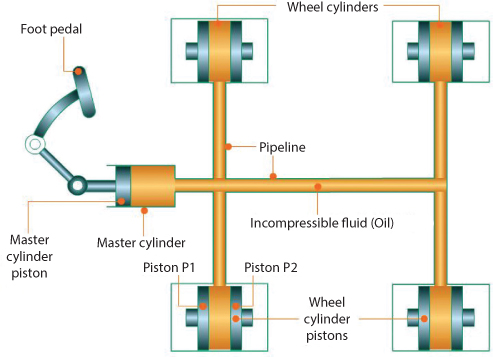
Components of Hydraulic Brake System
The common hydraulic brake arrangement of a commercial vehicle consists of the following:
- Reinforced hydraulic lines
- Brake pedal or lever.
- Pushrod
- Brake caliper assembly
- A master cylinder assembly
Leave a Reply