It should be noted that the selection of a fan is based primarily not on its acoustical characteristics but rather on its ability to move a required amount of air against the installed static pressure created by the downstream system elements. The first cost of the fan, its size, and maintenance costs are of primary concern [12]. Once the operating requirements have been decided, the fan noise characteristics will automatically become known. It is usually not practical to try to choose a quieter fan since it is unlikely that it can meet the operating requirements already determined.
13.4.1 Types of Fans Used in HVAC Systems
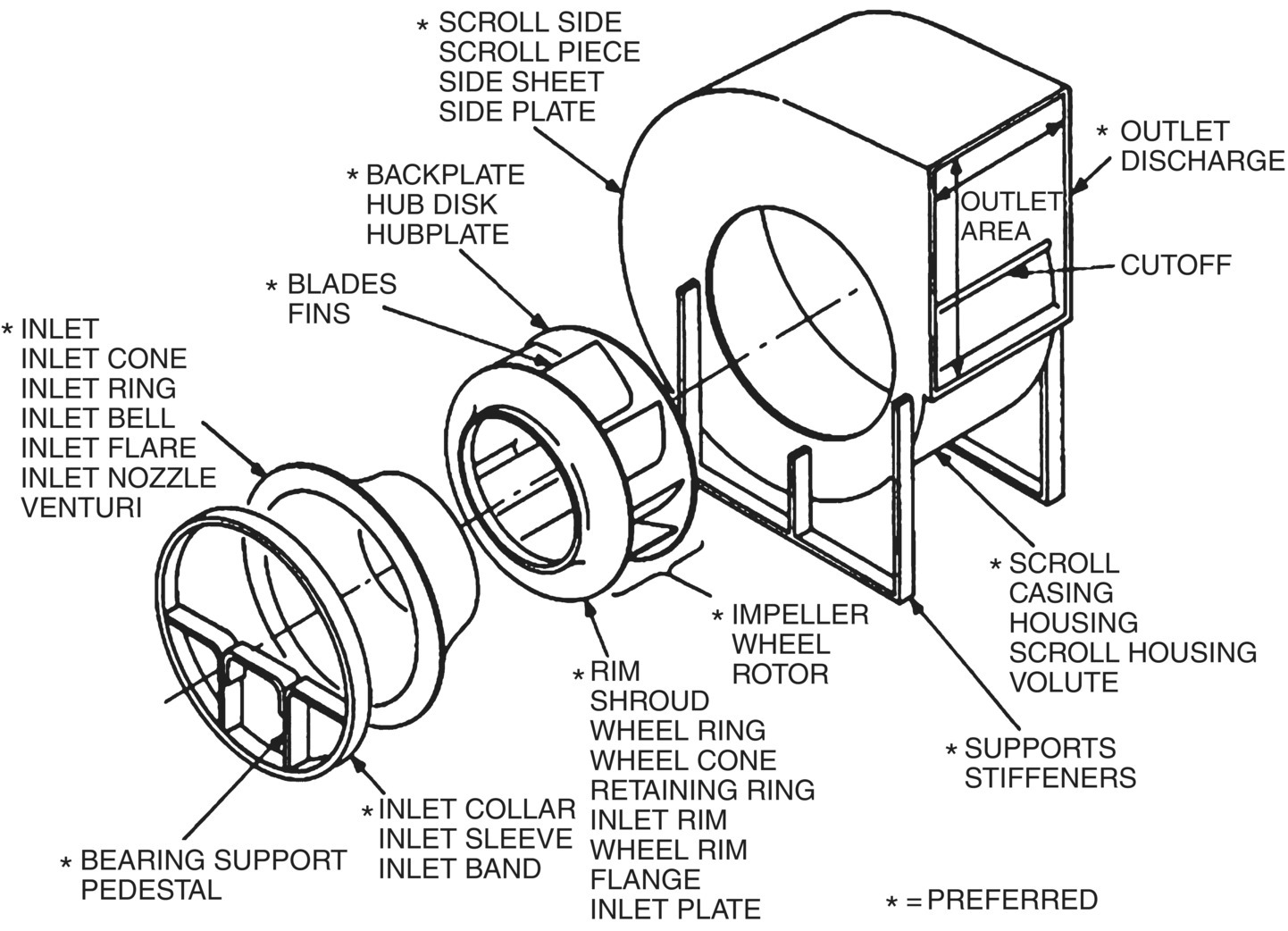
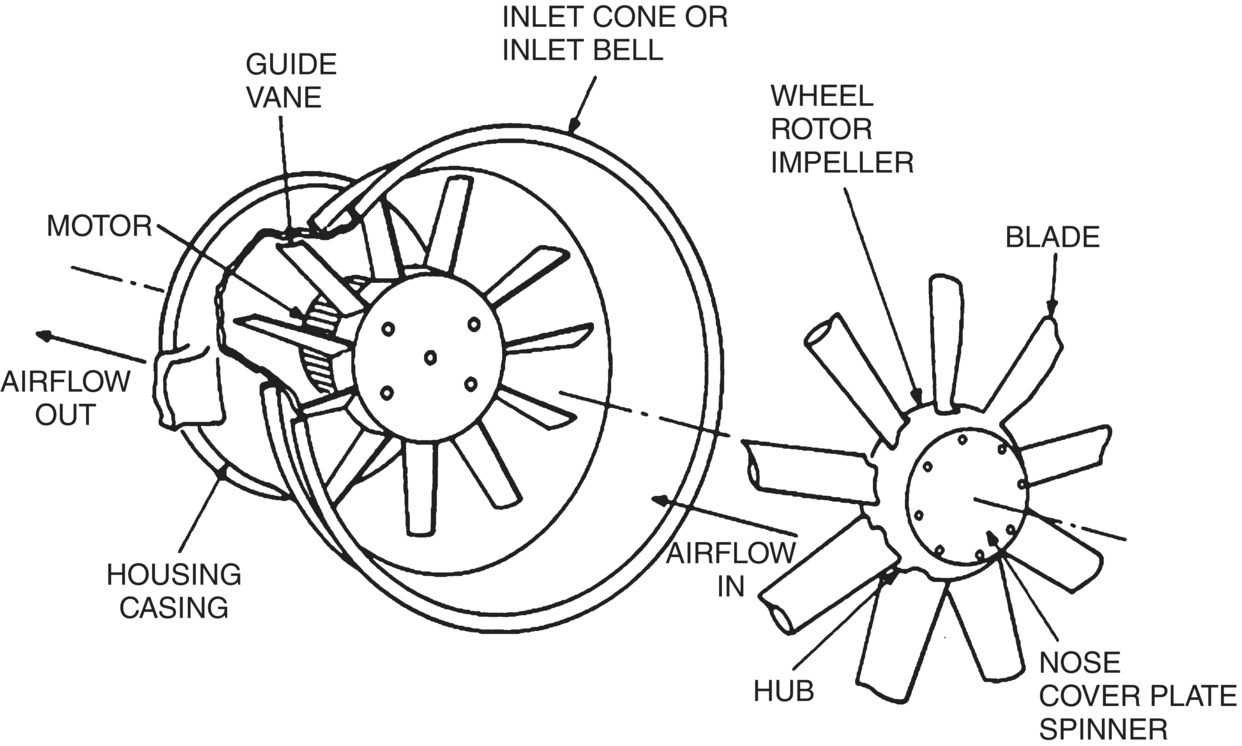
As already discussed in Chapter 11, there are two main types of fans: axial and centrifugal. There is also a third type, called a mixed‐flow fan, which combines elements of the axial and centrifugal types. See Figures 13.12 and 13.13 in the present chapter. Figure 11.7 in Chapter 11 presents more details about centrifugal and axial fans concerning their use and characteristics. A typical fan sound power spectrum consists of a broadband portion with superimposed discrete pure tone peaks at the blade passing frequency and at integer multiples of this frequency, i.e. harmonics. The relative contribution of the broadband and discrete frequency components depends upon the type and geometry of the fan. For example, many of the centrifugal fans used in air‐conditioning systems produce a mainly broadband frequency spectrum at low tip speed.
From a noise control perspective, the pure tones produced by a fan are very important. In many HVAC systems, in which fan noise is a problem, it is often found that pure tone components are the main cause of complaints. The ear is particularly sensitive to pure tones and can detect them in the general broadband noise making them irritating and annoying. For this reason, it is important to determine the octave band in which the fundamental pure tone (known as the blade passing frequency [BPF]) occurs. Care must be taken to make sure that noise control measures in this frequency band are adequate [12].
13.4.2 Blade passing Frequency (BPF)
The pure tones are primarily produced by the interaction of the rotating fan blades with the almost stationary air and by the interaction of the turbulent airflow with the stators. Each point in the surface through which the blade passes will receive a number of impulses per second equal to the number of fan blades times the number of fan revolutions per second. Thus, the fundamental blade passing frequency fB, is given by
(13.1)
where N = number of fan blades, and R = number of revolutions per minute (rpm). Since the periodic impulses created by the fan are not wholly sinusoidal and never completely identical, also because the inflow to the fan is not completely steady and for other reasons, tones at integer, multiples, n, of the BPF also occur (i.e. nfB).
EXAMPLE 13.1
An eight‐bladed axial fan is operated at 1800 rpm. Calculate the fundamental BPF and the first three harmonics using Eq. (13.1).
SOLUTION
N = 8 blades and R = 1800 rpm. The fundamental BPF is fB = 8 × 1800/60 = 240 Hz.
The first three harmonics, for n = 2, 3, 4, are nfB = 480 Hz, 720 Hz, 960 Hz.
The broadband noise is generated by sources which are random in time and may be dipole or quadrupole in nature. The noise can be generated either by lift fluctuations on the fan blade or by turbulent flow in the wake of the blade. In short, broadband noise is generated primarily by vortex shedding, by the interaction of the fan blades with turbulence, and by fan blade flow separation. The analytical prediction of this type of aerodynamic fan noise is beyond the scope of this book. However, reasonably accurate estimates can be obtained relatively simply. This is explained in Chapter 11 and later in this chapter. Lauchle has an extensive chapter dealing with fan noise in Ref. [26].
Since the primary purpose of a fan is to move a given quantity of air against a given pressure difference as efficiently as possible, it might seem that acoustical considerations are of secondary importance in the selection of a fan. However, it is found that when a fan is operated at peak aerodynamic efficiency, it also produces least noise. In other words, the same factors which increase a fan’s efficiency usually also tend to reduce the sound power it produces. A decrease in efficiency of only a few percent can result in a 3 dB change (doubling) in the sound power emitted. If an undersized fan were selected, it would not operate at its peak efficiency, and thus it would produce more noise.
The apparent cause of the higher noise at the lower efficiency appears to be the higher airflow velocity through the fan. On the other hand, an oversized fan (again not operating at its peak efficiency) is not only uneconomical but also noisier than one of the optimum size. The separation of airflow over the blades causes this effect.
In modern ventilation systems, the two main types of fans, centrifugal and vane‐axial, are employed in approximately equal numbers. Figure 13.12 shows an exploded view of a typical centrifugal fan. Figure 13.13 shows a similar view of a typical axial‐flow fan.
Figure 11.7 in Chapter 11 and Figure 13.14 shows the main types of centrifugal fans. Of these three types, forward‐curved centrifugal fans are the most compact and operate at the lowest speed when delivering a given volume flow rate and pressure. However, air is delivered into the scroll at a higher speed than the blade tip speed resulting in considerable turbulence and noise generation in the scroll‐impeller blade region. Since the fan can operate at a lower rotational speed than other centrifugal fans in delivering the required flow rate, the mechanical and bearing noise and wear, are, however, less than other centrifugal fans [26].
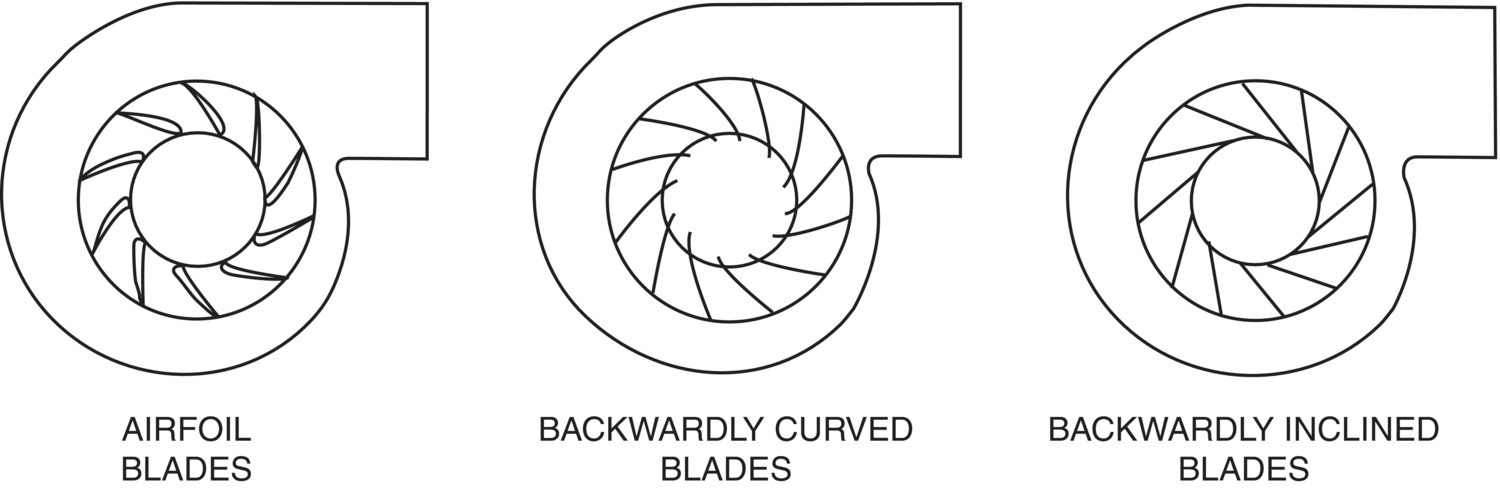
Centrifugal fans with backward‐curved blades release air into the scroll with a lower speed than the tip speed resulting in less noise. However, in order to deliver the air volume flow rate and pressure required, this type of fan must operate at a rotational speed of up to twice that of the forward‐curved blade type resulting in higher mechanical noise and vibration, wear and maintenance costs. Fans with backward‐curved aerofoil blades are the most efficient of these three types, but are the most expensive. They are often used when variable volume flow rates and pressures are needed [26].
Centrifugal fans with radial blades are rarely used in air‐conditioning systems. Their main use is in industrial applications, often when transporting particles such as coal dust, wood chippings, and plastic waste. Fan blades for such applications are normally made stronger and thicker.
Figure 13.15 shows typical octave band sound power spectra for vane‐axial, centrifugal, and mixed‐flow fans. (The latter are special fans incorporating features of axial and centrifugal designs.) The manufacturer’s electrical power rating given of 37.3 kW for each of these fans is the same. They also develop the same fluid power 23.0 kW when working at their maximum efficiency.
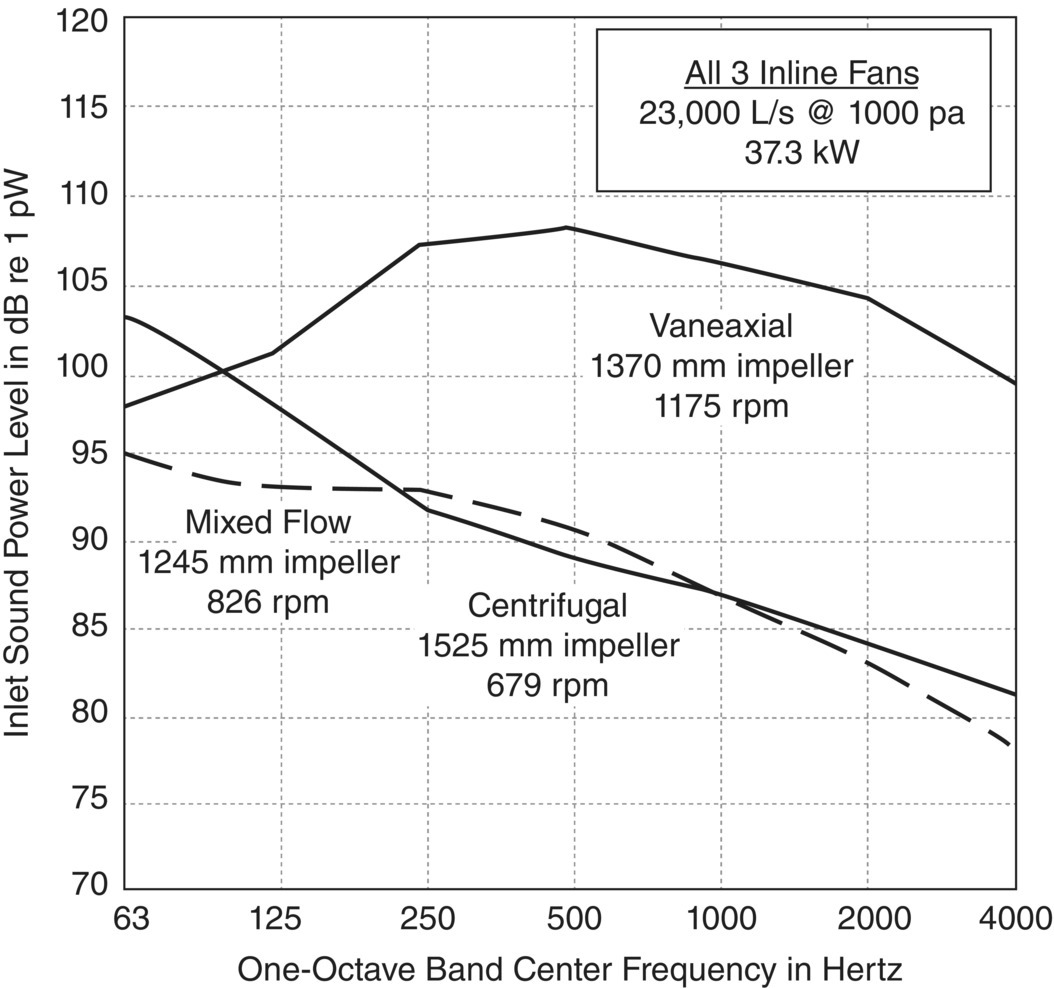
The sound power spectrum of each of these three fans is different. The spectrum for the vane‐axial type is fairly flat, while the spectrum for a centrifugal fan decreases with frequency at a rate of about 4–6 dB per octave. The centrifugal fan usually produces a little more sound power at low frequency but much less at high frequency than the equivalent axial type. The blade passing frequency sound is more pronounced in the vane‐axial fan spectrum and relatively little low‐frequency noise is generated. This is characteristic of axial fans, where there is usually a strong peak at the blade passing frequency, and there are quite often peaks evident at higher harmonics of the BPF. It should be noted that the fans shown in Figure 13.15 have the flow (inlet and exhaust) aligned with the duct work. If duct bends or obstructions located upstream or downstream of the fan are situated close to the fan, the pure tone BPF sound power will increase. The pure tone components have the added effect of making the noise very objectionable. This is particularly noticeable with fans which have less than 15 blades.
13.4.3 Fan Efficiency
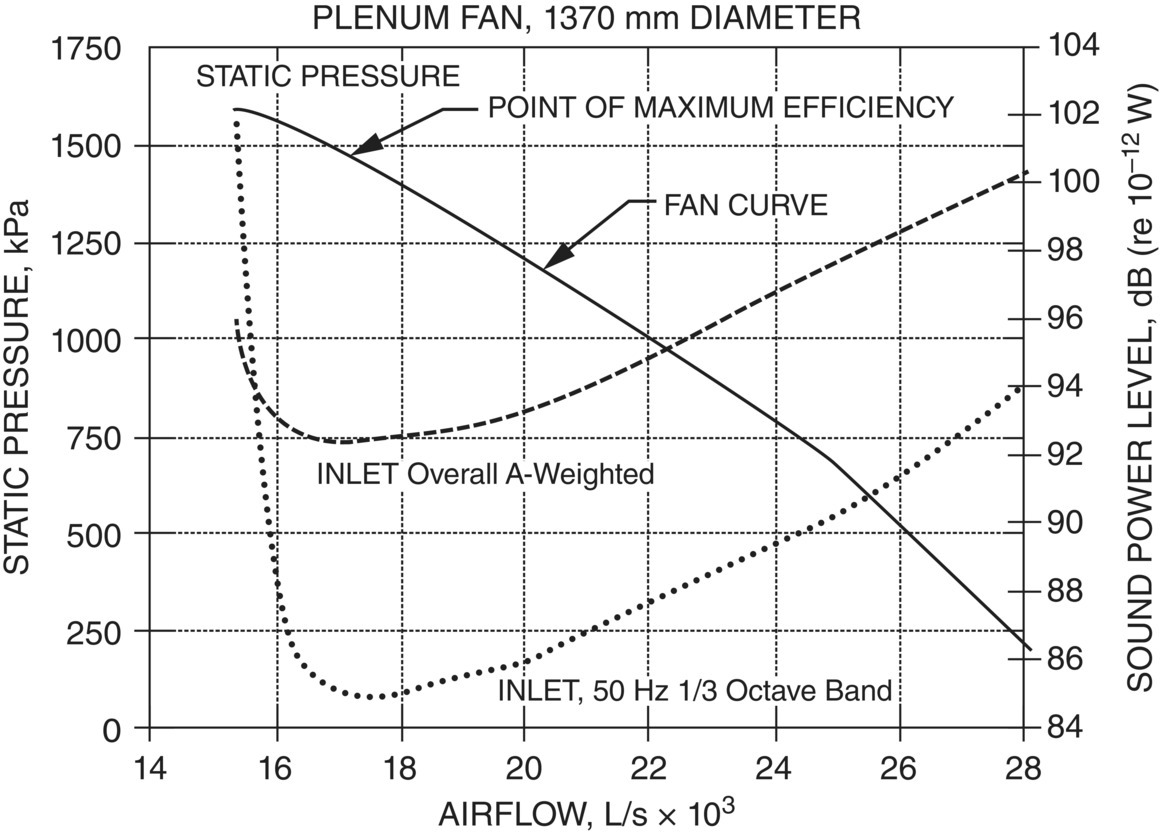
There is a common incorrect belief that a large fan operating at a low speed is less noisy than a small fan running at a higher speed. This is incorrect. The correct solution is to have the fan operating at its peak efficiency for the required airflow volume and pressure, and this will automatically produce the quietest fan. The ventilation engineer should always attempt to design the system so that the lowest possible pressure will be required, since the generated sound power rapidly increases with the pressure regardless of the type of fan used. Figure 13.16 shows the A‐weighted inlet sound power level, LWA, for a typical plenum fan. Also, shown are the fan curve, volume flow rate litre/second, and static pressure produced. The maximum efficiency for this fan is in a small operating range in the flow region of 17000 litre/second and pressure of 1500 Pa.
If a fan is not operated near its designed maximum efficiency, its sound power level will increase. The increase in each octave band can be calculated as follows:
Calculate the fan’s static efficiency:
(13.2)
If the volume flow rate is given in litre/second, and the static pressure is given in pascals, then the constant k = 1 and the mechanical input power developed by the fan shaft is in kilowatts. If the volume flow rate is given in ft3/min, and the pressure is given in inches of water, k = 6354 and the input power is given in brake horsepower [9, 27]. For vane‐axial fans, the pressure in Eq. (13.2) should be the static pressure plus the dynamic pressure created in the moving airstream [9]. Table 13.1 gives an estimate of the increase in sound power level expected for fans not operated at their designed maximum efficiency.
Table 13.1 Fan efficiency adjustment, i.e. the number of decibels by which the sound power level of a fan should be increased because of its operation at other than peak efficiency (these values are for different types of fans) [12].
| Airfoil centrifugal and vane‐axial fan | Backward‐curved centrifugal fan | Forward‐curved centrifugal fan | |||
|---|---|---|---|---|---|
| Efficiency, % | Increase, dB | Efficiency, % | Increase, dB | Efficiency, % | Increase, dB |
| 80 to 72 | 0 | 75 to 67 | 0 | 65 to 58 | 0 |
| 71 to 68 | 3 | 66 to 64 | 3 | 57 to 55 | 3 |
| 67 to 60 | 6 | 63 to 56 | 6 | 54 to 49 | 6 |
| 59 to 52 | 9 | 55 to 49 | 9 | 48 to 42 | 9 |
| 51 to 44 | 12 | 48 to 41 | 12 | 41 to 36 | 12 |
As already discussed, fans should be operated as close to their points of maximum efficiency as possible. This ensures the fan will require minimum power and in general minimum noise will be produced. See Figure 13.16. As the operating point is shifted to the right and down along the fan curve, the fan produces greater airflow but achieves a lower static pressure. Also the inlet A‐weighted sound power level, LWA, increases. Fans produce noise not only at the exhaust but at the inlet as well. In the USA, manufacturers usually provide the inlet sound power level of fans in octave bands with center frequencies from 63 to 8000 Hz. Normally the inlet sound power values given are measured under the ideal laboratory conditions specified in AMCA Bulletin 300 using a reverberation room.
13.4.4 Sound Power and Frequency Content of Fans
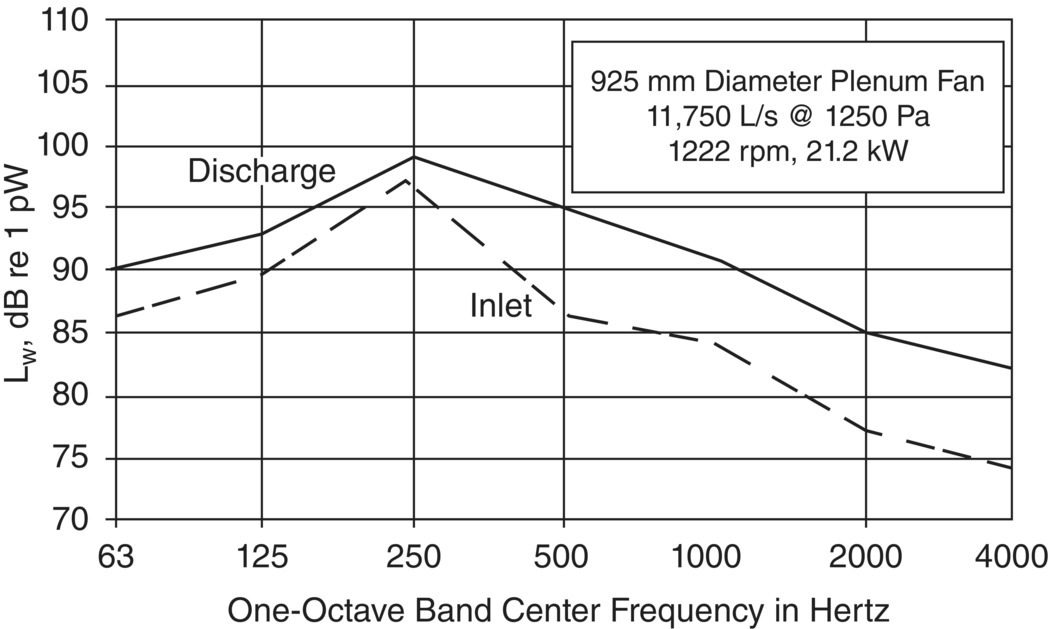
Some manufacturers now provide both inlet and exhaust sound power level data. As discussed, these levels will increase if obstructions, abrupt duct bends or cross‐section changes are situated in inlet or exhaust locations close to the fan. Figure 13.17 shows the inlet and discharge octave band sound power levels for a typical plenum fan. In many cases, the discharge sound power levels can be as much as 5–10 dB above the inlet sound power levels (which are those normally supplied by manufacturers).
EXAMPLE 13.2
Consider the fan in Figure 13.15. Assume that the electric motor driving the fan converts 75% of the 40 kW electrical power into shaft power. Also assume that the fan only converts 85% of the shaft power into fluid flow power. Define the fan efficiency as fluid flow power divided by shaft power. The type of fan in Figure 13.16 is unknown. Use the fan curve for the plenum fan of diameter 1370 mm in Figure 13.16. With these various assumptions, calculate the fan efficiency, fluid flow power and sound power level increase of the fan for representative pressure/airflow conditions in Figure 13.16 by using Table 13.1.
SOLUTION
Use the following relationships:

Fluid flow power = Q × P. For fan in Figure 13.15, electrical power = 40 kW. Assume shaft power = 0.75 × 40 = 30 kW. Assume fluid flow power at maximum efficiency = 0.85 × 30 = 25.5 kW.
Note fluid flow power is given by Q × P in Figure 13.16.



This result agrees with the initial assumption that at maximum efficiency the fan converts 85% of shaft power into fluid flow power. The values of fluid flow power for other fan curve conditions are found from Figure 13.16. The efficiency and sound power level increases are estimated from Table 13.1 and given in Table 13.2. We note that the level increases predicted here for the lower static pressures of 750 kPa and 500 kPa are higher than in Figure 13.16, which are, however, A‐weighted.
Table 13.2 Estimated sound power level increases for different fan pressures and volume flows.
| Static Pressure kPa | Air Flow L/s × 103 | Fluid Flow Power Q × P kW (Figure 13.16) | Efficiency (Q × P/30)100% | Estimated Sound Power Level Increase dB (Table 13.1) |
|---|---|---|---|---|
| 1500 | 17.0 | 25.35 | 25.4/30 = 85% | 0 |
| 1250 | 19.9 | 25.35 | 25.4/30 = 85% | 0 |
| 1000 | 22.5 | 22.5 | 22.5/30 = 75% | 3 dB |
| 750 | 24.5 | 18.4 | 18.4/30 = 61% | 6 dB |
| 500 | 26.0 | 13.0 | 13.0/30 = 43% | 12 dB |
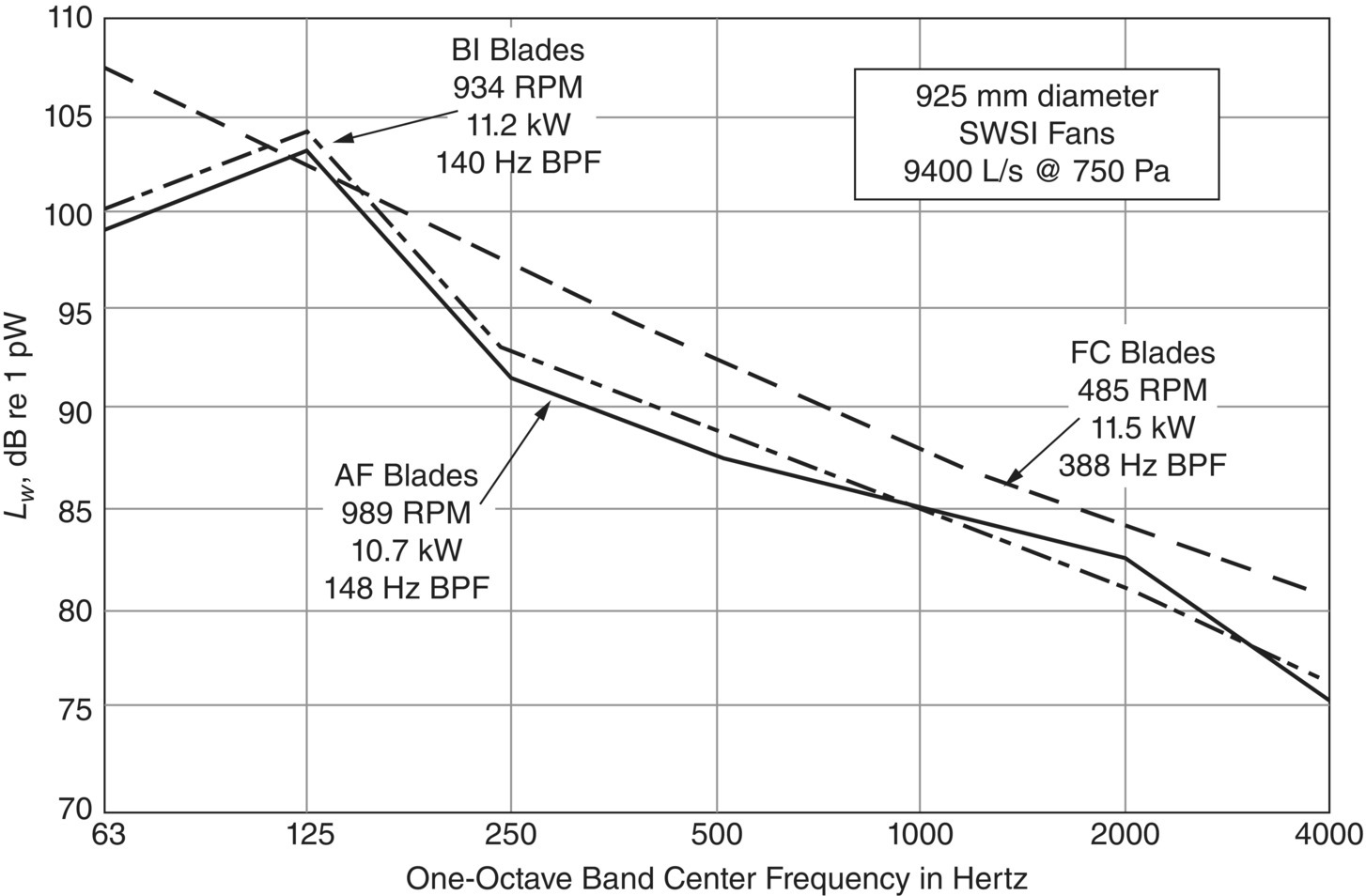
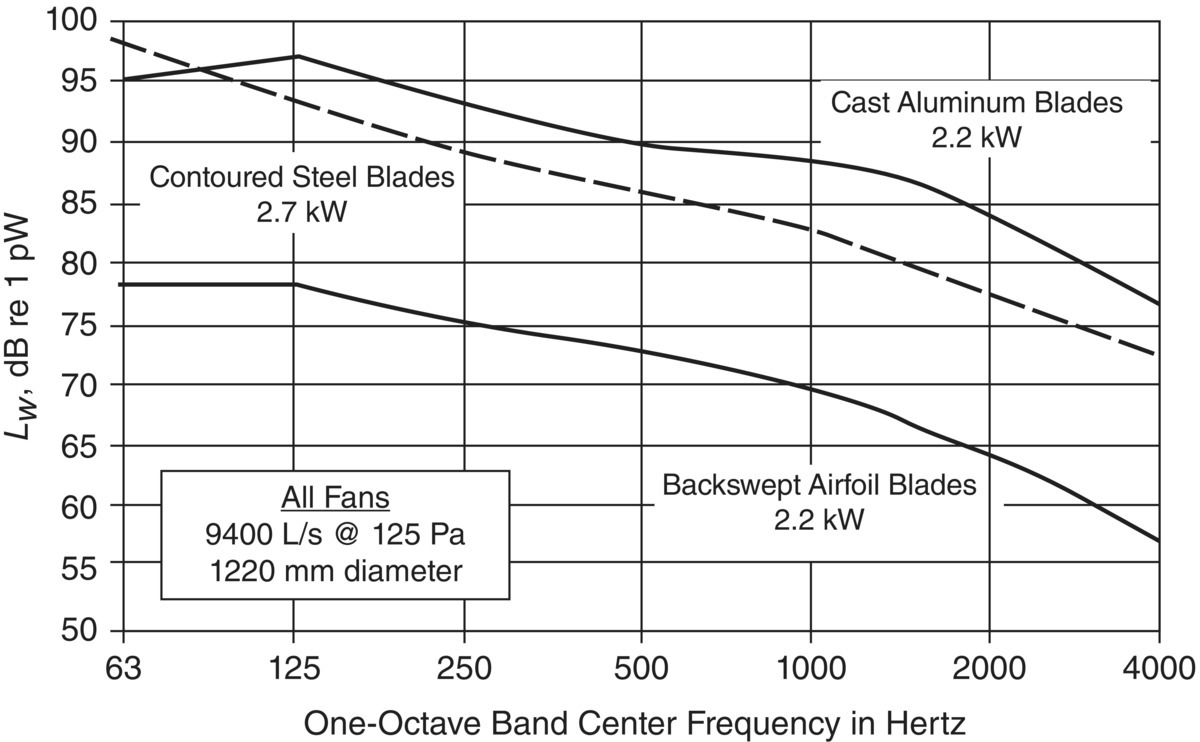
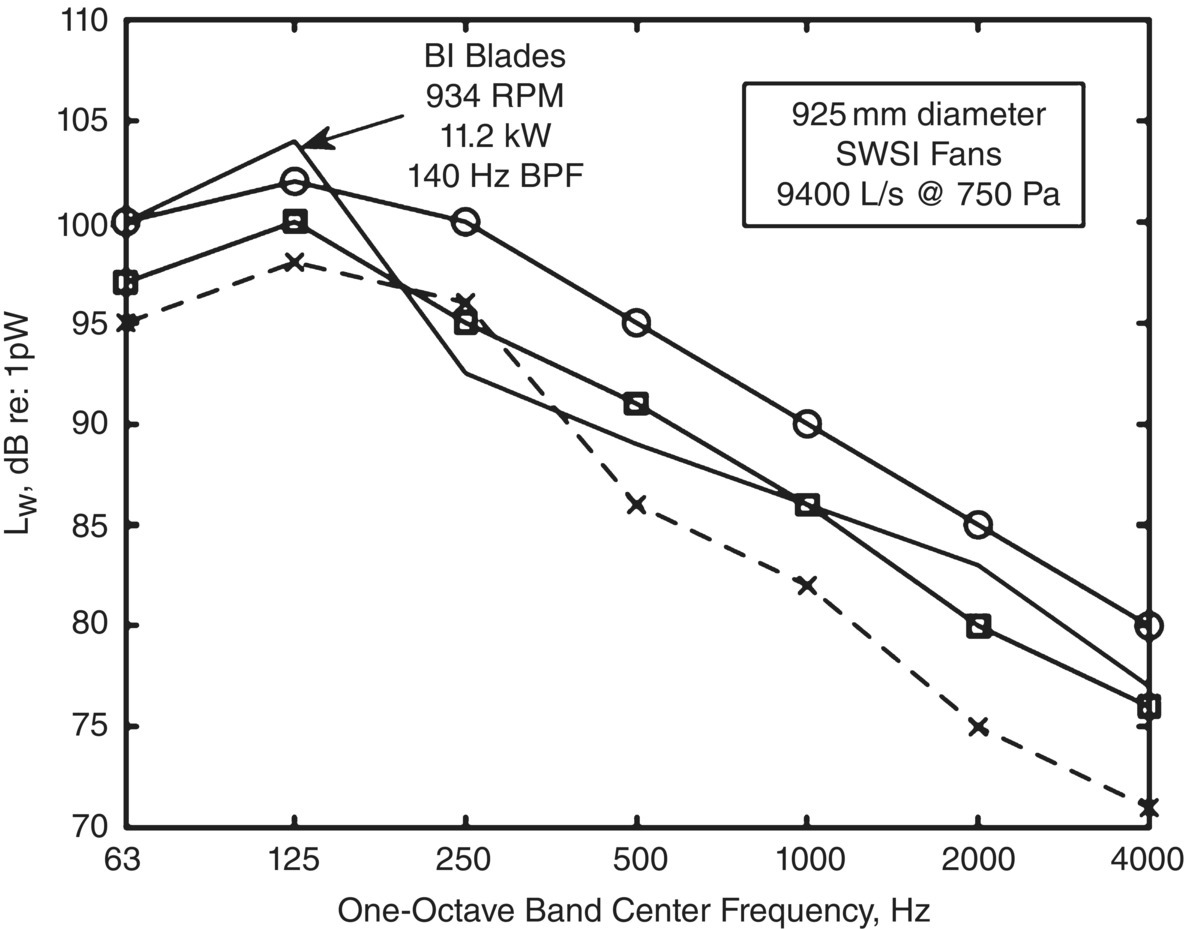
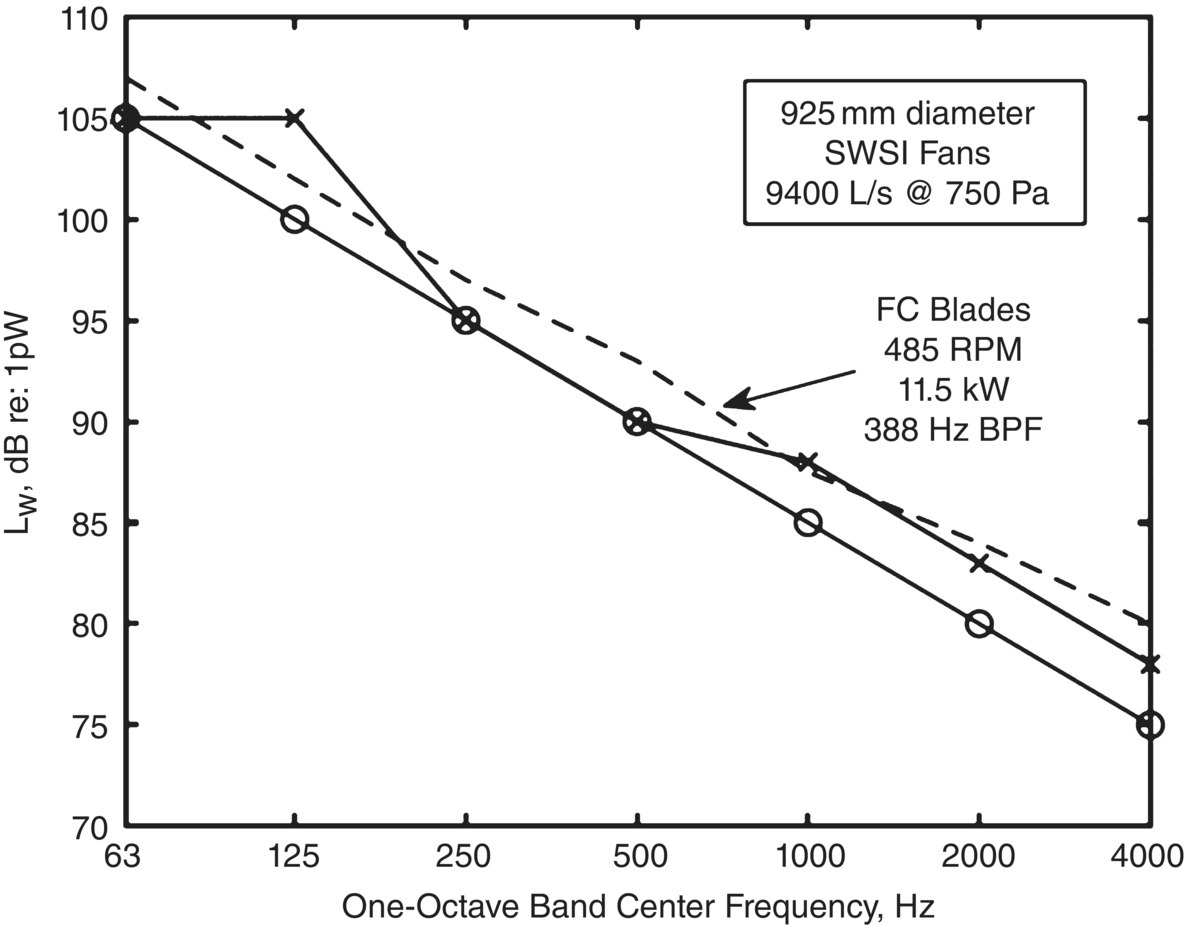
Figure 13.18 shows a comparison between the unweighted sound power levels of three types of centrifugal fans operating at 9400 L/s and 750 Pa total pressure. The fans all have similar electrical power ratings of between 10.7 kW and 11.5 kW. The forward‐curved fan (FC) type does not show as strong a BPF peak at 125 Hz, but the greater level at 63 Hz is more difficult to suppress at this low frequency, at which sound‐absorbing and barrier materials are less effective. Figure 13.19 gives inlet sound power levels for three types of axial‐flow fans with electrical power ratings of 2.2 kW.
13.4.5 Sound Power Levels of Fans and Predictions
As already discussed, although, all of the different axial fan types shown in Figure 13.19 have different overall sound power levels and frequency spectra, they all produce their lowest noise levels when operated in the region of peak efficiency on their performance curves. See Figure 13.16. The cast‐aluminum blade type is the least expensive, but it is the noisiest. The contoured steel blade is quieter but costs more. The backward swept airfoil blade fan is the quietest type but the most expensive.
It is often necessary for an engineer to be able to estimate fan sound power levels at the design stage within ±5 dB, if manufacturers’ data should not be available. Consequently, several prediction schemes involving empirical equations have been developed and used with some success for sound power predictions. However, when using such empirical prediction schemes, one should ensure that the scheme chosen is valid for the particular fan and its operating conditions. Some of the fan sound power prediction schemes are now reviewed briefly.
One of the earliest fan sound power prediction schemes was produced by Beranek et al. in 1955 [21]. They assumed an acoustical efficiency of 10−6. This efficiency is defined to be sound power divided by source mechanical power. By measuring the sound power spectra of 14 different centrifugal fans, they determined an empirical result for the overall fan sound power level. They found that the octave band levels sloped downwards at about 5 dB per octave. The first one-octave band centered at 20 Hz was normally found to be also downward and given by 1 dB less than that predicted by the overall level. Beranek’s result gives better accuracy for centrifugal fans developing large static pressures.
In 1967, Groff gave a relation for the sound power level generated for a variety of centrifugal fans [26]. In 1972, Graham proposed a simplified fan sound power prediction scheme partly based on the earlier methods discussed [5, 6]. This scheme was adopted by ASHRAE in the 1973 Guide and Data Book and was widely used. Graham later discussed this scheme further, giving several examples, and also converted it into SI units [10]. This scheme assumes that the fan is well designed and operating near its maximum efficiency. In order to estimate fan sound power, fans are divided into the main types shown in Figure 11.7 in Chapter 11.
Most manufacturers of centrifugal fans now provide measured sound power levels for their products along with detailed information on their operating conditions for both FC, backward inclined (BI), and aerofoil fan blades. One should note carefully whether these are quoted in decibels (re 10−12 or 10−13 W). Manufacturers’ data are preferred to estimated levels since predictions can be in serious error. The sound power levels in Table 11.2 in Chapter 11 are given in decibels with stated reference quantities.
13.4.6 Prediction of Fan Sound Power Level
Although Graham’s method [3–6] no longer appears in the latest ASHRAE Handbook [20], it is still widely used. Table 11.2 in Chapter 11 presents a method based on the work by Graham and Hoover [10]. In this approach, specific sound power levels are given for different types of fans based on the reference quantities Wref = 10−12 W, volume flow Qref = 1 m3/s, and ∆Pref = 1 kPa. For fans operating at other values of Q and ∆P, the correction can be made by adding 10 log (Q) + 20 log (∆P) to the specific sound power levels. A pure tone correction is also made to the octave band in which the BPF occurs by adding the last increment in Table 11.2 to the level in that band.
Fry gives a very similar prediction scheme [8]. In this, the sound power level is given by
(13.3)
It should be noted, however, that in Fry’s method, Qref = 1 m3/s, and Pref = 1 Pa, not 1 kPa.
Fry provides Table 13.3 for frequency spectrum corrections as follows. Both Eq. (13.3) and Table 13.3 are derived from the earlier work of Beranek and Allen.
Table 13.3 Fan sound power frequency spectrum corrections in dB [8].
Fan type | One-octave band center frequency (Hz) | ||||||
|---|---|---|---|---|---|---|---|
| 63 | 125 | 250 | 500 | 1000 | 2000 | 4000 | |
| Forward‐curved centrifugal | −2 | −7 | −12 | −17 | −22 | −27 | −32 |
| Backward‐curved centrifugal | −7 | −8 | −7 | −12 | −17 | −22 | −27 |
| Axial‐flow | −5 | −5 | −6 | −7 | −8 | −10 | −13 |
| Mixed‐flow | −12 | −11 | −10 | −10 | −13 | −17 | −22 |
EXAMPLE 13.3
Calculate the sound power level in one‐octave bands for the FC and BI fans in Figure 13.18. Each fan operates with a volume flow of 9400 L/s and pressure of 750 Pa. The FC fan has a BPF of 388 Hz and the BI fan has a BPF of 148 Hz. Use both the Graham and Hoover (Chapter 11, Table 11.2) and the Fry method [8]. Note 1 m3 = 1000 l.
SOLUTION
First for the FC fan with the Graham and Hoover method, we use the values for the forward‐curved centrifugal fan in Table 11.2 to obtain the octave band sound power levels. See the second row in Table 13.4. Then we make the flow and pressure correction log Q + 20 log ∆P = 10 log (9.4) + 20 log (0.750) = 7.2 dB and put this into row 3. Finally, the total FC fan values of Lw are obtained in row 4 of the table. A similar approach is used to obtain the prediction for the BI fan using the values for the backward‐curved centrifugal fan in Table 11.2. The total BI fan values are given in row 7.
Table 13.5 shows the results for the FC and BI fans using the Fry method [8]. First the one-octave band sound power levels are calculated using Eq. (13.3) and the flow Q and pressure P values in Figure 13.18. See rows 2 and 5 in Table 13.5. Then the spectrum corrections for the FC and BI fans are found from Table 13.2. See rows 3 and 6. The final Lw values are calculated after the corrections are made and are given in rows 4 and 7.
Table 13.4 Graham and Hoover calculation of the one‐octave band sound power of FC and BI fans.
| One‐Octave Band Center Frequency, Hz | 63 | 125 | 250 | 500 | 1000 | 2000 | 4000 | 8000 |
|---|---|---|---|---|---|---|---|---|
| Forward‐curved (FC) Fan | 98 | 98 | 88 | 81 | 81 | 76 | 71 | 66 |
| Flow and Pressure Correction | +7.2 | +7.2 | +7.2 | +7.2 | +7.2 | +7.2 | +7.2 | — |
| Total (FC) Fan, Lw, dB | 105 | 105 | 95 | 88 + 2 | 88 | 83 | 78 | — |
| Backward Inclined (BI) Fan d > 0.75 m | 85 | 85 | 84 | 79 | 75 | 68 | 64 | 62 |
| Flow and Pressure Correction | +7.2 | +7.2 | +7.2 | +7.2 | +7.2 | +7.2 | +7.2 | +7.2 |
| Total (BI) Fan, Lw, dB | 95 | 95 + 3 | 96 | 86 | 82 | 75 | 71 | 69 |
| Backward Inclined (BI) Fan d < 0.75 m | 90 | 90 | 88 | 84 | 79 | 73 | 69 | 64 |
| Flow and Pressure Correction | +7.2 | +7.2 | +7.2 | +7.2 | +7.2 | +7.2 | +7.2 | +7.2 |
| Total (BI) Fan, Lw, dB | 97 | 97 + 3 | 95 | 91 | 86 | 80 | 76 | 71 |
Table 13.5 Fry calculation of the sound power levels, dB, of FC and BI fans.
| Frequency, Hz | 63 | 125 | 250 | 500 | 1000 | 2000 | 4000 | 8000 |
|---|---|---|---|---|---|---|---|---|
| Forward‐curved (FC) Fan | 107 | 107 | 107 | 107 | 107 | 107 | 107 | 107 |
| Spectrum Correction, dB (Table 13.3) | −2 | −7 | −12 | −17 | −22 | −27 | −32 | — |
| Total FC Fan Lw, dB | 105 | 100 | 95 | 90 | 85 | 80 | 75 | — |
| Backward Inclined (BI) Fan | 107 | 107 | 107 | 107 | 107 | 107 | 107 | 107 |
| Spectrum Correction, dB (Table 13.3) | −7 | −8 | −7 | −12 | −17 | −22 | −27 | — |
| Total BI Fan, Lw, dB | 100 | 99 + 3 | 100 | 95 | 90 | 85 | 80 | — |
The sound power level predictions made in Tables 13.4 and 13.5 are shown in Figures 13.20 and 13.21 and compared with the manufacturer’s sound power level data for backwardly inclined and forward‐curved centrifugal fans. The Graham and Hoover, and the Fry prediction methods both give predictions for the FC fan in Figure 13.21 within ±5 dB except in the low frequency range (< 250 Hz) and high frequency range (>1000 Hz) for the centrifugal fan in Figure 13.20. Both the Graham and Hoover, and the Fry methods make predictions within ±5 dB for the FC centrifugal fan in Figure 13.21. The Fry method overpredicts the sound power level for the BI fan levels in Figure 13.20 in the mid frequency range by a few decibels more than 5 dB. The Graham and Hoover method predicts the level well, provided it is assumed incorrectly that the fan diameter d < 0.75 m. But assuming correctly that d > 0.75 m makes it underpredict the level by almost 10 dB for frequencies >2000 Hz.
13.4.7 Importance of Proper Installation of Centrifugal Fans
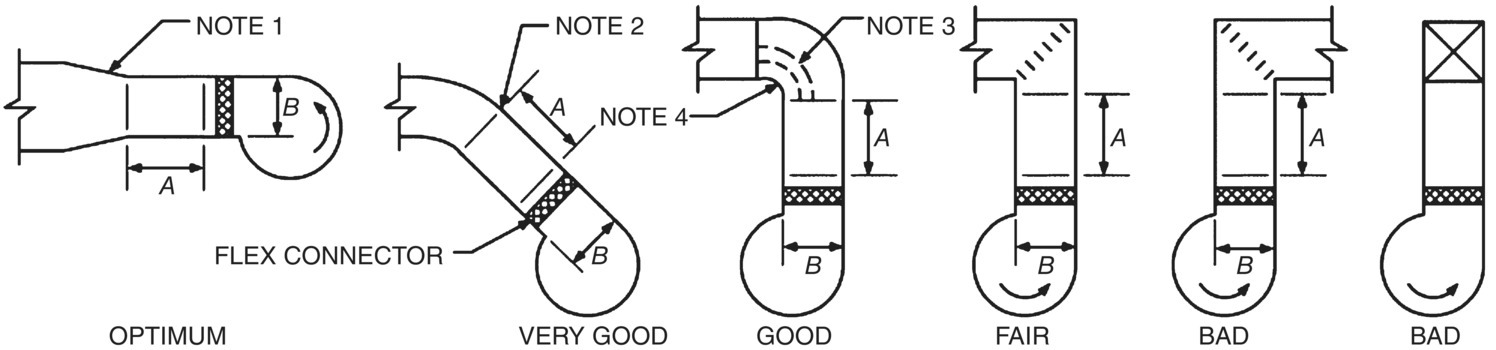
The noise generated by centrifugal fans is strongly dependent on the installation. Figure 13.22 shows the worst installation at the right to good in the middle and best at the left. With installations shown as bad or fair in Figure 13.22, duct rumble is likely to occur. While with installations shown as good, very good or best, rumble is less likely to occur. There are several ways to reduce the occurrence of duct rumble. One method is to change the speeds of the motor, fan belt or fan. Another method involves mass loading the duct to change the wall resonance frequencies excited by the flow. Noise reductions between 5 and 10 dB in the 31.5 and 63 Hz frequency bands have been recorded by this approach [20]. Complete enclosure of the duct wall with absorbing material placed between the enclosure wall and duct wall can reduce rumble and also breakout noise and break-in noise, provided the enclosing system is decoupled from the duct wall [20].
It is essential that great care is taken to ensure that an HVAC system is installed properly and that faults do not occur resulting in an unsatisfactory system. In the case of projects with large buildings, it is best that architects, engineers, and acoustical consultants should all be involved to ensure a satisfactory outcome. It is often found that architects and mechanical engineers have sized the HVAC items of equipment and specified noise and vibration control elements such as duct liners, silencers, and vibration isolators correctly, but they have been incorrectly installed resulting in complaints. Table 13.6 shows the increase in noise level expected from some poor fan inlet and discharge conditions.
Table 13.6 Poor intake and discharge condition corrections [8].
| (a) Abrupt Entry | |||||||
| Frequency, Hz | 63 | 125 | 250 | 500 | 1000 | 2000 | 4000 |
| Correction, dB | +2 | +5 | +7 | +5 | +5 | +5 | +5 |
| (b) Upstream interference for example trimming vane, idling impeller, radiused bend, acute transformations, expanders. | |||||||
| Frequency, Hz | 63 | 125 | 250 | 500 | 1000 | 2000 | 4000 |
| Correction, dB | +6 | +6 | +6 | +6 | +6 | +6 | +6 |
| (c) Flexible connectors (misaligned or concave) | |||||||
| Frequency, Hz | 63 | 125 | 250 | 500 | 1000 | 2000 | 4000 |
| Correction, dB | +6 | +6 | — | — | — | — | — |
| (d) Form of running (motor upstream of impeller) | |||||||
| Frequency, Hz | 63 | 125 | 250 | 500 | 1000 | 2000 | 4000 |
| Correction, dB | +6 | +7 | +3 | +8 | — | — | +2 |
Table 13.7 Calculation of natural frequency fn and static deflection needed to produce the isolation efficiency, ƞ, for each rpm.
| Machine rpm | 600 rpm | 1200 rpm | 1800 rpm |
|---|---|---|---|
| Frequency, f | 10 Hz | 20 Hz | 30 Hz |
| d | 0.5 cm | 0.5 cm | 0.5 cm |
| fn | 7.07 Hz | 7.07 Hz | 7.07 Hz |
| f/fn | 1.414 | 2.83 | 4.24 |
| (f/fn)2 − 1 | 1.0 | 7.0 | 17 |
| η % | 0% | 86% | 94% |
| d | 1.0 cm | 1.0 cm | 1.0 cm |
| fn | 5.0 Hz | 5.0 Hz | 5.0 Hz |
| f/fn | 2.0 | 4.0 | 6.0 |
| (f/fn)2 − 1 | 3.0 | 15.0 | 35.0 |
| η % | 67% | 93% | 97% |
| d | 2.5 cm | 2.5 cm | 2.5 cm |
| fn | 3.16 Hz | 3.16 Hz | 3.16 Hz |
| f/fn | 3.16 | 6.33 | 9.49 |
| (f/fn)2 − 1 | 9.0 | 39.0 | 89.0 |
| η % | 89% | 97% | 99% |
| d | 5.0 cm | 5.0 cm | 5.0 cm |
| fn | 2.24 Hz | 2.24 Hz | 2.24 Hz |
| f/fn | 4.46 | 8.92 | 13.4 |
| (f/fn)2 − 1 | 19 | 79 | 179 |
| η % | 95% | 99% | 99% |
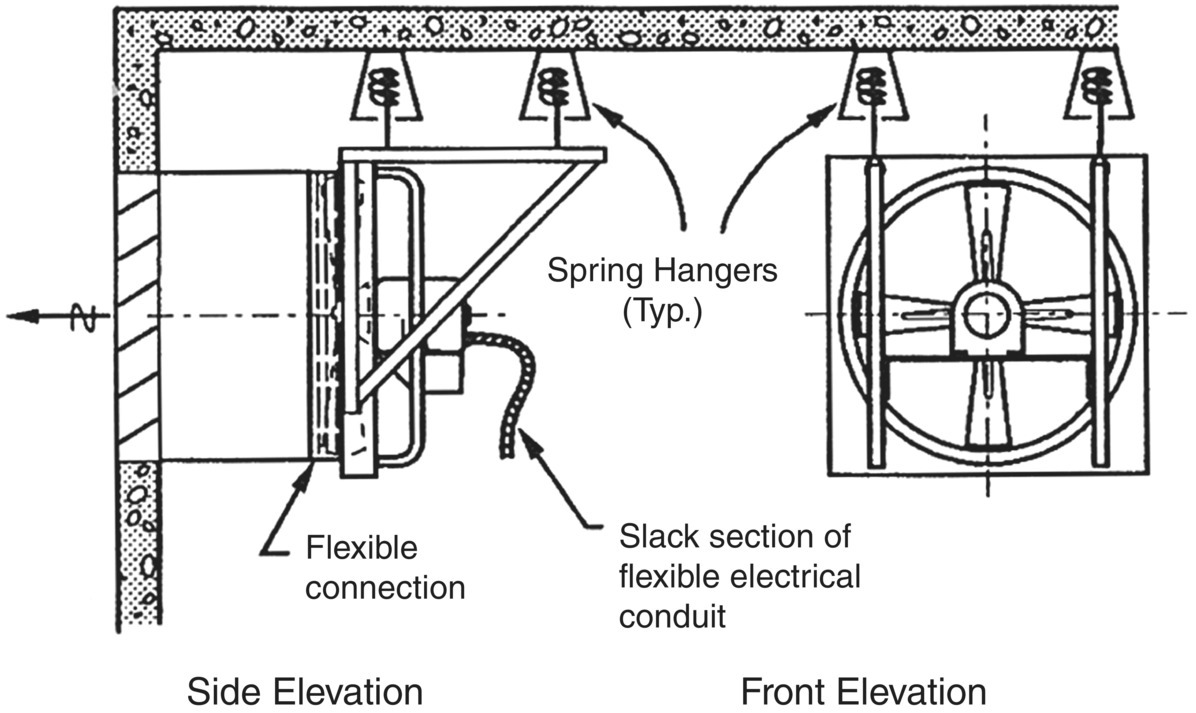
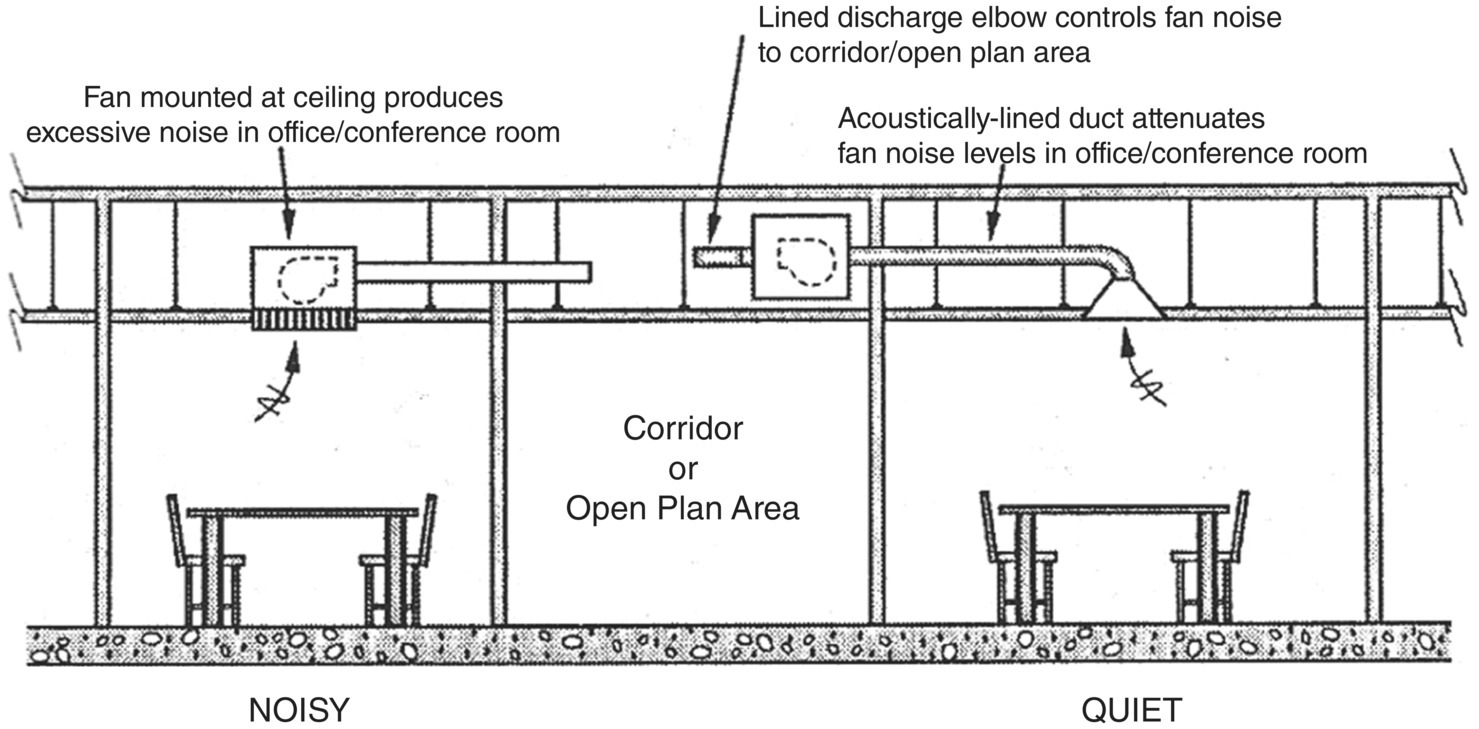
Exhaust fans are needed in bathrooms and sometimes in conference rooms and theaters in which many people are present at the same time. In bathrooms, exhaust fans are often poorly installed with short ducts, obstacles located before or after the fan and with sharp bends after it. If the fan is not vibration‐isolated, vibration and duct noise can be transmitted throughout the whole building. Figure 13.23 shows an exhaust fan with necessary vibration isolation correctly undertaken and a flexible duct connection provided. In addition, exhaust fans may be needed in mechanical rooms where substantial heat build‐up can occur. Figure 13.24 shows examples of noisy and quiet installations of exhaust fans in a conference room ceiling set‐up.
13.4.8 Terminal Units (CAV, VAV, and Fan‐Powered VAV Boxes)
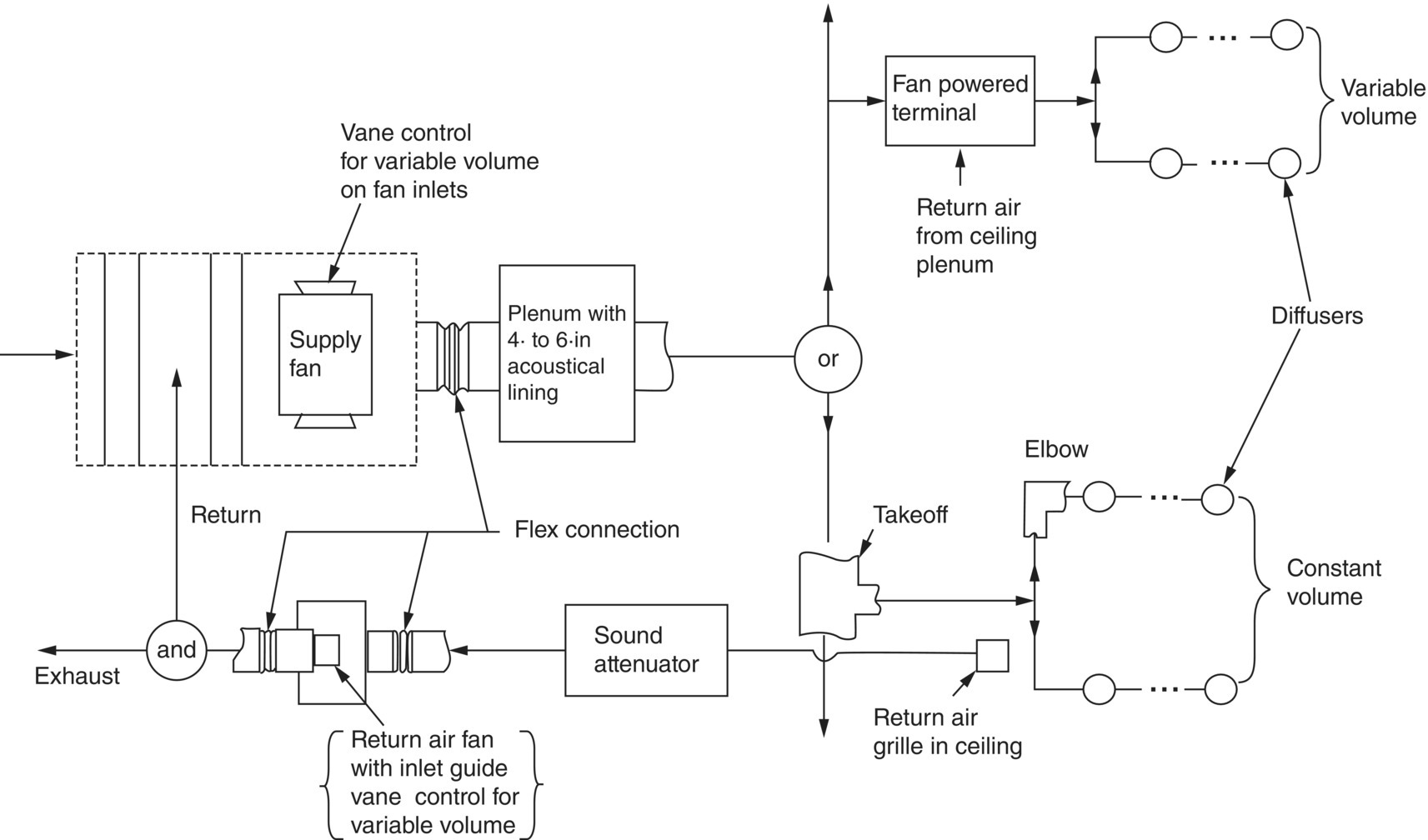
In recent years, different types of terminal units have come into widespread use. Constant air volume systems (CAV) are designed to supply a constant airflow volume to a room at a variable temperature. In contrast, VAV systems vary the airflow at a constant temperature. The advantages of VAV systems include more precise temperature control, better dehumidification, reduced system wear, lower fan energy consumption and less noise. Figure 13.25 shows a variable volume flow system (VAV) at the right top and a constant flow system (CAV) at the right bottom. Figure 13.26 shows guidelines for the installation of VAV systems.
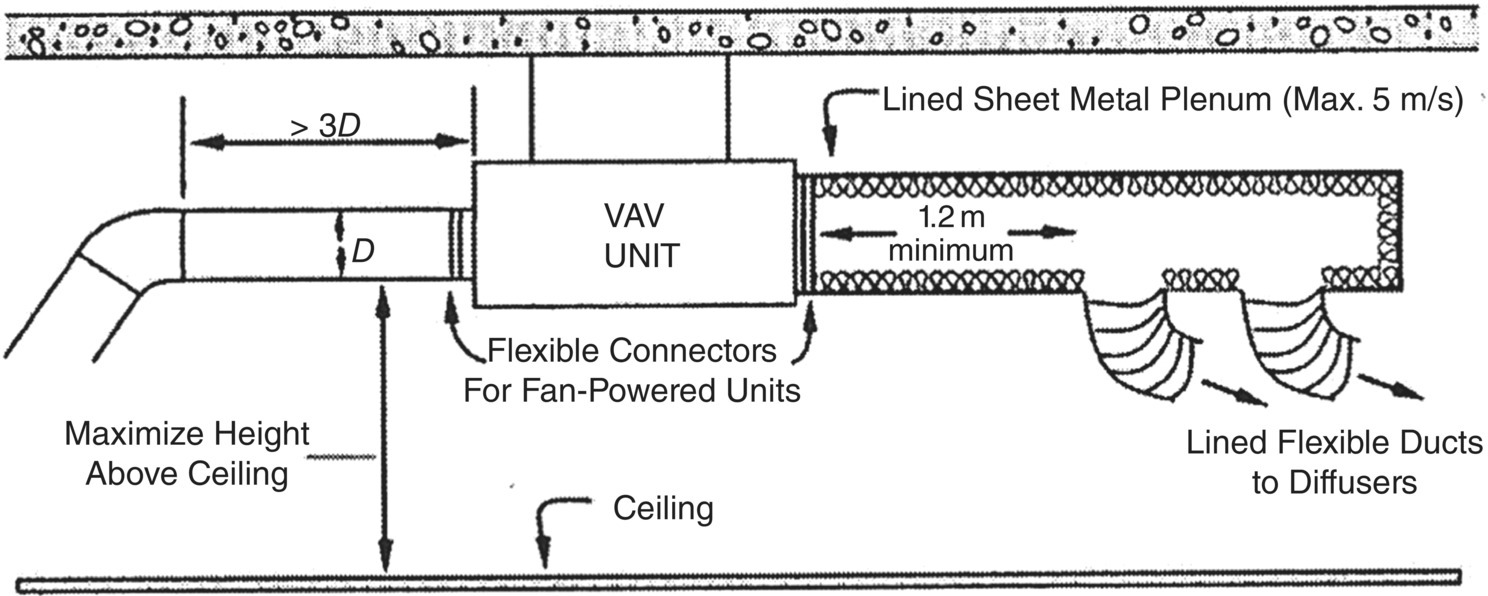
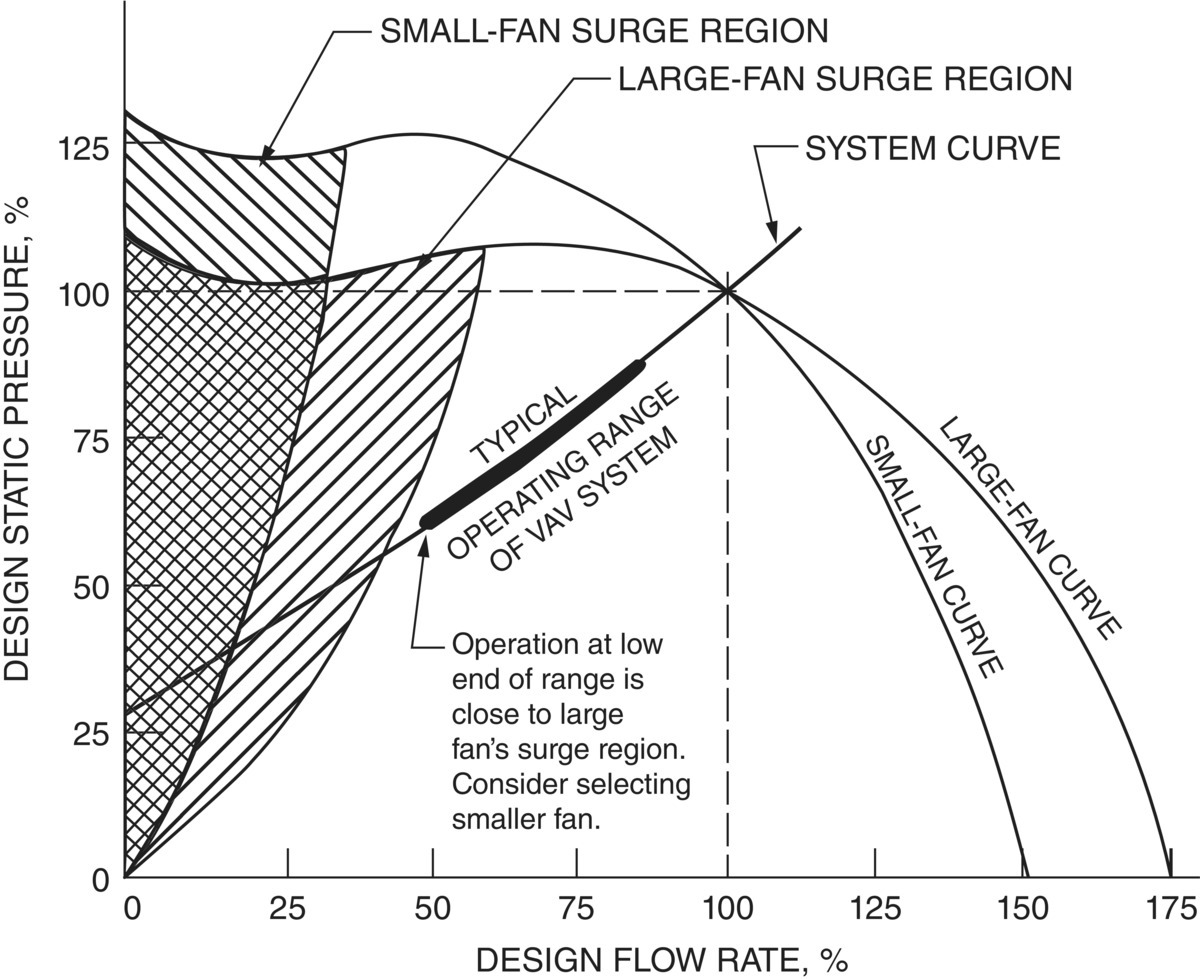
Control of the VAV system’s fan is very important. Without proper control, the system and its ductwork can be damaged through over pressurization. In the cooling mode, once the required temperature is reached, the VAV “box” valve partially or completely closes. As the temperature rises, the box valve reopens to reduce the temperature. The fan must be designed to provide a constant pressure regardless of the VAV box setting. As the box closes, the fan must slow down to reduce the airflow volume but as the box reopens it must speed up again to increase the volume flow and maintain the constant static pressure. Figure 13.26 shows guidelines for the installation of VAV units. Flexible connectors and a lined sheet metal plenum are advisable. The unit should be located as far away from the drop ceiling as possible. Figure 13.27 shows curves which can be used for guidance in selecting terminal VAV systems. If VAV fans are required to produce large pressures at low flow rates, surge, increased noise and even damage can occur.
Leave a Reply