16.3.1 Traffic Noise Sources
There are several reasons for the emergence of traffic noise as the main source of community noise annoyance in most developed countries. The power–weight ratio of trucks and cars has been constantly increased to permit higher payloads and more speed and acceleration; the resulting higher power engines are usually noisier than the earlier lower power ones. The number of vehicles has increased dramatically in most countries over the last 20 or 30 years. This, combined with the movement of people from country to city and the natural increase in urban population, has exposed more and more people to more and more traffic noise. Reference [11] discusses road traffic noise in more detail.
Although aircraft noise near airports is more intense than road traffic noise, the large number of vehicles in use and the fact that traffic noise is created in close proximity to residential housing ensures that it is a greater problem than aircraft and airport noise in most countries. The numbers of vehicles in use continues to increase. Studies in North America and Europe suggest that the external noise of many vehicles has not been significantly reduced in recent years. Figure 16.3 shows the cruise‐by noise levels of cars, light trucks, and heavy trucks over the period of 1974–1999.
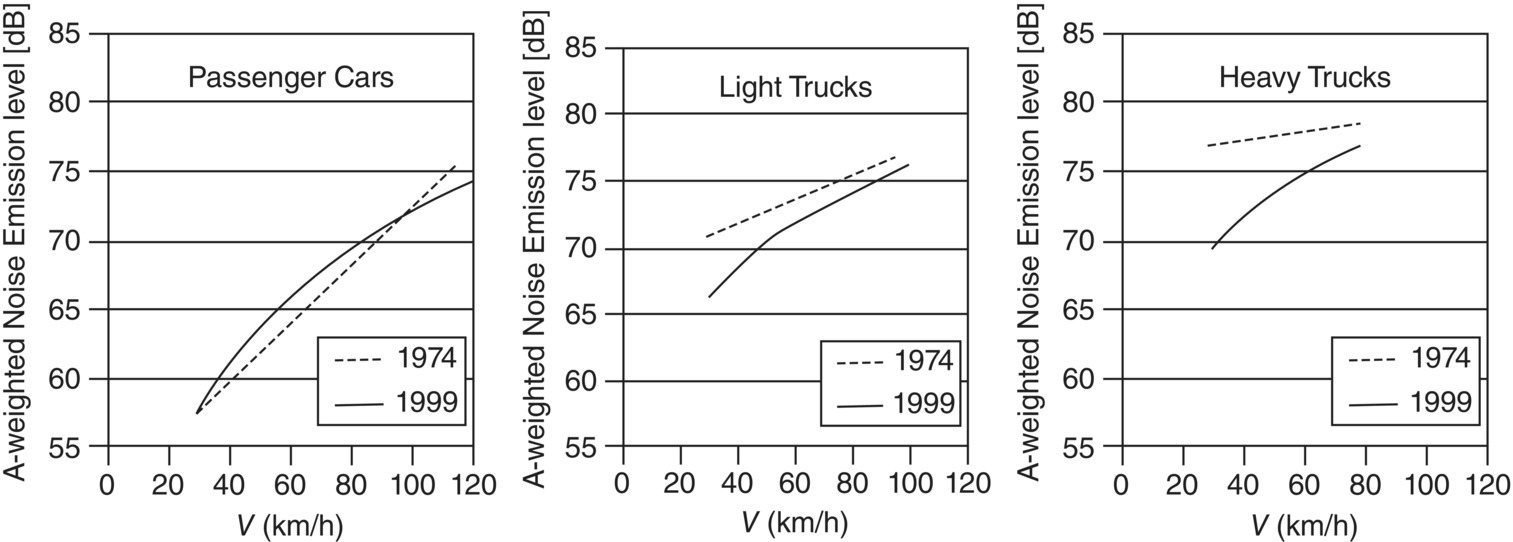
The main sources on vehicles include power plant (and power train) noise, tire–road interaction noise, and wind noise. The noise of cars is dominated by tire noise, except under accelerating conditions at low speed, during which power plant noise exceeds tire noise. With medium and heavy trucks, however, power plant noise is not exceeded normally until about 40 or 50 km/h is reached. At very high speeds wind noise on cars and trucks can become a major source, but below about 130 km/h it normally does not exceed tire noise (See Chapter 14 of this book).
The sound pressure levels generated by heavy vehicles exceed those of most cars by about 10–15 dB (See Figure 16.4). Trucks are vastly outnumbered by cars, but since they are normally in service for much longer periods than cars each day and they are so much noisier, they are a very important contributor to the overall road traffic noise problem. Noise levels near highways depend upon traffic flow rates and the mix of light and heavy vehicles with cars. Traffic noise tends to increase during mornings and evenings as people travel back and forth to work and other activities. Traffic noise is normally at a minimum during nighttime hours between about 1:00 a.m. and 4:00 a.m.
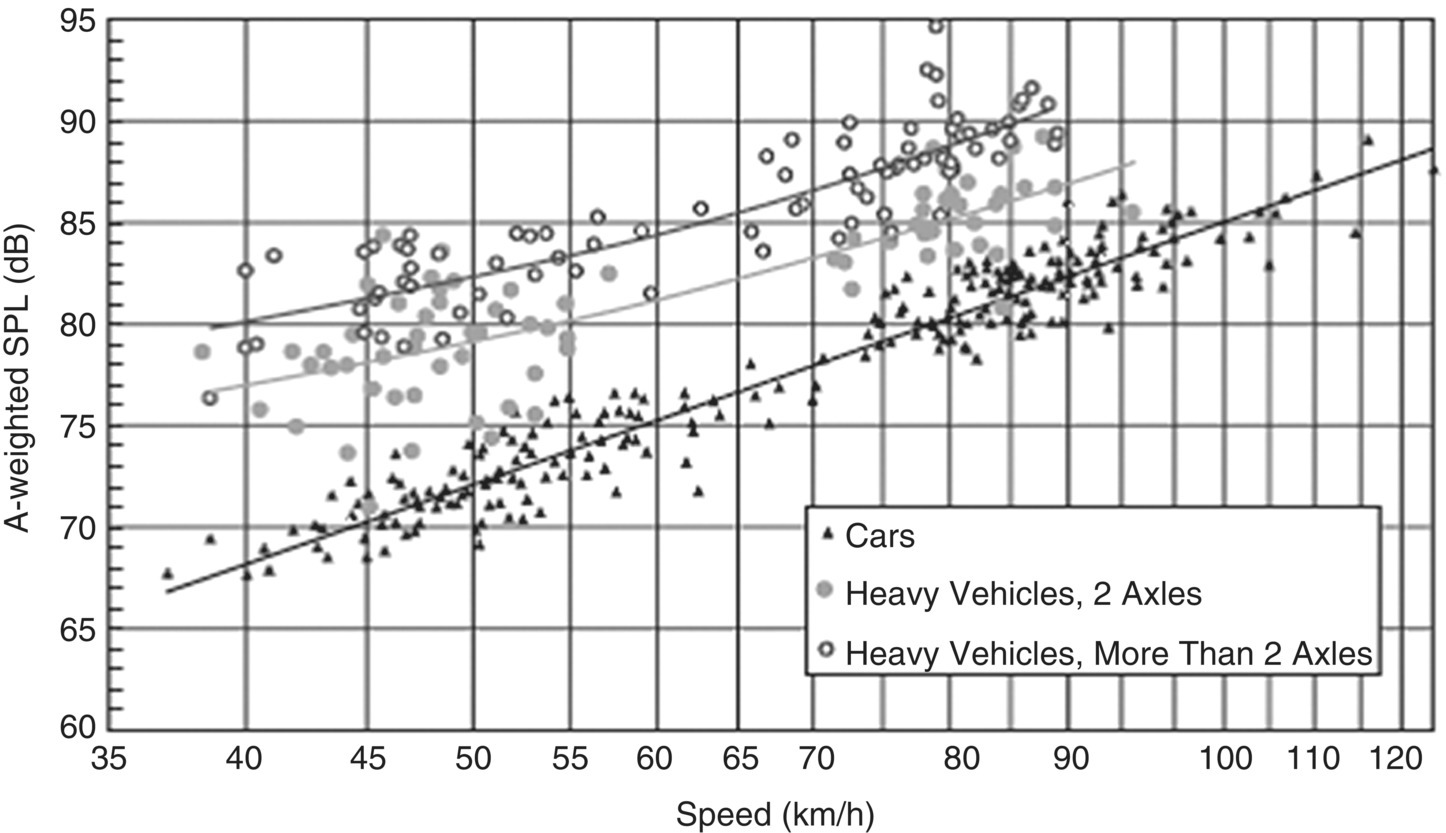
There are two main methods of evaluating vehicle noise. The first consists of measuring the pass‐by noise of a vehicle at 7.5 or 15 m from the road centerline. The maximum A‐weighted sound pressure level is recorded for single vehicles under controlled conditions normally on a special test track [11]. Figure 16.4 is an example of the noise of individual vehicles traveling at constant speed, normally known as the “cruise‐by” condition. For traffic noise prediction schemes, statistical pass‐by measurements of randomly occurring vehicles are made near selected highways. The levels measured in the statistical pass‐by approach are dependent on the mix of light and heavy vehicles with cars and are also dependent on the type of road surface.
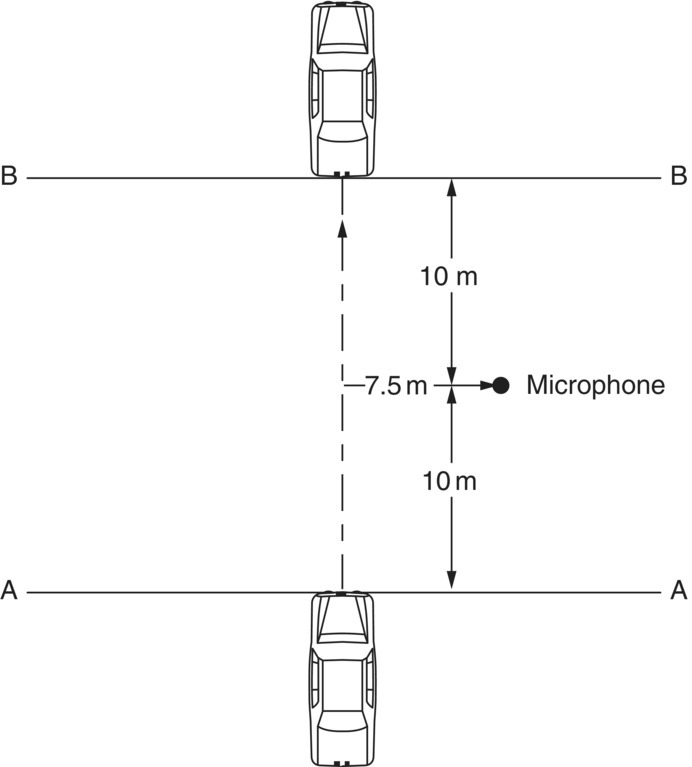
The second type of test, normally used for regulatory purposes, consists of a full‐throttle acceleration test performed on a vehicle, which approaches the measurement zone AA in Figure 16.5 at a controlled speed. The measurement is again made at 7.5 or 15 m from the road centerline. The maximum A‐weighted sound pressure level measured between lines A–A and B–B is recorded (See Figure 16.5).
Traffic noise prediction schemes normally include statistical information on the numbers of vehicles, the vehicle mix, the noise characteristics of each vehicle, the road surfaces, and the shielding effects of residential buildings on the propagation of the sound to the prediction points [11].
Community noise surveys and the creation of noise maps (see Section 16.6.3) are used in communities as a basis for checking results of some of these traffic noise prediction schemes. Also, traffic noise prediction schemes and community noise surveys of the one octave, one‐third octave, and/or A‐weighted sound pressure level generated by traffic are useful in deciding on noise abatement strategies. The most common traffic noise abatement strategy employed is the construction of roadside barriers, although porous sound‐absorbent road surfaces are coming into use in some countries, as discussed in Refs. [14, 15]. See Ref. [16] for a general discussion on barrier performance and Ref. [17] for a discussion on their use to control road and rail noise in the community.
Although well‐established prediction schemes are available to predict environmental noise from road traffic in communities, it has been demonstrated that specific prediction schemes can be established, which are more reliable for individual cities during workday hours. Of course, such specific prediction schemes cannot be transferred to other cities [18]. There are many other studies of road traffic noise and its prediction in the community [19–25].
16.3.2 Rail System Noise Sources
Railway noise is generally less of a problem than road traffic noise and aircraft/airport noise. This is because the numbers of rail vehicles are much smaller than road vehicles, and railroad noise in general only adversely affects smaller regions of most cities. Rail system noise is, however, a major problem for communities situated near railroad routes [26–37]. The major sources on railway and rapid transit systems are (i) power plant noise, (ii) wheel–rail interaction noise, and (iii) aerodynamic noise. The main railway and rapid transit system power plants in use include (i) electric motors, (ii) diesel engines, and (iii) combined diesel–electric systems. See Ref. [38] for a detailed discussion on rail system noise sources and methods for their control.
Diesel power plants can be very noisy if the noise is not properly suppressed. Wheel–rail noise depends upon wheel–rail roughness and train speed. Wheel–rail roughness can be increased by the use of cast‐iron brake systems. Disk brakes, which are coming into increasingly widespread use, have been found to reduce wheel–rail wear, roughness, and thus noise. Aerodynamic noise, although a problem inside rail vehicles at very high speeds, has not normally been found to be a major community noise problem, even at the very high speeds of 300 km/h [38].
Community noise prediction schemes for railway noise must include data on the power plant and wheel–rail noise of the rail vehicles, the number of railcars in operation and the rail vehicle speeds. In addition, the prediction schemes must account for the attenuation caused by air and ground surface absorption and by the distance to the observation points. The screening caused by obstacles, including buildings, railway cuttings, embankments, and purpose‐built noise barriers must also be included in the schemes. There is some evidence to suggest that railway noise causes less sleep disturbance than road traffic noise at the same noise level [32–37]. In the United Kingdom, an A‐weighted sound pressure level differential in favor of railway noise has been used in the development of railway noise legislation, using the equivalent A‐weighted sound pressure level and existing road traffic noise legislation as the base. Railway noise and its effects continue to obtain the attention of many researchers and authorities [32–37].
16.3.3 Ground‐Borne Vibration Transmission from Road and Rail Systems
Vibration generated by road and rail vehicles, some industrial enterprises, and building sites is transmitted through the ground and into buildings nearby. Vibration at frequencies up to 200–250 Hz can be transmitted at distances as far as about 200 m from roads or railway lines. Vibration at higher frequencies tends to be attenuated more rapidly with distance. The vibration caused in the buildings results in floor and wall vibrations, the movement of household or office objects, the rattling of doors and windows, and indirectly as re‐radiated noise. Vibration is annoying to people at frequencies up to 50 or 100 Hz because various body organs resonate at low frequencies. For example, the stomach and other internal organs resonate in the region of 8–10 Hz, and the eyes and head resonate at frequencies of about 20–40 Hz. The chest wall cavity resonates in the range of 50–100 Hz. Chapter 5 of this book discusses some of these phenomena in more detail. Damage to buildings from vibration is unusual, although there are some cases where construction of new highways or railway lines has not been allowed because of the fear that the vibration they would cause could damage ancient historical buildings. Vibration of the ground or building foundations is normally measured in the vertical direction with velocity or acceleration transducers such as accelerometers. The quantities usually recorded consist of the maximum velocity or acceleration levels. The levels are normally recorded in one‐third octave frequency bands, and each band is weighted according to human response to vibration. Reference [39] describes the procedures for measurement and prediction of these quantities. Chapter 5 of this book discusses human response to vibration and suggests suitable vibration limits.
The sources of ground vibration from road vehicles include passage of the vehicle wheels over road irregularities including bumps and holes. With rail vehicles, the source mechanisms are related to the travel of the wheels over the rail, which causes periodic and random forces. The periodic forces are created by the passage of the wheels over the spatially periodic supports of the rails and any discontinuities located at rail joints. The broadband random vibration is caused by unevenness or roughness in the rail and wheel contours. At high speed, vibration can also be caused when the vehicle speed exceeds either the Rayleigh surface wave speed in the ground or the bending‐wave speed in the rails [39].
Vibration is transmitted through the ground by various wave mechanisms. The wave motion is quite complicated and consists of three main types: dilatational or pressure waves, equivolume or shear waves, and free surface or Rayleigh waves [39]. The main methods of protecting buildings from ground vibration include reduction of vibration at the source, such as better road and rail maintenance, the use of softer suspension systems for road and rail vehicles, resiliently mounted and better maintained rail tracks, and grinding of the wheels and rails to reduce roughness. Other methods to protect buildings include base isolation of the buildings themselves, as is described in Ref. [40].
Models exist for predicting the propagation of ground vibration from road and rail traffic [41, 42]. The models are mainly different because of the different input force mechanisms. With road vehicles, for the purpose of generating the wheel–road interface forces, the road itself can be considered to be rigid while the vehicle and its suspension are assumed to generate the dynamic forces in response to the road roughness. With rail vehicles, however, the excitation is different and is related to the unsprung mass of the wheel and axle combined with the mass of part of the rail system. Existing models range from mostly empirical to completely theoretical. Two‐dimensional theoretical models are simpler but do not include the complete effects of fully three‐dimensional models. Finite element (FEM) and coupled finite element/boundary element (FEM–BEM) models have been used and are becoming available in commercial software packages. Finite difference methods are also in use and have some advantages over FEM–BEM models since the computational code is simpler. Using those models to calculate absolute vibration levels [43] requires significant modeling details. Greatest accuracy is achieved when making predictions of insertion loss, even with relatively simple models [39, 40].
16.3.4 Aircraft and Airport Noise Prediction and Control
Air travel is projected to continue increasing in the foreseeable future. These increases will require the expansion of existing major airports and the creation of new airports. Airport expansion provokes public resistance because of the annoyance, speech interference, and sleep interference caused by aircraft noise in nearby residential districts. Aircraft noise is a much more localized problem than surface transportation noise since it is significant primarily around major airports. Most of the noise energy is produced by the operations of scheduled airliners, the contribution of the large numbers of general aviation aircraft being relatively small [44].
The introduction of early pure jet passenger aircraft in the late 1950s brought much higher noise levels during both take‐off and landing than the piston engine airliners that they replaced. The majority of piston engine propeller‐driven airliners have now been phased out of service, although twin‐engine propjet aircraft continue to be used on some low‐density, short‐range routes. Jet aircraft operate at a much higher cruising speeds than do propeller types, and the aerodynamic configuration necessary for them to achieve these speeds results in higher take‐off and landing speeds. Required runway length is normally greater with jet than propeller aircraft, partly as a consequence of these higher speeds, and partly because jet engine thrust is reduced when an aircraft is stationary or nearly so. This naturally brings the airport noise closer to residential communities. The generally large size and inertia of long‐range passenger jet aircraft, and their greater throttle response times compared with those of piston engine propeller‐driven aircraft, require them to use long approach paths, resulting in more extensive low‐level flight over surrounding neighborhoods. Moreover, jet aircraft normally use considerable amounts of power on approach to counteract the drag of their high‐lift devices. The noise produced by jet powered aircraft is primarily from their engines. The aerodynamic noise produced by the passage of the aircraft through the air (termed airframe noise) is still normally insignificant in comparison.
In the early 1960s, the first fanjet engines (also known as turbofans or bypass jets) entered service. Although developed mainly to improve fuel economy, the fanjet engines were quieter than the first pure jet (or turbojet) engines of the same thrust. A fanjet engine can be regarded as essentially a ducted propjet engine, in which the propeller (called the fan) is ducted to improve efficiency. All long‐range airliners and almost all medium‐range airliners are now powered by fanjet engines. Such fanjet engines mostly produce broadband noise from their high‐speed jet exhausts during take‐off, although with lower power conditions during landing approach, the tonal whine produced by the compressor stages usually becomes prominent. At a distance of 3 km, the A‐weighted sound pressure level during a jet aircraft take‐off is of the order of 60–65 dB and is sufficient to interfere with speech [44]. Current wide‐body fanjets (e.g. Boeing 717, 737, 767, 777, and 787 and Airbus A‐300/310, A‐318, A‐320, A‐330/340, A‐350, and A‐380) have considerable noise control technology built into their engines and are much quieter than the early pure jet and fanjet aircraft.
Some airliners have been particularly designed to have quiet operational characteristics. The BAe 146, first introduced in the 1980s, was an early, very quiet, four‐engine jet airliner, which has special high‐lift devices giving it short take‐off and landing capabilities that make it able to operate from very short runways at small downtown airports. It is able to operate from downtown airports such as those at Monchengladbach, Aspen, and at the London City Airport (a converted dock). In May 2006 landing and take‐off tests at the London City Airport of the newer Airbus A‐318 has shown it can also use this downtown airport. Following evaluations by Airbus, London City Airport, and the UK airworthiness authorities, in March 2006, these authorities granted the A‐318 a steep landing approach certification that enabled the airport compatibility tests to take place. With its very low noise characteristics, the A‐318 makes it possible for it to use downtown airports such as the one in downtown London. The modern narrow‐body Bombardier’s C Series aircraft has very quiet operational characteristics that increase airport utilization. This airplane is a single‐aisle short‐haul jet, equipped with turbofan engines, and made of advanced composite materials. C Series aircraft’s community noise level is below the stage 4 limit defined by the Federal Aviation Authority (see Chapter 15), making it ideal for downtown airport operations.
As discussed in more detail in Ref. [44], propeller‐driven airliners are used on some medium‐range and most short‐range routes, and such aircraft are almost exclusively powered by gas turbine engines. Such turboprop aircraft, as they are commonly known, mainly produce tonal noise instead of the broadband jet noise. The noise of propellers is quite directional and is mostly radiated in the propeller plane. Helicopters are less commonly used than jet and turboprop aircraft, but they can be quite noisy and produce A‐weighted noise levels of about 60 dB at 1 km. Like propeller aircraft, the helicopter blade noise is very directional and is created both by the main rotor and the high‐speed tail rotor.
Aircraft noise is evaluated for two main reasons: (i) for certification purposes and (ii) to monitor the noise around airports. For certification, the noise of individual aircraft is measured using the effective perceived noise level (EPNL). For monitoring noise at airports it is normal to use a measure that accounts for many aircraft movements and the time of day in which the noise is produced. In the EU a composite measure known as day–evening–night level (DENL or Lden) is used [44]. The DENL includes components for daytime, evening, and nighttime hours. During the evening, a 5‐dB penalty is applied and at night a 10‐dB penalty.
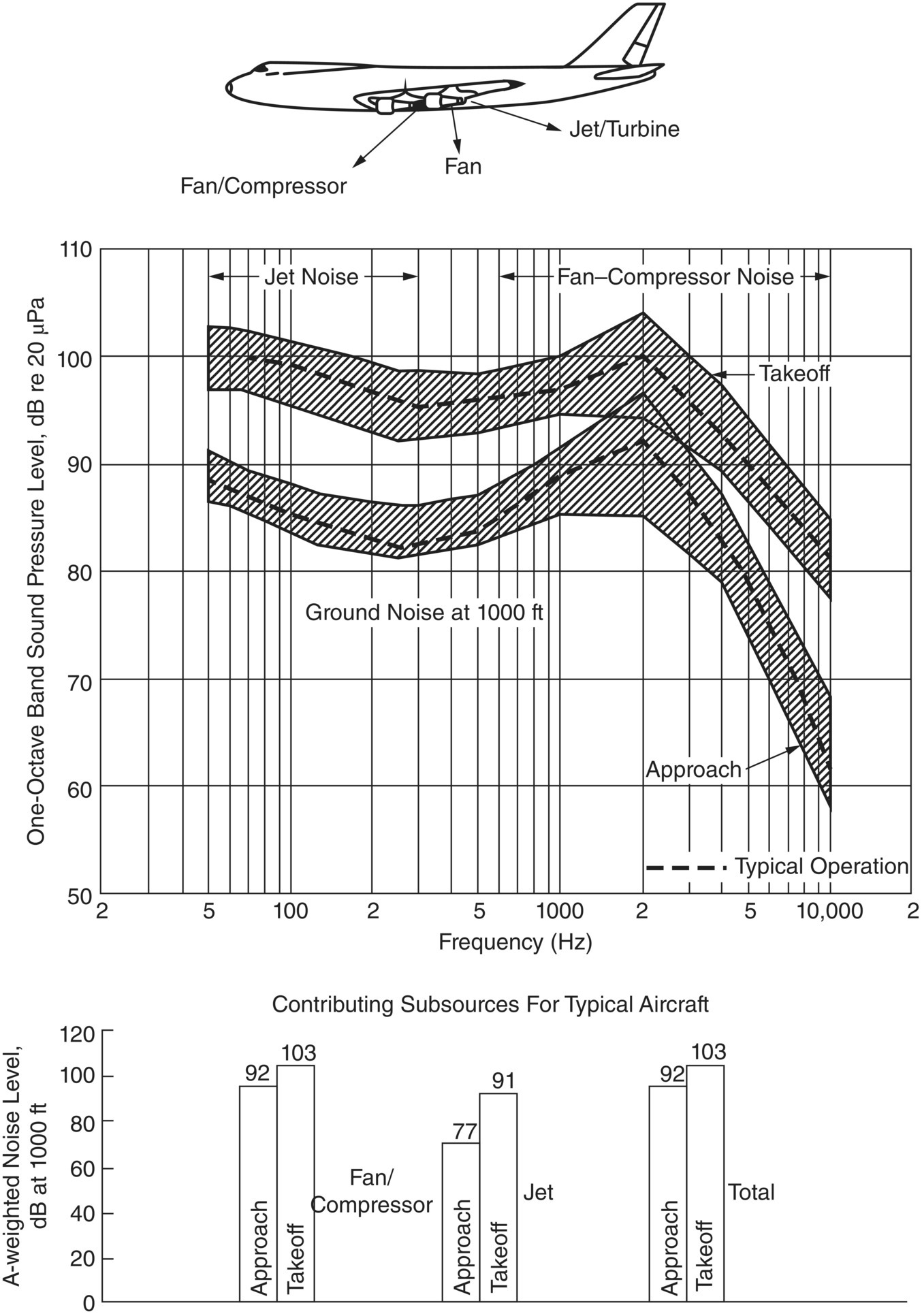
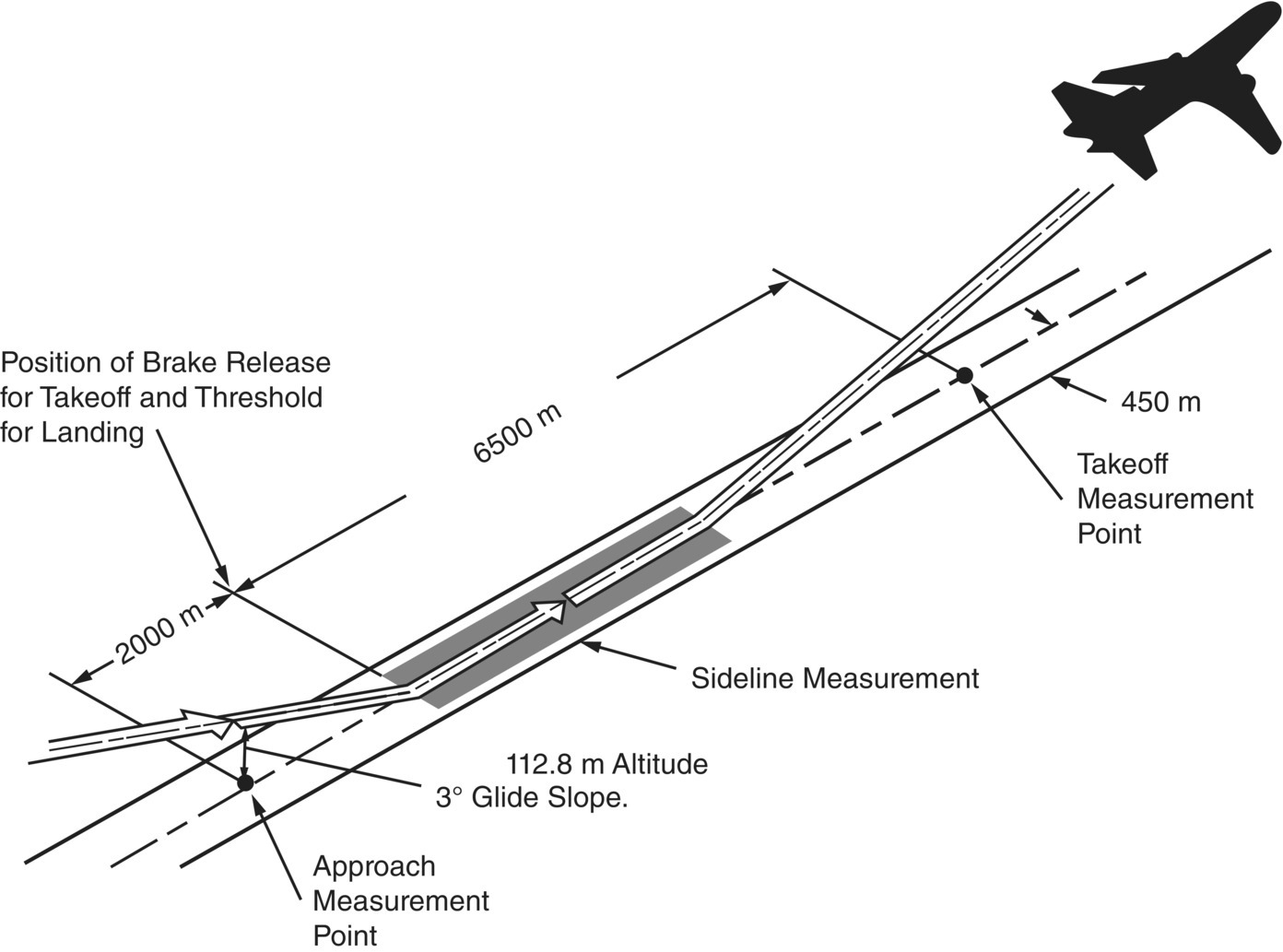
Figure 16.6 shows the noise levels and spectra of an early fanjet aircraft both for take‐off and approach. Figure 16.7 shows the measurement locations used for certification of aircraft according to FAR Part 36 noise standards [45]. Research on evaluating aircraft and airport noise and community annoyance continues [47–58].
16.3.5 Off‐road Vehicle and Construction Equipment Exterior Noise Prediction and Control
Off‐road vehicles and heavy construction equipment are used for roadway and railway construction, earth moving and excavation, laying of pipes and cables, and construction of new buildings. They are responsible for high levels of environmental noise and cause annoyance, speech interference, and sleep disturbance in residential areas. In addition, there is the possibility they can cause hearing damage to people operating this equipment or people working in close proximity. A‐weighted sound pressure levels can be as high as 75– 90 dB at distances of 15 m. Sound pressure levels at distances of several hundred metres can be of the order of 60–70 dB, which is above acceptable community noise limits. The main noise sources on off‐road vehicles and construction equipment consist of the engine, exhaust, intake, cooling fans, and the tracked wheels. Mobile compressors are also significant noise contributors and are often used in conjunction with impulsive noise generators, such as pneumatic drills, cutters, and vibrating roller equipment.
In Europe, off‐road vehicles and heavy construction equipment are required to have product labels giving their sound power outputs. Noise emission limitations are set by EC Directives. In the United States, such equipment noise output is governed by community noise ordinances or state regulations. Mobile compressors are one exception, since their noise output is regulated by the U.S. Environmental Protection Agency (EPA). Other countries do not seem to have uniform approaches to regulate the noise of off‐road vehicle and construction equipment. In Europe, the sound power output of such equipment must be provided by display of a label [59]. The sound power is normally determined through measurements of the sound pressure level at discrete microphone locations on a hemispherical surface as described in ISO standards. Alternatively, the sound power can be determined with the use of sound intensity equipment (see Chapter 8).
Off‐road vehicles and heavy construction equipment can be divided into three main categories [59]: (i) wheeled vehicles, including excavators, loaders, and graders, with which the engine is the dominant noise source, (ii) tracked vehicles, in which the track noise is comparable to the engine noise, and (iii) vibration and impact‐generating tools, including pneumatic drills and vibrating rollers, in which the noise is generated by the tool itself and no engine is involved. The exterior noise can be reduced by a combination of passive means, including enclosures, vibration isolators, use of vibration damping materials, sound‐absorbing materials, baffles, and barriers. Enclosures can be very effective, particularly if absorbing materials are used inside and they are properly sealed. Unfortunately, this is not always possible because of the heat build‐up created by most items of machinery, in particular the engine. The use of inlet and exhaust mufflers is essential on such equipment [59]. Sound‐absorbing material is sometimes placed inside the mufflers, although the material can lose its effectiveness because of contamination with moisture and carbon particles. Normally, for such reasons, reactive mufflers are preferred. Reference [59] gives an example of noise reduction on a mobile compressor. Other examples of mobile compressor noise control are given in Ref. [60]. Compressor noise is discussed in detail in Ref. [61]. Efforts continue on reducing interior and exterior noise and vibration of off‐road vehicles [62–64].
16.3.6 Industrial and Commercial Noise in the Community
The annoyance produced by industrial and commercial noise is very similar to that produced by road traffic noise when the long‐term energy‐ sound pressure levels are the same [65–68]. However, in most countries industrial noise and road traffic noise are treated differently [69]. As explained in Ref. [2], it is common now for a city to have different district plan noise rules. Normally, industrial enterprises are located in special zones in the city. It is desirable for the industrial zones to be separated from zones for residential housing. The separation in distance must not be too great; otherwise people will be inconvenienced by having to travel a long way to work. But the industrial and residential zones must not be situated too close to each other either. The noise created in residential areas from the sources in the industrial zones is normally predicted on the basis of the sound power outputs from the different noise source components in the industrial zone [69].
Industrial and commercial noise sources can be divided into two main categories [69]. The first category includes steady noise sources that have little variation in level and character during the day and night. The second category includes intermittent noise resulting from different industrial production cycles and caused by vehicles coming and going to the industrial and commercial areas. Steady noise containing pure‐tone and impulsive components is generally found to be less acceptable in residential areas compared with steady noise of the same long‐term equivalent sound pressure level. This is particularly true when steady noise contains pure‐tone components below 90 Hz [69]. Impulsive noise is also known to be more annoying than steady noise of the same equivalent sound pressure level.
Reference [69] describes a procedure for predicting the sound pressure levels in residential areas, which is based on knowledge of the sound power output per unit area of the industrial operation. Included in the procedure are adjustments for wind effects on the noise propagation. Such sound pressure level predictions are valuable in deciding whether new industrial operations should be permitted near residential communities and/or residential developments should be allowed near existing industry. It is important to monitor the noise levels produced by the industrial and commercial operations and to make comparisons with those that are predicted. Also, in order to avoid community complaints, it is important to inform the public in the residential areas of such noise monitoring and also to provide details about all activities being undertaken to reduce noise reaching the residential areas from the industrial and commercial zones [70–80].
16.3.7 Construction and Building Site Noise
Noise created on building sites in a city can interfere with speech, sleep, and other human activities [66–68, 70, 71]. The noise created comes from a variety of machinery and mechanical equipment and includes demolition of buildings, construction of new buildings, laying of pipelines, sewers, and cables, and construction of new roadways and railways. Some noise is impulsive in character, such as caused by pile driving. Other noise is more continuous in nature from sources such as compressors and heavy earth‐moving equipment. Noise levels on building sites can be predicted from knowledge of the sound power output of the different items of machinery. Reference [81] explains how predictions of the noise at different locations near a building site can be made. Normally the contributions from the different sources are added on an energy basis. In some countries the predicted or measured sound pressure level from all the sources is compared with the ambient noise level when none of the sources is acting. There are few standards or test codes for the prediction and control of noise from building sites. In 2006, the only such test codes were those in Germany and the United Kingdom. These test codes provide tools for the calculation of the daytime and nighttime rating levels. These are then compared to standard ambient‐noise values for decisions on the acceptability of the building site noise. Transient noise peaks on the building site can also be considered in these assessments.
Local authorities sometimes are tolerant of intense noise on a building site in order to speed up construction for economic or political purposes or to limit disruptions to road and rail traffic and the operations of public utilities. If the A‐weighted sound pressure levels caused by the sources are no more than 5–10 dB greater than the ambient levels, they may be allowed by some authorities. But levels that are greater than 10 dB above the ambient are normally determined to be excessive and require regulation and/or control.
Using city or national ordinances, some local authorities impose penalties for impulsive noise and/or noise containing prominent pure‐tone components. Other local authorities restrict noise in certain city zones and others only during nighttime. In some cases noise control programs are initiated when repeated and/or frequent complaints are received. If noise control measures are found to be necessary, these should start with the noisiest sources and incorporate the normal source–path–receiver concepts as explained in Chapter 9 of this book and Refs. [60, 81]. As discussed in Refs. [59, 81], the EU Directive 2000/14/EC requires construction equipment machinery used on building sites to be subject to noise labeling. This EU directive requires the manufacturer to state the guaranteed sound power level in the operating instructions and on the machine itself with a label. The determination of the sound power level is usually carried out in accordance with ISO 3744. Some of these construction machines are subject to sound power level limits.
Leave a Reply