In the LiBr-water system, water is the refrigerant and LiBr the absorber. The lithium bromide solution has a strong affinity for water vapour because of its very low vapour pressure. The lithium bromide-water vapour absorption system is shown in Fig. 19.25. The evaporator and absorber are placed in one shell which operates at the same low pressure of the system. The generator and condenser are placed in another shell which operates at the same high pressure of the system.
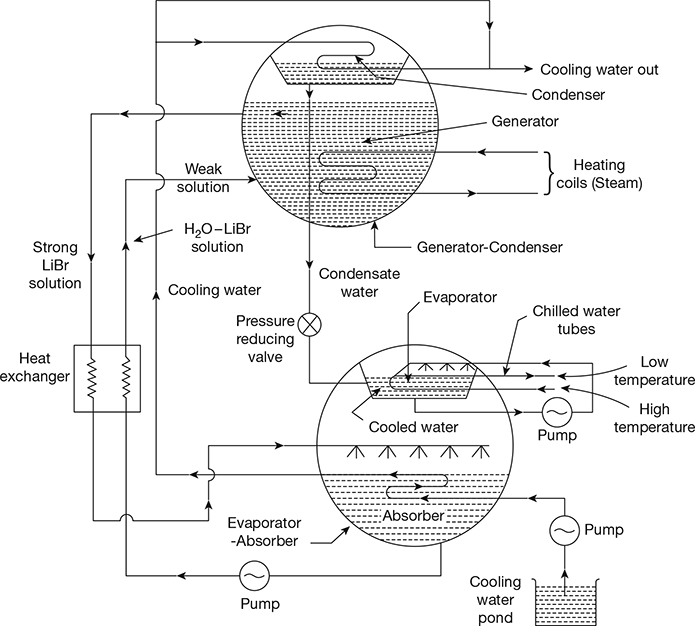
Figure 19.25 Lithium bromide-water vapour absorption system
1 Working Principle
The water for process requirements is chilled as it is pumped through the chilled-water tubes in the evaporator by giving up heat to the refrigerant water sprayed over the tubes. Since the pressure inside the evaporator is maintained very low, therefore, the refrigerant water evaporates. The water vapours thus formed are absorbed by the strong lithium bromide solution which is sprayed in the absorber. In absorbing the water vapour, the lithium bromide solution helps in maintaining very low pressure needed in the evaporator, and the solution becomes weak. This weak solution is pumped by a pump to the generator where it is heated up by using steam in the heating coils. A portion of water is evaporated by the heat and the solution becomes more strong. This strong solution is passed through the heat exchanger and then sprayed in the absorber. The weak solution of lithium bromide from the absorber to the generator is also passed through the heat exchanger. This weak solution gets heat from the strong solution in the heat exchanger, thus reducing the quantity of steam required to heat the weak solution in the generator.
The refrigerant water vapours formed in the generated due to healing of solution are passed to the condenser where they are cooled and condensed by the cooling water flowing through the condenser water tubes. The cooling water for condensing is pumped from the cooling water pond. This cooling water first enters the absorber where it takes away the heat of condensation and dilution. The condensate from the condenser is supplied to the evaporator to compensate the water vapor formed in the evaporator. The pressure reducing valve reduces the pressure of condensate from the condenser pressure to the evaporator pressure. The cooled water from the evaporator is pumped and sprayed in the evaporator in order to the cool the water flowing through the chilled tubes. This completes the cycle.
2 Lithium Bromide-Water System Equipment
A line diagram of two-shell lithium bromide-water vapour absorption refrigeration system is shown in Fig. 19.26. The various components are:
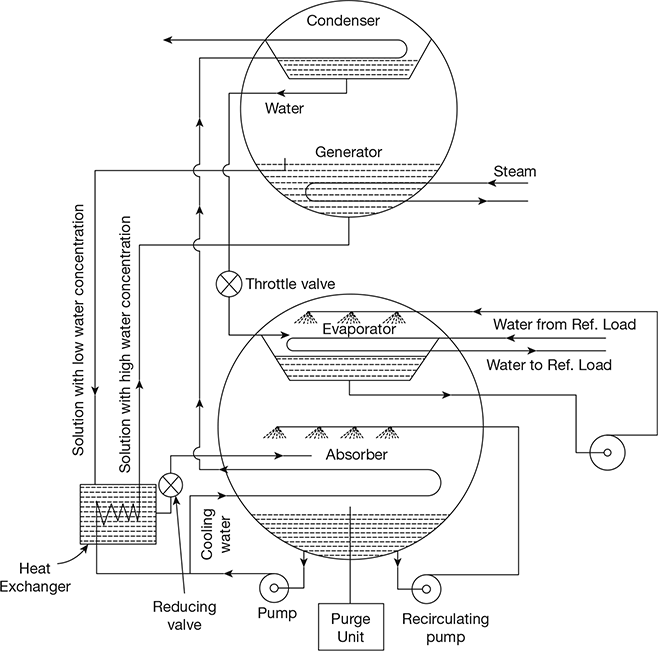
Figure 19.26 Lithium bromide-water vapour absorption system
- Generator: It consists of tube bundles submerged in the solution heated by steam or hot liquids.
- Condenser: It. consists of tube bundles located in the vapour space over the generator shielded from carry over of salt by eliminators. Cooling water to condenser first passes through the absorber.
- Absorber: It consists of bundles over which the strong absorbent is sprayed. Refrigerant vapours are condensed into the absorbent releasing heat to the cooling water passing through it.
- Evaporator: Evaporators are tube bundles over which the refrigerant water is sprayed and evaporated. The liquid to be cooled passes inside the tubes.
- Solution heat exchangers: Solution heat exchangers are all of steel shell and tube construction.
- Purgers: All units include a purger which is used to remove non-condensable gases. Non-condensable gases present in small quantities can raise the total pressure in the absorber sufficiently to significantly change the evaporator pressure. Very small pressure increases cause appreciable change in the refrigerant evaporating temperatures.
- Expansion Device: Mechanical expansion valves are not used in absorption units. The flow or refrigerant liquid to evaporator is controlled by an orifice or other fixed restriction between the condenser and the evaporators.
- Pump: Other details about pumps etc., are shown in Fig. 19.26.
Capacity control: All lithium bromide-water cycle absorption machines meet load variations and maintained chilled water temperature control by varying the rate of re-concentration of the absorbent solution.
At any given constant load, the chilled water temperature is maintained by a temperature difference between refrigerant and chilled water. The refrigerant temperature is maintained in turn by absorber being supplied with a flow rate and concentration of solution, and by absorber cooling water temperature.
Load changes are reflected by corresponding changes in chilled water temperature. Aload reduction, for example, results in less temperature difference being required in the evaporator and a reduced requirement for solution flow or concentration. The resultant chilled water temperature drop is met basically by adjusting the rate of re-concentration to match the reduced requirements of the absorber.
All units sense the chilled water temperature changes resulting from a load change with a thermostat in the leaving chilled water.
Leave a Reply