Figure 10.1 shows the classification of IC engines on the basis of cycle of operation into cylinder, type of fuel, method of supply of fuel, type of ignition, among others.
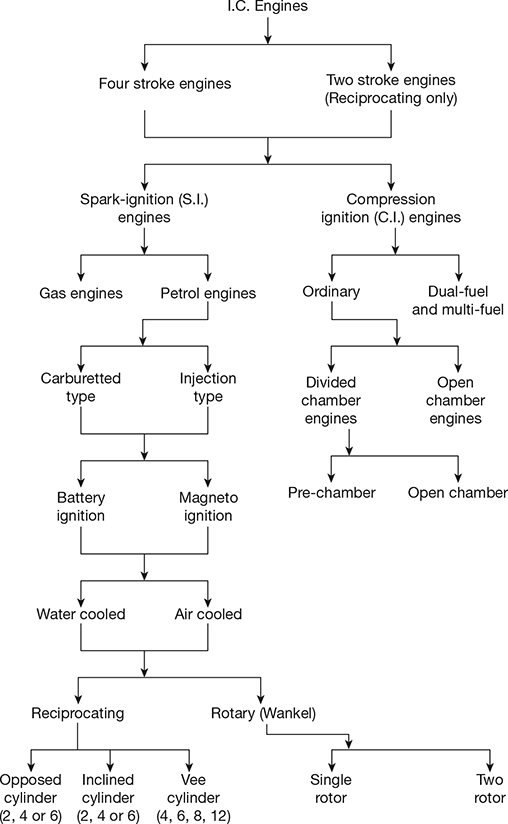
Figure 10.1 IC engine classification
- Basic engine design: Reciprocating engines, rotary (Wankel) engines
- Working cycle: Otto cycle and diesel cycle
- Number of strokes: Four-stroke and two-stroke engines
- Fuel: Gasoline (or petrol), compressed natural gas (CNG), liquefied petroleum gas (LPG), diesel oil (light diesel oil—LDO and high speed diesel oil—HSD), fuel oil, alcohols (methanol, ethanol)
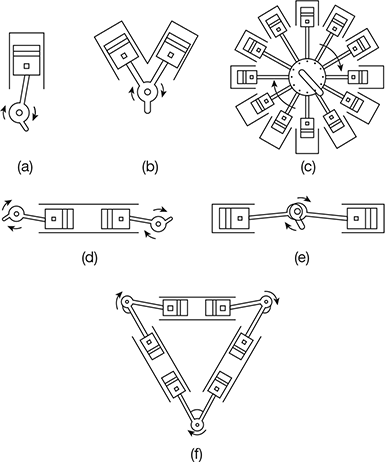 Figure 10.2 Classification of IC engines as per cylinder arrangement: (a) Inline engine, (b) Vee engine, (c) Radial engine, (d) Opposed piston engine, (e) Opposed cylinder engine, (f) Delta type engine
 - Fuel supply and mixture preparation: Carburetted type and injection type
- Method of ignition: CI (compression-ignition), SI (spark-ignition) engines: battery ignition or magneto ignition
- Method of cooling: Water cooled or air-cooled
- Cylinder arrangement (Fig. 10.2): Inline, V, or Vee, radial, opposed piston and opposed cylinder, delta
- Valve or port design and location: Overhead valves (I-head), side valve (L-head); in two-stroke engines: cross scavenging, loop scavenging, uniform scavenging
- Application: Automotive engines for land transport, marine engines for propulsion of ships, aircraft engines for aircraft propulsion, industrial engines, prime movers for electrical generators
Leave a Reply