If you’ve set up your website for SEO success, your URL structure should be sound. But you still need a descriptive slug for each page. Google says to use words that are relevant to your content. Often the easiest way to do that is to use your target keyword.
Optimize your images
Images from your pages can rank in Google image search and send more traffic your way. You need to do three things to optimize them.
Use descriptive filenames
Google says that filenames give it clues about the image’s subject matter. So dog.jpg is better than IMG_859045.jpg. Here are a few naming tips:
- Be descriptive.
black-puppy.jpgis better thanpuppy.jpg - Be succinct.
black-puppy.jpgis better thanmy-super-cute-black-puppy-named-jeff.jpg - Don’t stuff keywords.
black-puppy.jpgis better thanpuppy-dog-pup-pooch.jpg - Use dashes between words.
black-puppy.jpgis better thanblack_puppy.jpg
Use descriptive alt text
Google also uses alt text (alternative text) to understand the subject matter of an image.[9] This is an HTML attribute used on <img> tags to describe the image. It’s not visible on the page itself and looks something like this:
<img src="https://yourdomain.com/puppy.jpg" alt="puppy">
The main purpose of alt text is to improve accessibility for visitors who use screen readers. These convert page content, including images, to audio.
Here’s our best advice for creating alt text:
- Be descriptive. Describe what’s actually in the image.
- Be concise. Keep them as short as possible.
- Don’t stuff keywords. Google says it results in a negative user experience.
- Don’t say it’s an image. There’s no need to include “Image of…” or “Picture of…” in descriptions.
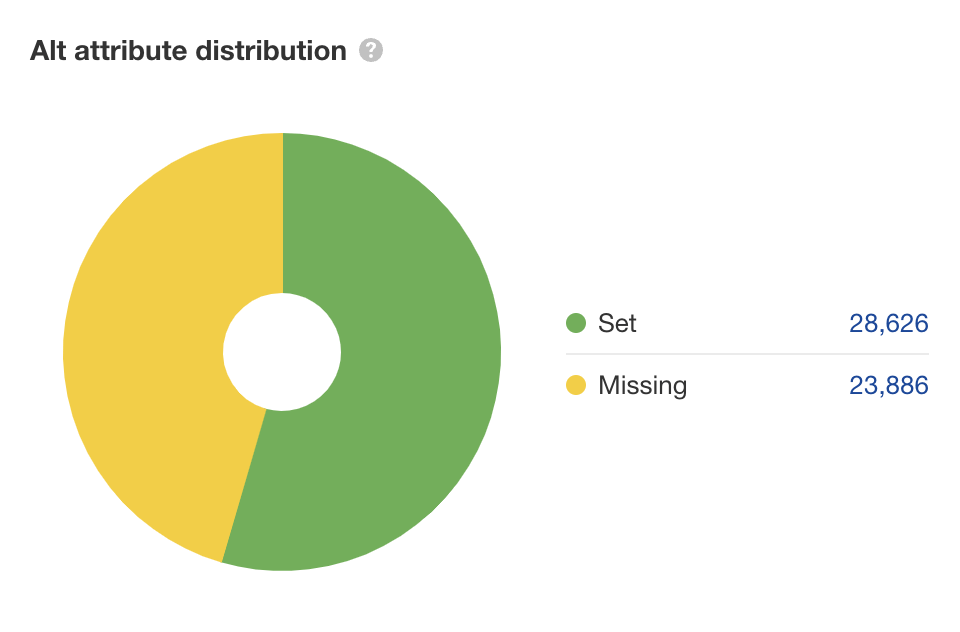
You can use the Images report in Ahrefs’ Site Audit to check your site for images with missing alt text.
Compress them
Compressing images makes file sizes smaller, leading to faster load times. Plenty of tools exist for doing this. ShortPixel is a good option.
Use external links
Some people think linking to external resources is bad for SEO. There’s no evidence to suggest that. Goo00gle says linking to other websites is a great way to provide value to your users. So don’t be afraid to do it where it makes sense.
Show off your expertise
Google values content from experts,but having expertise isn’t enough. You need to make your expertise immediately obvious to readers. Below are a few ways Google advises to do that.
- Show that you know the topic well
- Provide clear sources of information
- Provide background information of the author, such as a link to an “author” page
- Ensure the content is free from easily verified factual errors
Leave a Reply