Fluidised bed boilers produce steam from fossil and waste fuels by using a technique called fluidised bed combustion (FBC).
1 Bubbling Fluidised Bed Boiler (BFBB)
A schematic diagram of BFBB is shown in Fig. 3.18. In this boiler, crushed coal (6−20 mm) is injected into the fluidised bed of limestone just above an air-distribution grid at the bottom of the bed.
The air flows upwards through the grid from the air plenum into the bed, where combustion of coal occurs. The products of combustion leaving the bed contain a large proportion of unburnt carbon particles which are collected in cyclone separator and fed back to the bed. The boiler water tubes are located in the furnace.
Since most of the sulphur in coal is retained in the bed by the bed material used (limestone), the gases can be cooled to a lower temperature before leaving the stack with less formation of acid (H2SO4). As a result of low combustion temperatures (800−900°C), inferior grades of coal can be used without slagging problem and there is less formation of NOx. Cheaper alloy materials can also be used, resulting in economy of construction. Further economies are achieved since no pulveriser is required. The volumetric heat release rates are 10 to 15 times higher and the surface heat transfer rates are 2 to 3 times higher than a conventional boiler. This makes the boiler more compact.
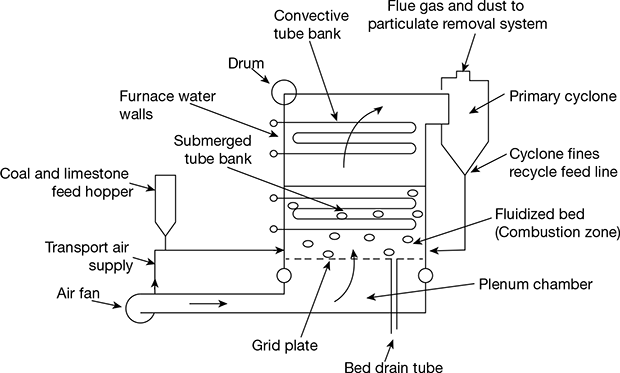
Figure 3.18 Bubbling fluidised bed boiler
2 Advantages of BFBB
- The unit size and hence capital cost are reduced due to better heat transfer.
- It can respond rapidly to changes in load demand.
- Low combustion temperatures (800−950°C) restricts the formation of NOx pollutants.
- Fouling and corrosion of tubes is reduced considerably due to low combustion temperatures.
- Cost of coal to fine grind is reduced as it is not essential to grind the coal very fine.
- Low grade fuels and high-sulphur coal be used.
- Fossil and waste fuels can be used.
- Combustion temperature can be controlled accurately.
Leave a Reply