14.3.1 Automobiles and Trucks
The interior noise in the occupied spaces of automobiles, busses, and trucks is mainly caused by the engine, exhaust, transmission, power train, tire/road interaction, and wind/structure interaction. With automobiles, trucks, and busses, structure‐borne noise usually tends to be dominant below about 400–500 Hz, while airborne noise from tire/road interaction and airflow/structure interaction (wind noise) tends to dominate in the mid‐ and high‐frequency ranges. Reference [38] describes the relative contributions from different noise and vibration sources and paths to the vehicle interior. Interior noise levels depend also upon vehicle operating conditions and in particular on speed. During acceleration, engine noise tends to dominate; while during cruise conditions, above about 80 km/h, tire noise becomes the major contributor, and at higher speeds above about 120 km/h, wind noise becomes dominant. Improper sealing around vehicle doors, windows, dashboards, windshields, and the like causes excessive external turbulent pressure fluctuations from airflow over the vehicle (wind noise) to be transmitted to the vehicle interior. This is known as aspiration [38]. Some luxury vehicles have multiple door seals to accomplish effective sealing to reduce the transmission of these external turbulent pressure fluctuations to the occupied interior.
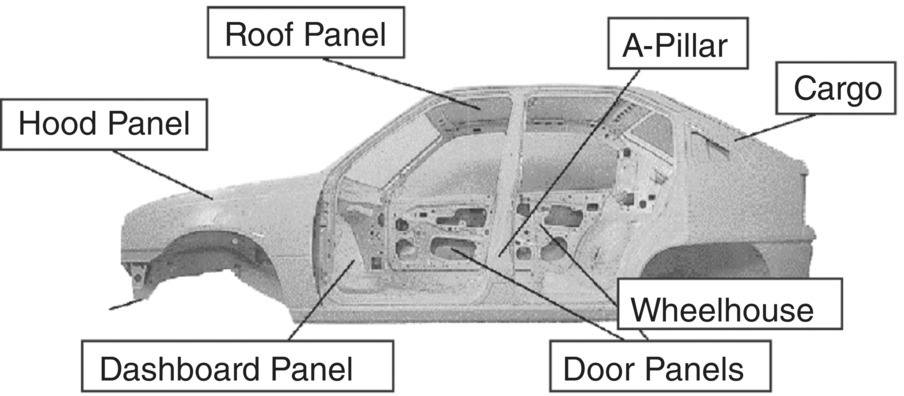
To reduce airborne and structure‐borne noise reaching the vehicle’s occupants, various well‐known techniques are often used, including (i) increasing structural damping, (ii) improving the TL of body panels and windows, (iii) increasing the use of sound‐absorbing materials in the engine, passenger, and luggage compartments, and (iv) vibration isolation of mechanical components. Hirabayashi et al. have described how all four of these techniques are used the in the automotive industry to reduce noise and vibration in vehicles [39]. Rao has provided a useful review of the use of vibration damping materials in automobiles and commercial aircraft [40]. Polce et al. have also presented a detailed study on improvements in cabin noise obtained by using damping treatments [41]. Add‐on constrained layer, spray‐on, and integral damping materials are often used. Table 14.3 lists various locations on a typical automobile, such as illustrated in Figure 14.9, where these are often used.
Table 14.3 Automotive applications [39].
| Engines and Power Trains | Body Structures | Brakes and Accessories |
|---|---|---|
| Oil pans | Dash panels | Brake insulators |
| Valve covers | Door panels | Backing plates |
| Engine covers | Floor panels | Brake covers |
| Push rod covers | Wheelhouses | Steering brackets |
| Transmission covers | Cargo bays | Door latches |
| Timing belt covers | Roof panels | Window motors |
| Transfer case covers | Upper cowl | Exhaust shields |
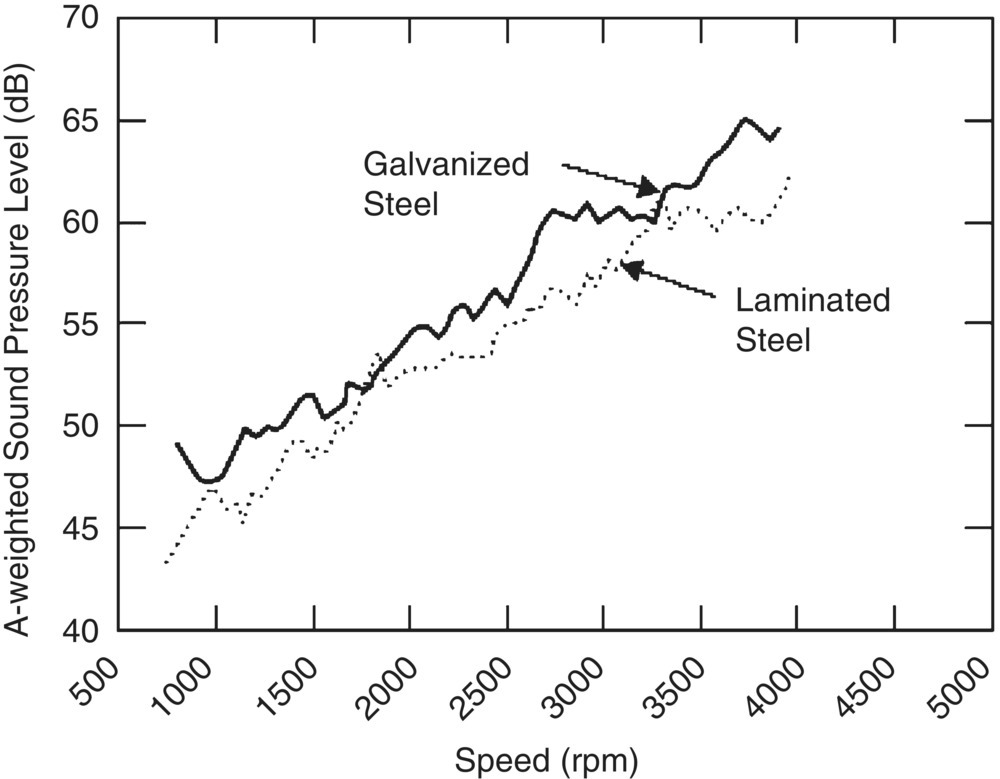
Damping materials are generally more effective at reducing structure‐borne vibration (particularly panel resonances) rather than at reducing the airborne sound transmitted through panels. Of the damping approaches, spray‐on damping material is easiest to apply, but constrained damping layers comprised of a viscoelastic layer constrained by a thin surface layer normally provide higher damping for the same weight or less weight through shearing action in the viscoelastic layer. The oil pan (or sump) of an engine can be responsible for radiating 50% of the sound power of an engine [40, 42]. Figure 14.10 shows the A‐weighted interior SPL in a vehicle at the driver’s ear position with: (i) a regular galvanized steel oil pan and (ii) with the oil pan replaced by a high damping laminated steel oil pan [40]. The A‐weighted SPLs were obtained during a stationary engine run‐up test with increasing engine revolutions per minute (rpm). Figure 14.10 shows that reductions in the A‐weighted interior noise level of about 5 dB were obtained with the laminated steel oil pan.
Water‐based spray‐on damping materials are also used in automobile manufacture. Their advantage is that they can be sprayed robotically on areas such as floor panels and other locations that are hard to reach (such as wheel housings) [40]. Thicknesses of between 1 and 3 mm are normally used. The disadvantage of the use of such materials is that they require costly spray and robotic equipment [40]. It is believed that the use of body and floor panel damping is effective mostly at reducing structure‐borne interior automobile noise in the 100‐ to 500‐Hz range. Although increased damping normally has disappointing results in increasing sound insulation, spray‐on damping materials do also add mass, which can reduce airborne sound transmission through areas such as floor panels.
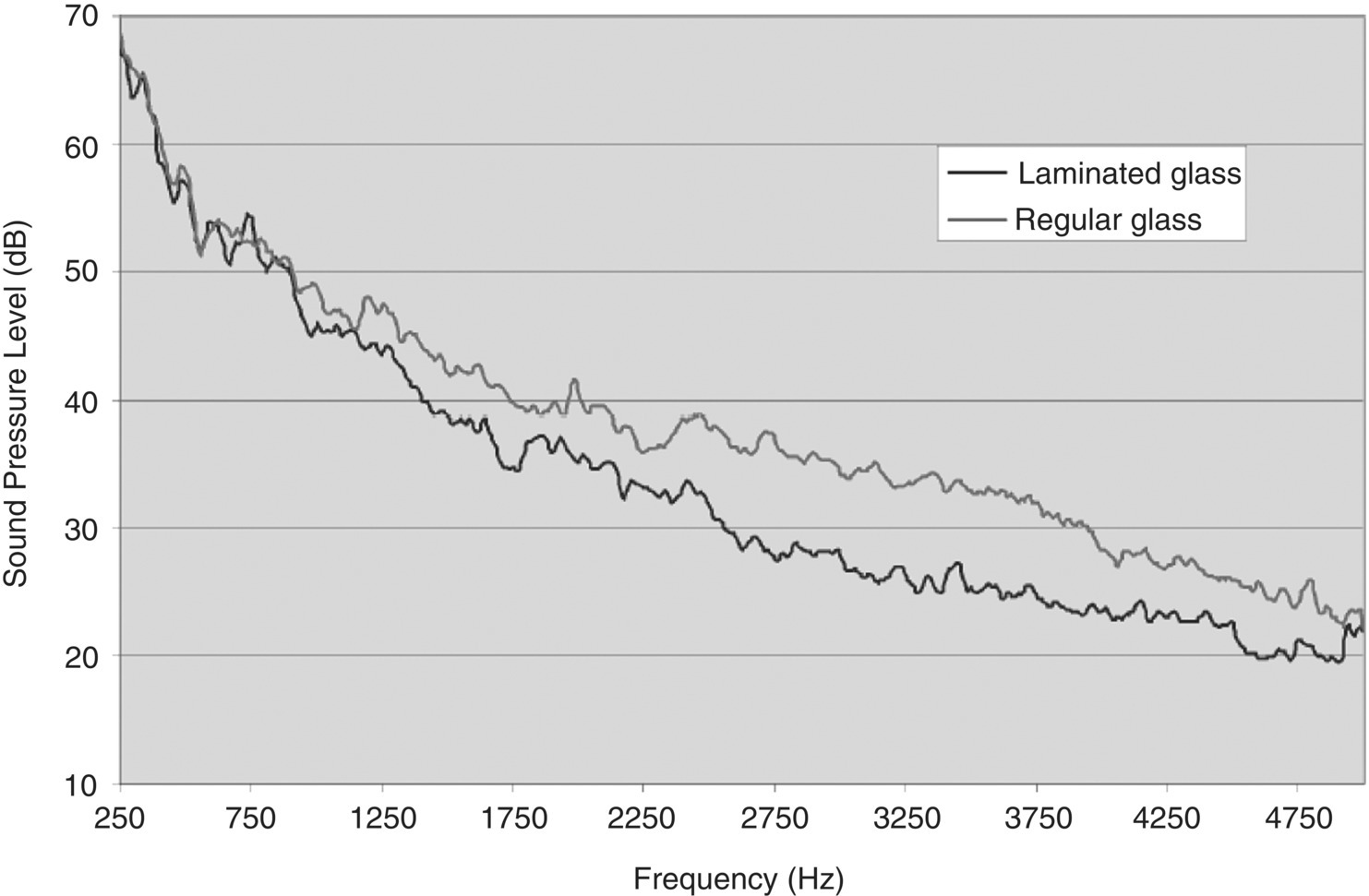
The use of laminated glass to reduce automobile interior noise continues to increase [43]. Figure 14.11 shows the effect of using laminated glass in reducing wind noise and tire/road noise [38]. The reduction in airborne noise by the use of the laminated glass is probably caused by the material impedance mismatch, which results in sound reflection at each interface layer; while the reduction in structure‐borne noise is likely caused mostly by the increase in vibration damping produced by use of the laminated glass. At some frequencies, the damping loss factor for the laminated glass is twice that of the standard tempered glass. The increased damping can reduce sound transmission in the coincidence frequency region.
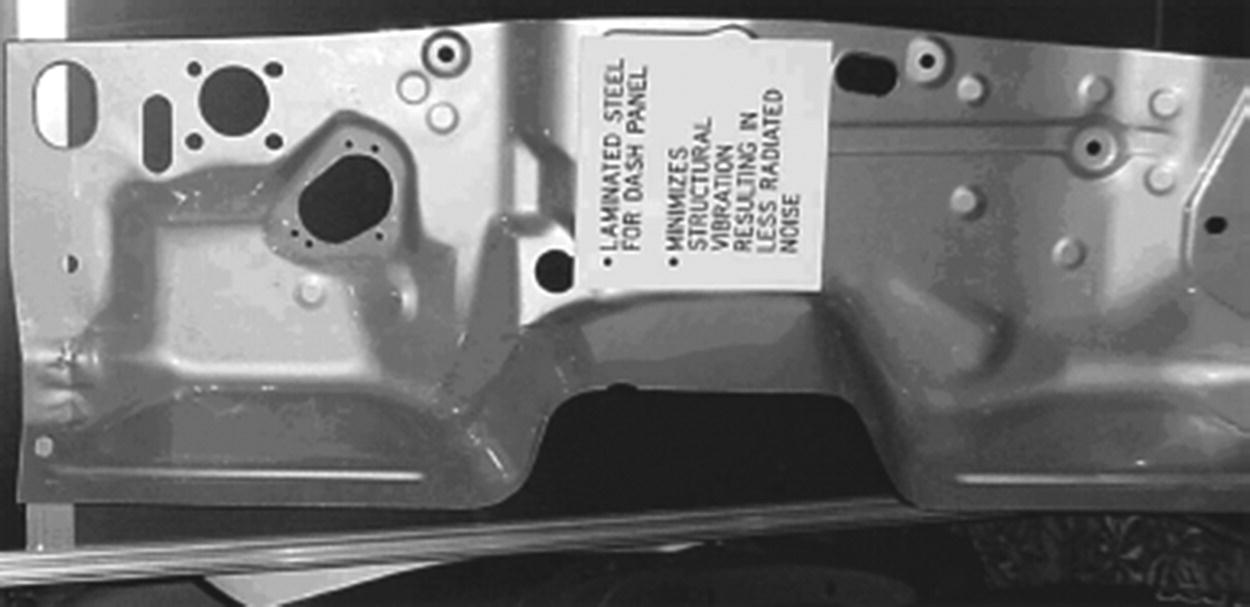
The use of laminated vibration‐damped steel (LVDS) is now being studied for its capability in reducing airborne and structure‐borne noise reaching the passenger compartment from the engine and power train components. See an example of an LDVS dash panel in Figure 14.12. The advantage of LVDS is that no add‐on damping treatment is needed. Improvements in sound quality and speech interference level through the use of LVDS must be considered in light of cost and other factors.
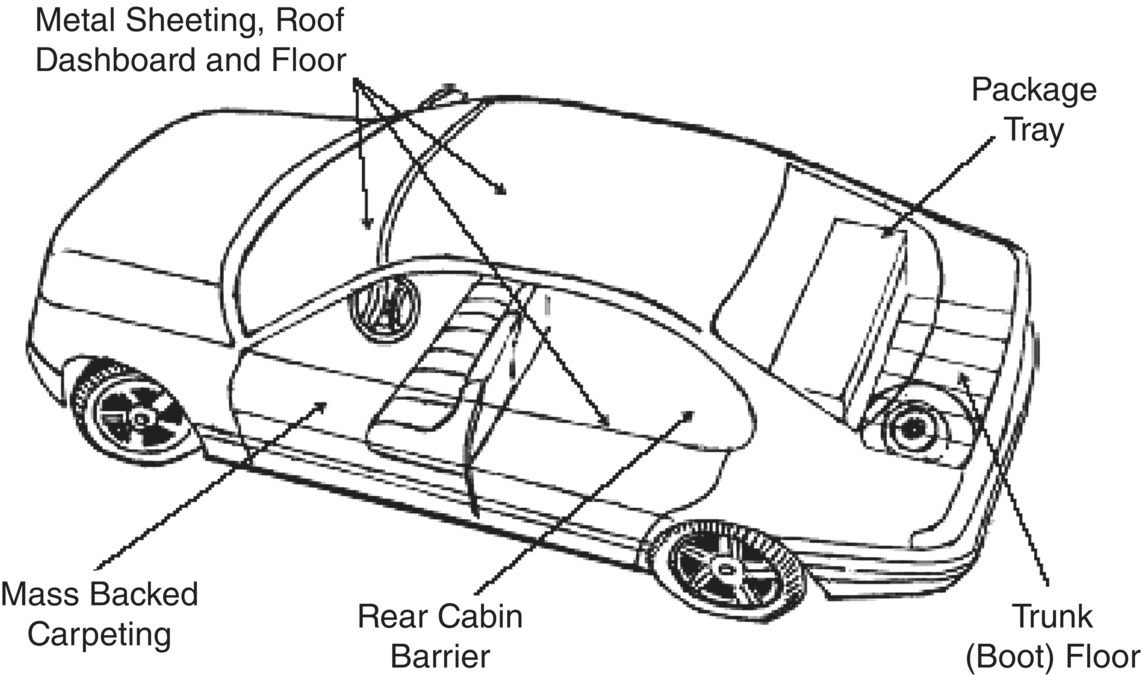
In the automotive industry, materials used to enclose a noise source (such as the engine) or the passengers (the cabin enclosure) are usually termed barrier materials. Such barrier materials are required to reduce airborne sound reaching the cabin from noise sources, including the engine, fan, exhaust system, tires, and wind. Below the coincidence frequency region, the TL of such materials is mostly dominated by the mass/unit area (m) of a partition (see Chapter 12 of this book). For single layer partitions this means that TL increases by 6 dB for each doubling of frequency or by 6 dB at a given frequency if m is doubled. Multilayer partitions, particularly with intervening air gaps between layers, can achieve TL results much better than mass law would predict, and the TL for such panels can be more like 12 dB/octave rather than 6 dB/octave. Great care must be taken to avoid air leaks for high values of TL to be achieved in practice. Figure 14.13 shows locations where barrier materials are often applied in an automobile.
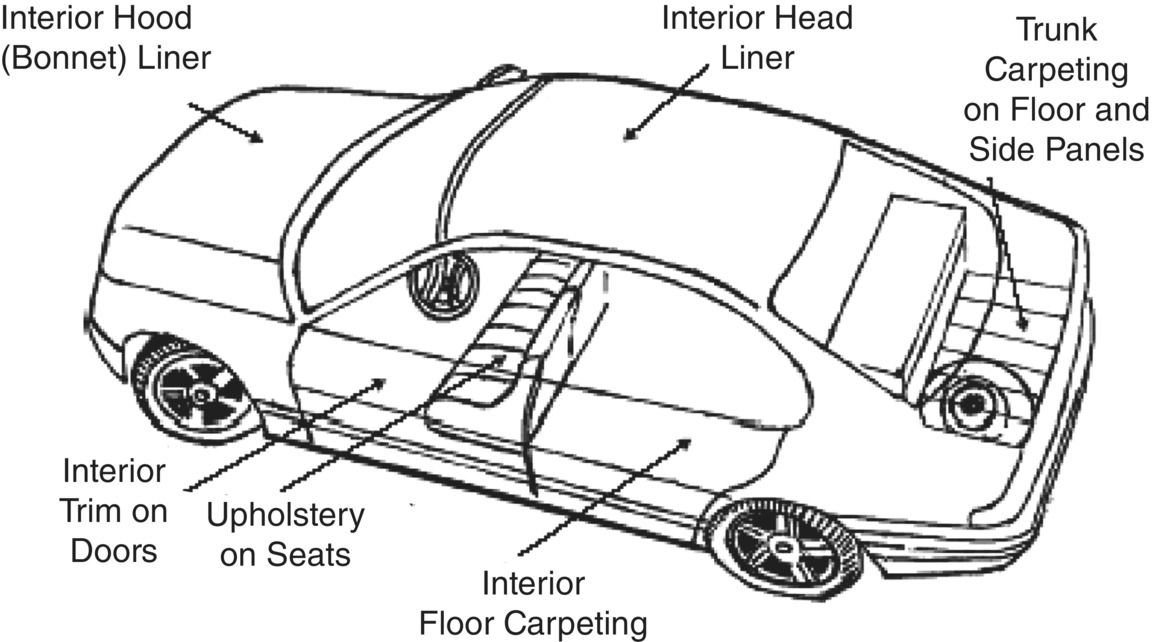
Once airborne and structure‐borne sound has penetrated into the cabin, the sound can be absorbed effectively by the use of sound‐absorbing material (see Chapter 9 of this book). Generally, thicker sound‐absorbing materials are better than thinner ones, and a material works best if its thickness approaches one quarter wavelength of the sound. This thickness can only be approached at quite high frequency in an automobile. Figure 14.14 shows locations where sound‐absorbing materials are often applied. In particular, sound absorption materials based on acoustical textiles are widely used in vehicles to reduce interior noise and improve the sensation of ride comfort for the vehicle’s occupants. See Ref. [44] for a detailed discussion on the use of acoustical textiles in the automotive industry.
A variety of theoretical methods, such as statistical energy analysis, finite element analysis (FEA), boundary element analysis, and computer‐aided engineering methods are used to predict sound and vibration energy transmission from exterior sources to the vehicle interior as described in many publications [45–70]. Because of complicated structural geometries, analytical approaches must often be supplemented with laboratory noise testing in anechoic rooms, wind tunnels, and actual tests with real full‐scale vehicles on dedicated test tracks [38]. With automobiles and trucks, it is insufficient to simply reduce noise reaching the passenger compartment. Passengers expect different types of vehicles such as passenger cars, sports cars, sport utility vehicles, luxury cars, and light trucks to have distinctive sounds. In some cases, manufacturers’ brand names are often associated with a particular vehicle sound, and it is important not just to reduce interior noise but also to consider the quality of the sound [71].
14.3.2 Off‐Road Vehicles
Off‐road vehicles are used for a variety of tasks including moving earth, road, railway and airport construction, and use on building sites and in agriculture. The vehicles are provided either with wheels or tracks for propulsion. Cabs are used to protect the operator from rollover and other operational hazards, from the weather, and from noise and vibration. One of the main concerns with these vehicles is to provide a safe acoustical environment for the operator inside the cab. To achieve this, the time‐averaged A‐weighted equivalent SPL inside the operator cab should be no higher than about 75 dB. Since noise levels vary with time as vehicles undertake various activities such as moving earth or grading, noise measurement methods to record the SPLs generated have been standardized internationally, which take account of this operational variability. A‐weighted internal cab noise measurements are normally made with a single microphone in the presence of the operator. The microphone is oriented horizontally at the operator head height and pointed forward or in the direction in which the operator normally looks.
Interior noise levels depend upon the strength of the noise and vibration sources and paths including the power plant, exhaust, transmission, hydraulic systems, mounting systems, and wheel and/or track ground surface interactions. It is important to ensure that the sources are vibration‐isolated from the vehicle structure and that proper care is taken to achieve satisfactory operator sound isolation by providing a suitable TL (sound reduction index) for the cab enclosure. Air leaks should be minimized if the cab noise level can only be achieved with windows closed. Structural damping and interior sound‐absorbing material, if properly used in the design stage, can help achieve the necessary interior cab noise level design goals.
Analytical models, which are often employed in the design of off‐road vehicle cabs, include statistical energy analysis, FEA and boundary element methods (BEM) [72, 73]. The track undercarriage can become a dominant noise source for tracked vehicles. Experimental confirmation that cabin noise goals have been achieved is necessary during prototype vehicle development and testing. The SPL depends on vehicle operations including moving earth and other working cycles. Reference [74] discusses the interior noise and vibration of off‐road vehicles and methods to reduce the interior noise.
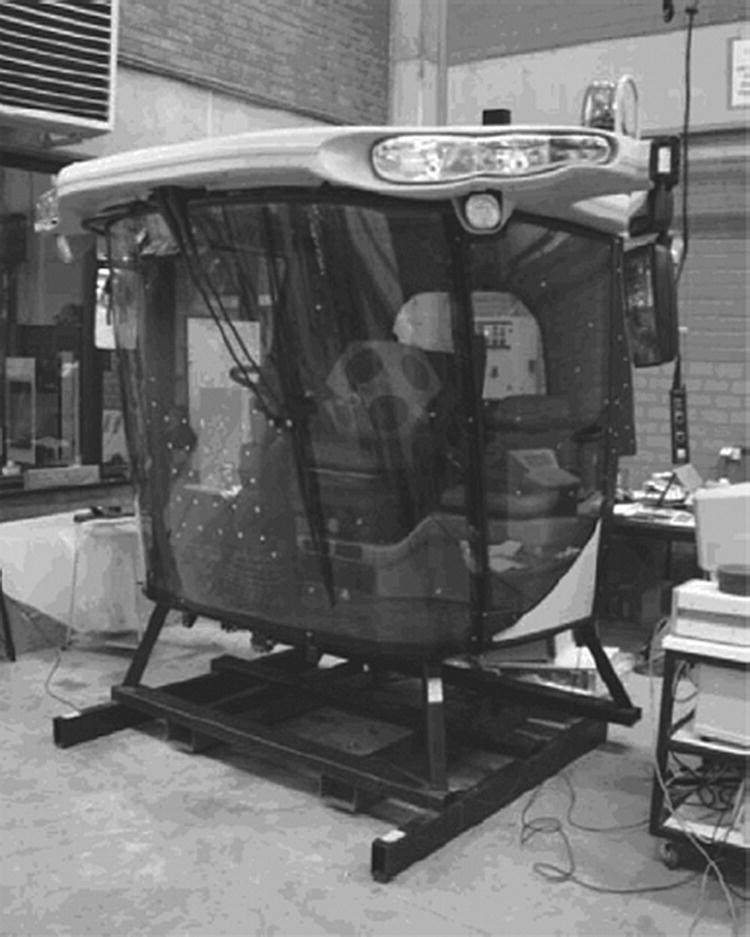
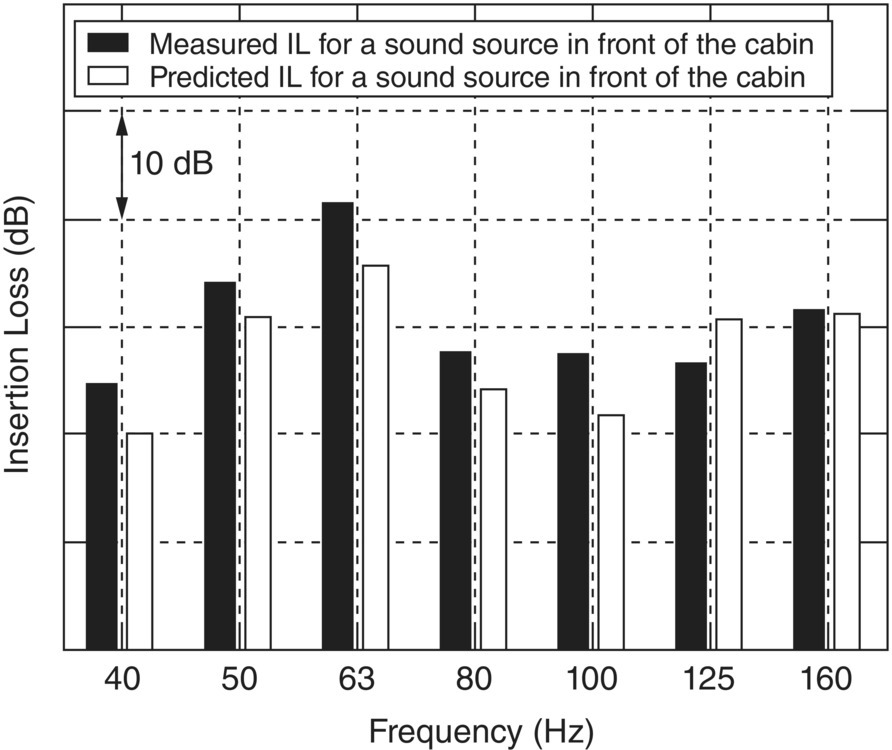
A‐weighted SPLs in off‐road vehicle cabs have been measured to be as high as 107 dB [75]. By proper passive noise control approaches, these levels can be reduced considerably [74]. Approaches vary from mostly experimental to almost completely theoretical [72, 73, 76]. Both structure‐borne and airborne noise and vibration paths to the cab interior must be considered [72]. A quite sophisticated study of the noise transmitted into the operator cab of an agricultural machine using both scale models and theoretical FEA and BEM has been reported [72]. Figure 14.15 shows the operator cabin studied by Desmet et al. [72]. The scale model was used to obtain experimental results. Both FEA and BEM meshes were used for the cabin structure and acoustical space. A comparison between the measured and predicted sound IL of the model cabin is shown in Figure 14.16.
Leave a Reply