The interaction of the flow around a vehicle with the vehicle body structure gives rise to sound generation and noise problems both inside and outside the vehicle. Turbulent boundary layer fluctuations on the vehicle exterior can result in sound generation. The pressure fluctuations also cause structural vibration, which in turn results in sound radiated both to the exterior and to the vehicle interior. Abrupt changes in the vehicle geometry result in regions of separated flow that considerably increase the turbulent boundary layer fluctuations. Poorly designed or leaking door seals result in aspiration (venting) of the seals, which allows direct communication of the turbulent boundary layer pressure fluctuations with the vehicle interior. Appendages on a vehicle, such as external rear‐view mirrors and radio antennas also create additional turbulence and noise. The body structure vibrations are also increased in intensity by the separated flow regions. Although turbulent flow around vehicles is the main cause of aerodynamic noise, it should be noted that even laminar flow can indirectly induce noise. For example, the flow pressure regions created by laminar flow can distort body panels, such as the hood (bonnet), and incite vibration. Figure 14.8 shows various locations on a vehicle body where flow separation regions exist creating fluctuating pressures. Multiple and extensive separated regions may be present between rear window and trunk lid (notch‐back), and at the base of fast‐back or hatch‐back vehicles [27].
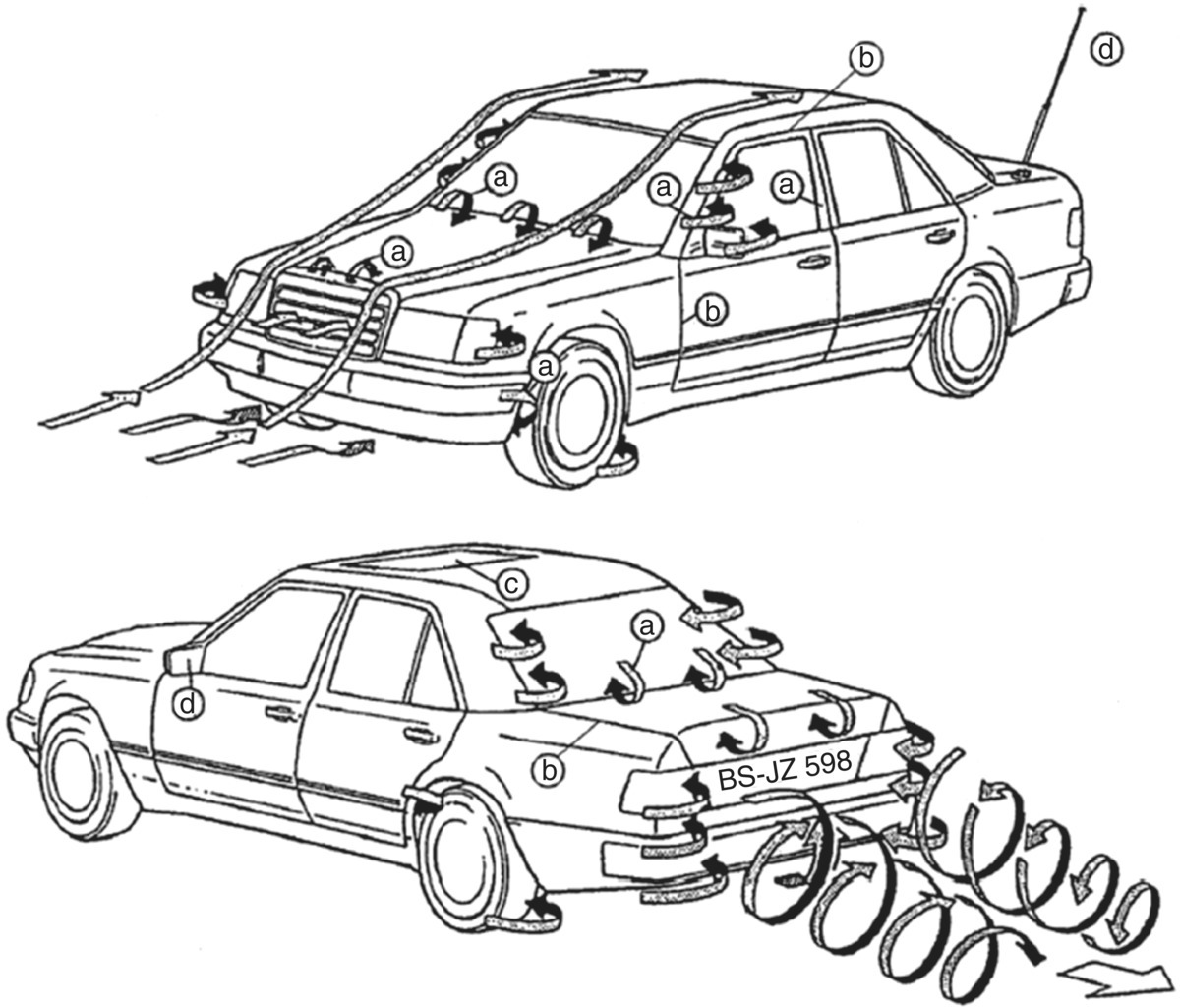
At vehicle speeds above about 130 km/h the vehicle flow‐generated noise exceeds the tire noise and increases with speed to the sixth power. Because of the complicated turbulent and separated flow interactions with the vehicle body, it is difficult to predict accurately the aerodynamic sound generated by a vehicle and its radiation to the vehicle interior and exterior. Vehicle designers often have to resort to empiricism and/or full‐scale vehicle tests in wind tunnels for measurements of vehicle interior and exterior aerodynamic flow generation and interior noise predictions. Statistical energy analysis and computational fluid dynamics have also been utilized to predict interior wind noise in vehicles
Leave a Reply