In most developed and developing countries, vehicle traffic is the main contributor to community noise. Aircraft noise is a lesser problem since it mostly affects small areas of urban communities that are located near to major airports. The substantial increase in road vehicle traffic in Europe, North America, Japan, and other countries suggests that road vehicle traffic will continue to be the dominant source of community noise into the foreseeable future. Legislative pressures brought to bear on vehicle manufacturers, particularly in Europe and Japan, have resulted in lower power unit noise output of modern vehicles. Tire/road interaction noise, caused by the interaction of rolling tires with the road surface, has become the predominant noise source on new passenger cars when operated over a wide range of constant speeds, with the exception of the first gear. When operated at motorway speeds, the situation is similar for heavy trucks and again tire road noise is found to be dominant.
A European study has suggested that, for normal traffic flows and vehicle mixes on urban roads, about 60% of traffic noise sound power output is due to tire/road interaction noise [19]. On motorways at high speed, this increases to about 80%. Both exterior power plant noise (the noise from the engine, gearbox/transmission, and exhaust system) and tire/road noise are strongly speed dependent. Measurements show that exterior tire/road noise increases logarithmically with speed (about 10 dB for each doubling of speed). Since an increase of 10 dB represents an approximate doubling of subjective loudness, the tire/road noise of a vehicle traveling at 40 km/h sounds about twice as loud as one at 20 km/h; and at 80 km/h, the noise will sound about four times as loud. Studies have shown that there are many possible mechanisms responsible for tire/road interaction noise generation. Although there is general agreement on the mechanisms, there is still some disagreement on their relative importance. The noise generation mechanisms may be grouped into two main types: (i) vibrational (impact and adhesion) and (ii) aerodynamic (air displacement).
There are five main methods of measuring tire noise. These methods include (i) close proximity CPX (trailer), (ii) cruise‐by, (iii) statistical pass‐by, (iv) drum, and (v) sound intensity. Figure 14.6 shows tire noise being measured by a CPX trailer built at Auburn University [20].
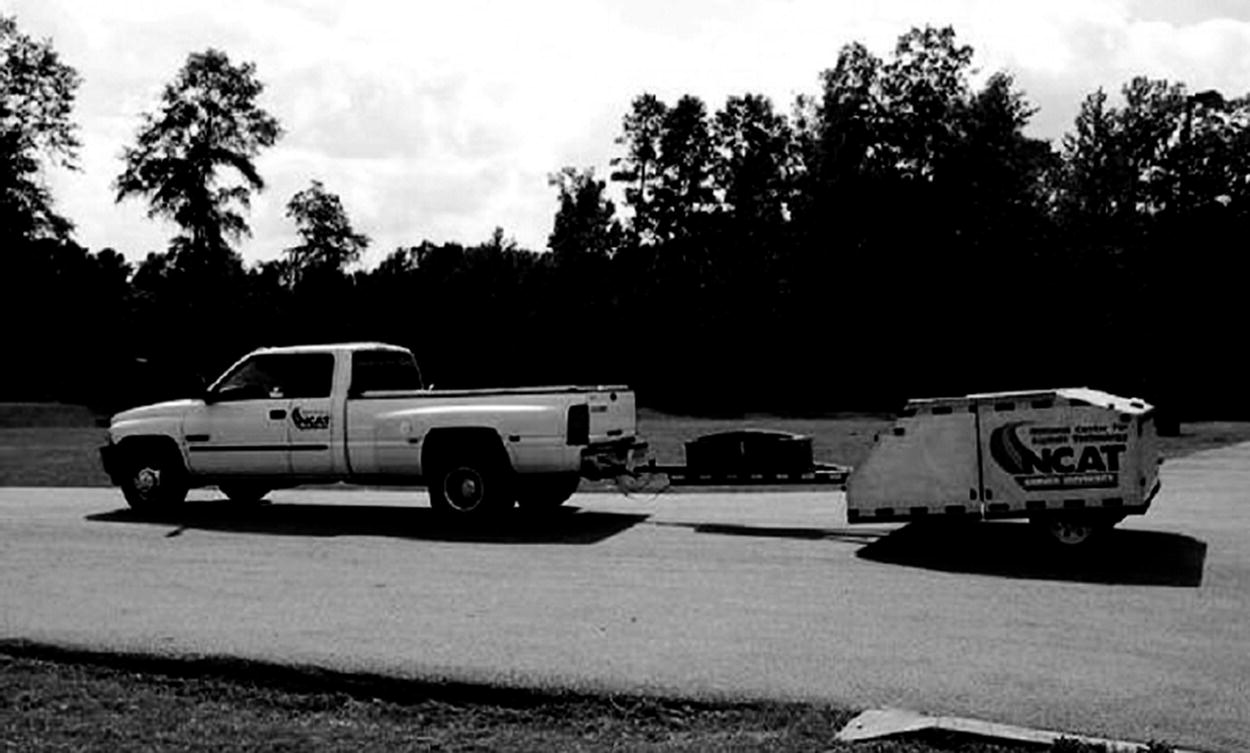
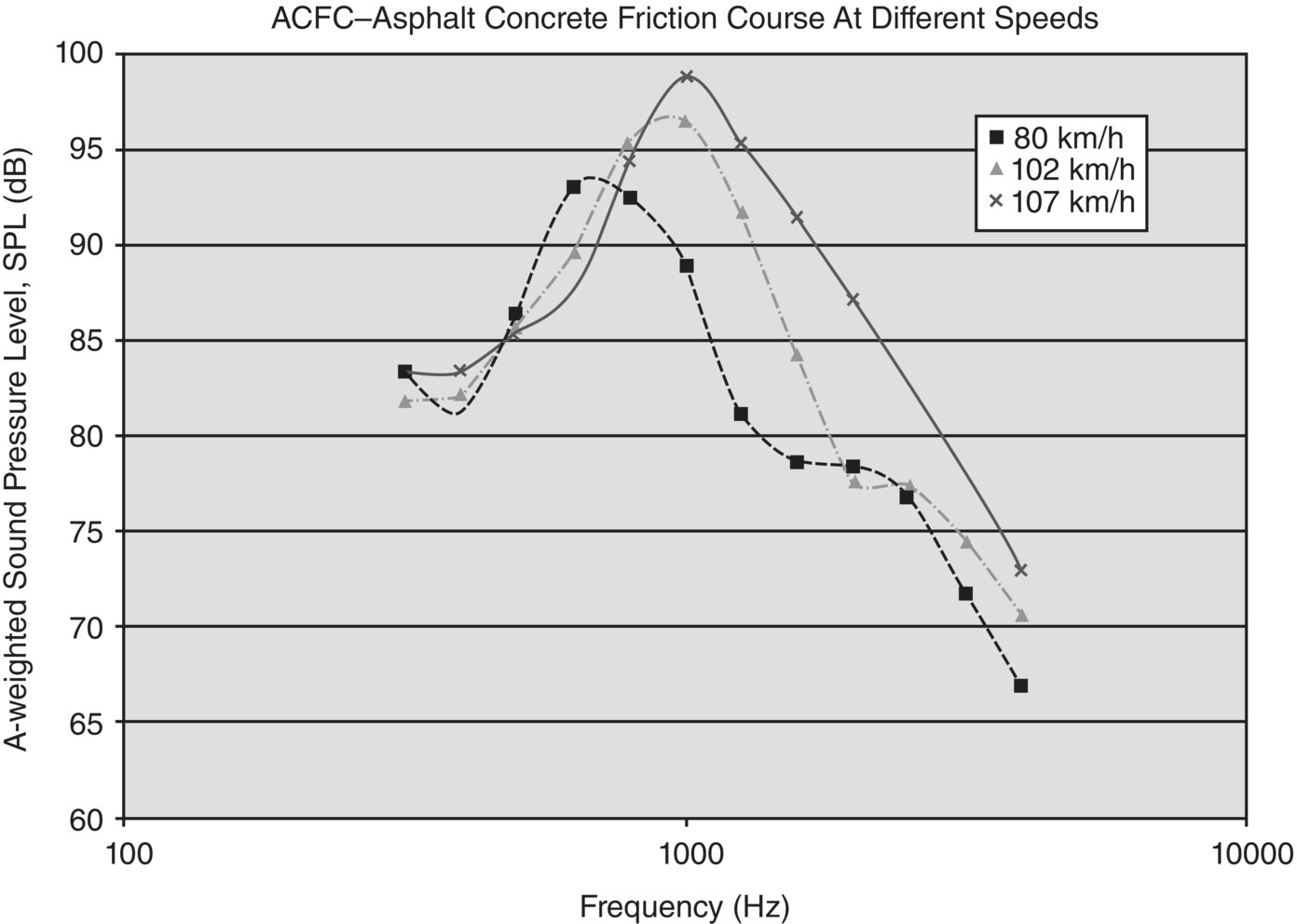
Figure 14.7 shows A‐weighted SPLs measured with the Auburn CPX trailer. Note that the A‐weighted spectrum peaks between 800 and 1000 Hz, and the peak increases slightly in magnitude and frequency as the vehicle speed is increased.
Knowledge of tire/road aerodynamic and vibration noise generation mechanisms suggests several approaches, which if used properly can be used to help suppress tire/road noise [19]. Perhaps the most hopeful, lower cost, approach to suppress tire/road noise is the use of porous road surface mixes [20]. Porous roads, with up to 20–30% or more of air void volume, are being used increasingly in many countries. They can provide A‐weighted SPL reductions of up to 5–7 dB, drain rain water, and reduce splash‐up behind vehicles as well. If the porous road can be designed to have maximum absorption at a frequency between 800 and 1000 Hz, it can be most effective in reducing tire/road interaction noise. Reduction of tire/road noise is also very important for reducing the environmental noise in urban areas (see Chapter 16 of this book). Tire/road interaction noise generation and measurement are discussed in detail in Ref. [19]. Much research continues to be conducted into understanding the origins of tire/road noise
Leave a Reply