In cars, trucks, and busses, major power plant noise sources include gasoline and diesel engines, cooling fans, gearboxes and transmissions, and inlet and exhaust systems. Other major sources include tire/road interaction noise and vibration and aerodynamic noise caused by flow over the vehicles [1]. (See Figure 14.1) Although vehicle noise and vibration have been reduced over the years, traffic noise remains a problem because of the continuing increase in the numbers of vehicles. In addition, most evidence suggests that the exterior noise of most new cars, except in first gear, is dominated in normal operation by rolling noise (defined here as tire/road interaction noise together with aerodynamic noise), which becomes increasingly important at high speed and exceeds power train noise (defined here as engine, air inlet, exhaust, cooling system, and transmission). See Table 14.1 and the detailed review of vehicle noise by Nelson. This review concludes that rolling noise has a negligible effect on the noise produced by heavy vehicles at low speed, but at speeds above 20 km/h for cars and 80 km/h for heavy vehicles, rolling noise contributes significantly to the overall noise level [2]. At speeds above 60 km/h for cars, rolling noise becomes the dominant noise source [2].
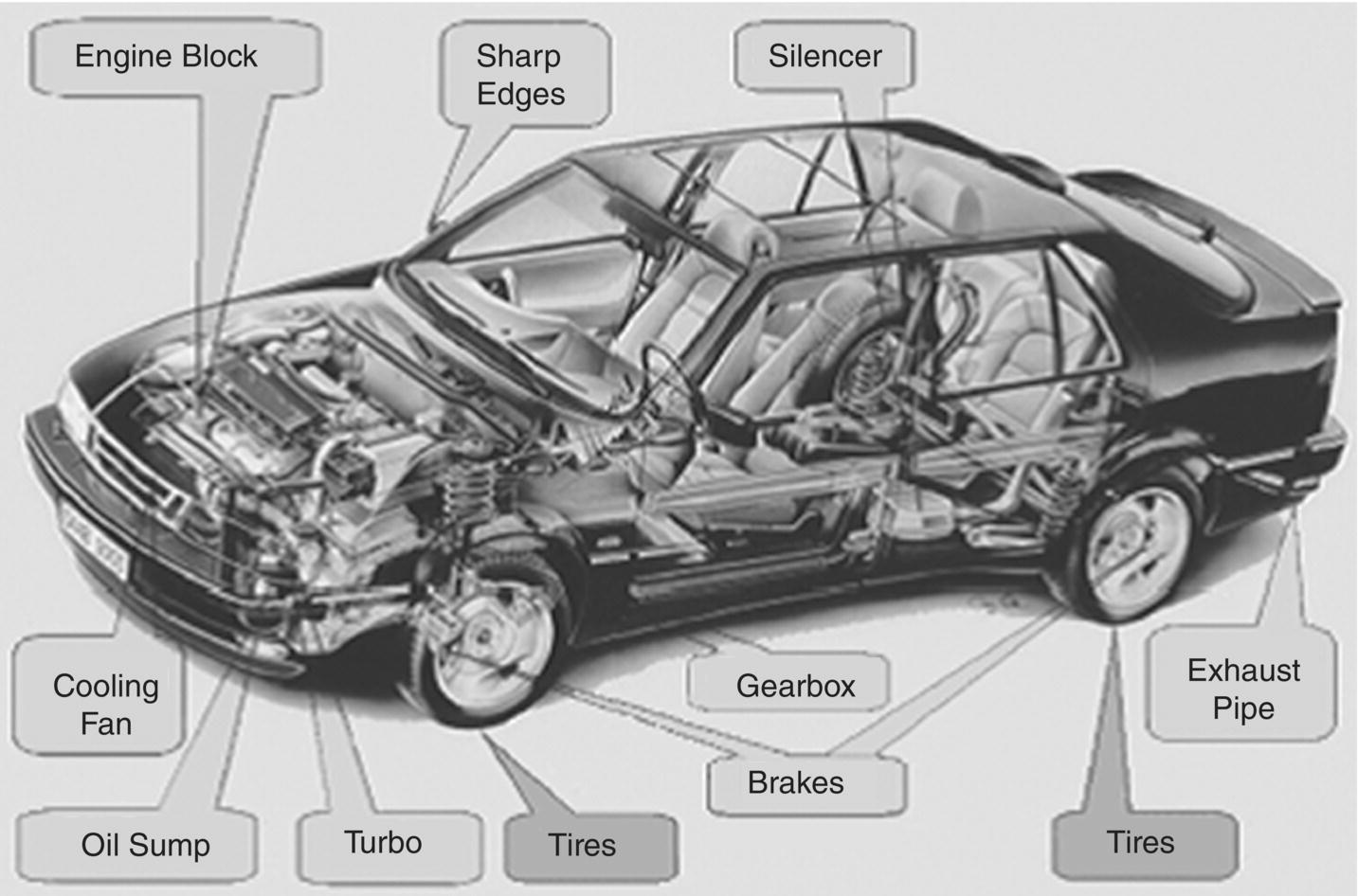
Table 14.1 Comparison of rolling and power train A‐weighted sound pressure levels.
Source: From Nelson [2].
| Road Speed (km/h) | Vehicle Class | Rolling Noise (dB) | Power Train Noise (dB) | Total Noise (dB) |
|---|---|---|---|---|
| 20 | Heavya | 61 | 78 | 78 |
| Light | 58 | 64 | 65 | |
| 80 | Heavya | 79 | 85 | 86 |
| Light | 76 | 74 | 78 |
a Heavy vehicles are defined as having an unloaded mass of greater than 1525 kg.
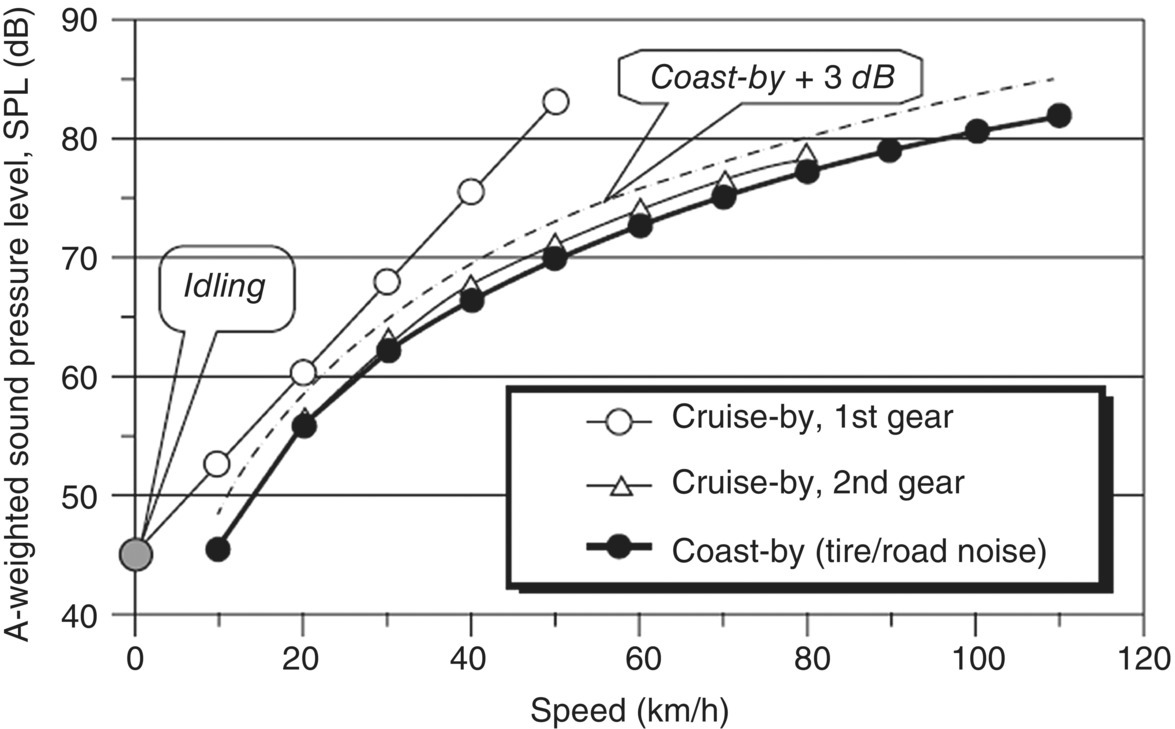
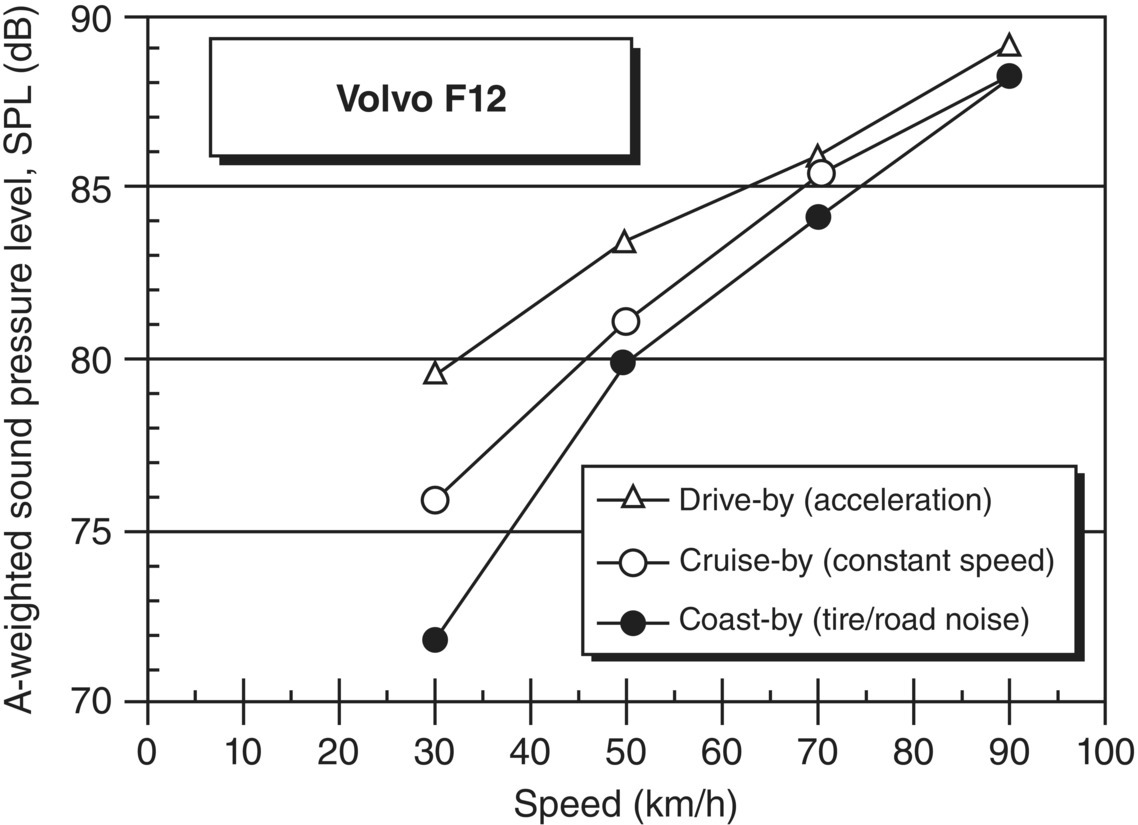
Figure 14.2 shows that there is little difference between the exterior noise generated by (i) a modern car at steady speeds (in the top three gears) and (ii) the car operating in a coast‐by condition at the same steady speeds without the power plant in operation. This suggests that tire noise together with aerodynamic noise are the dominant sources for most normal operations of modern cars at steady highway speeds. Trucks are dominated by power train noise at low speeds, but at higher speeds above about 80 km/h, exterior truck noise is mostly dominated by tire/road noise and aerodynamic noise. Figure 14.3 shows that above 70–80 km/h there is little difference between the exterior noise of the truck whether it is accelerating, cruising at a steady speed, or coasting by with the power plant turned off [1]. Again this suggests that above 70–80 km/h this truck’s exterior noise is dominated by tire/road noise and aerodynamic noise.
At high speeds above about 130 km/h, vehicle noise starts to become dominated by aerodynamic flow noise [1]. Due to different noise standards for vehicles in different countries and regions, and the condition of the vehicles, the speed at which tire noise starts to dominate may be higher than indicated above. The data here are for modern European vehicles in new condition. For example, in the United States the truck power plants are generally noisier than in Europe. One interesting approach to predict vehicle pass‐by noise involves the use of the reciprocity technique
Leave a Reply