Many industrial processes involve cutting metals. Metal‐cutting processes can either be continuous or impulsive in character. Examples of continuous processes include sawing, drilling, milling, and grinding. Additional continuous cutting processes include use of water jets for cutting steel plates up to 300‐mm thickness and plasma and laser cutting techniques. Examples of impulsive processes include punching, piercing, and shearing [50].
The following noise sources can be observed in continuous metal‐cutting processes: (i) aerodynamic noise usually caused by vortex shedding from a spinning tool such as from the teeth of a high‐speed rotating saw, (ii) noise caused by vibrations of the cutting tool, (iii) noise due to structural vibration and radiation from the cutting tool and the workpiece such as regenerative chatter, and (iv) noise due to material fracture in which energy is built up until it is released at fracture as acoustic emission.
The noise level radiated by continuous cutting processes depends on the feed rate of the workpiece, the depth of cut, the resonance frequencies of the cutting tool and the workpiece, the geometry of the cutting tool and the workpiece, and the radiation efficiencies of the resonant modes of vibration. In impulsive cutting processes such as stamping, forging, punching, piercing, and shearing, impulsive forces are involved. The noise generated by these operations includes acceleration noise, ringing noise, noise due to fracture of the feedstock material (cutting noise), and other machinery noise sources. Acceleration noise is generated by the impact between the cutting blade and the feedstock, causing the air around to be compressed due to the rapid surface deformations. This noise is usually low frequency in nature and is normally much less than the ringing noise caused by flexural vibrations.
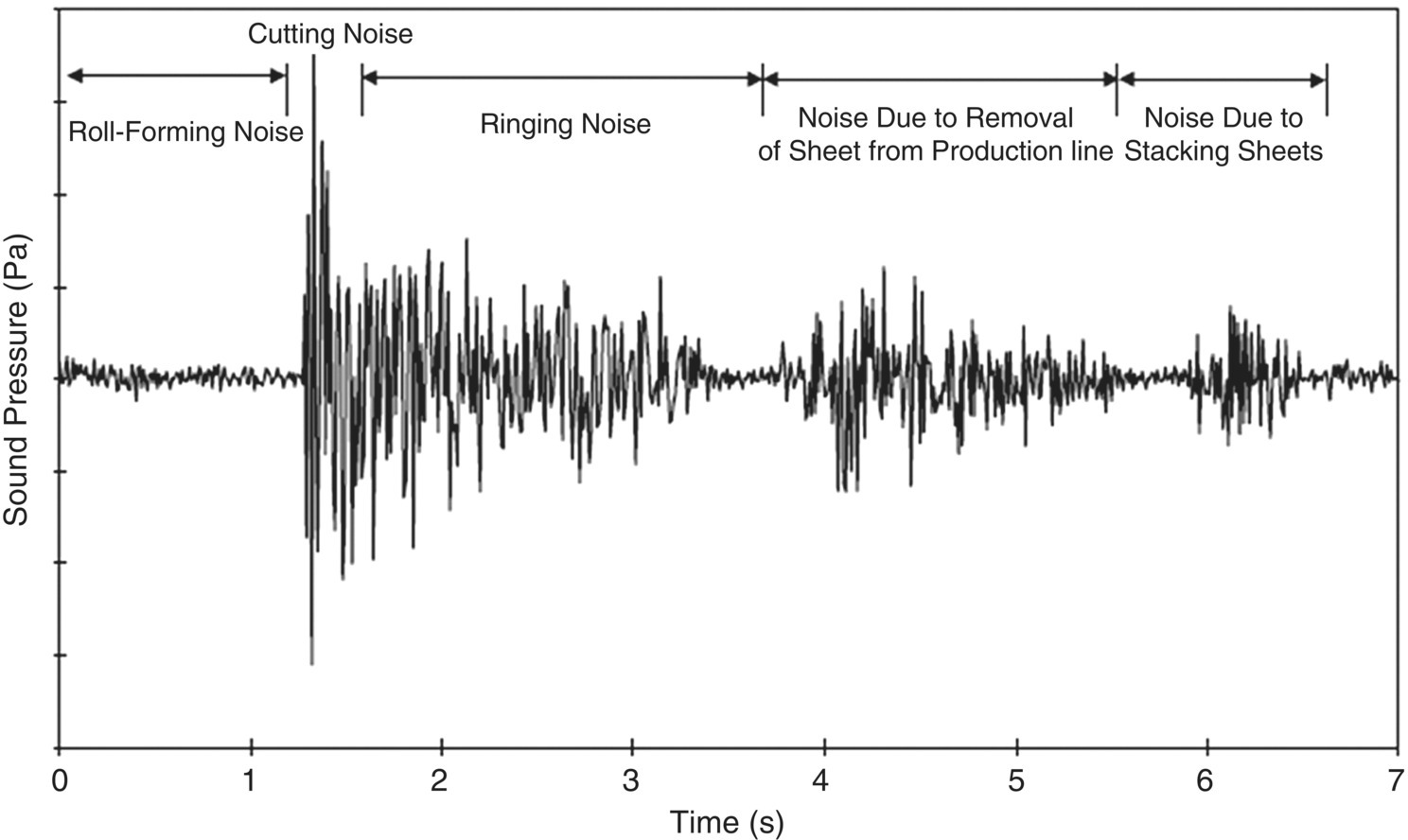
Ringing noise is generated from vibrations of the feedstock and machine structure including the machine foundations; it usually makes a significant contribution to the overall noise generated during the metal‐cutting process. The magnitude of the ringing noise depends on the radiation efficiency, and spatial averaged mean‐square normal vibration velocity of the surface and its area, the air density, and speed of sound in air. Figure 11.10 shows the noise signature at various stages of the operation of a roll former production line. Different sources of noise radiated can be identified from this sound pressure time‐history, such as the noise due to roll forming a flat metal sheet into a profiled sheet, cutting the sheet to the required length, removing the sheet from the production line and dropping the sheet onto a stack. It is noted that high impulsive noise levels are produced by the cutting action (fracturing the metal) and the resulting impact‐induced vibration of the product and the surrounding structure (ringing noise). The noise due to removal of the product from the production line and stacking the product may be reduced by changing the operator’s work practice or by installing an automatic stacking machine [50].
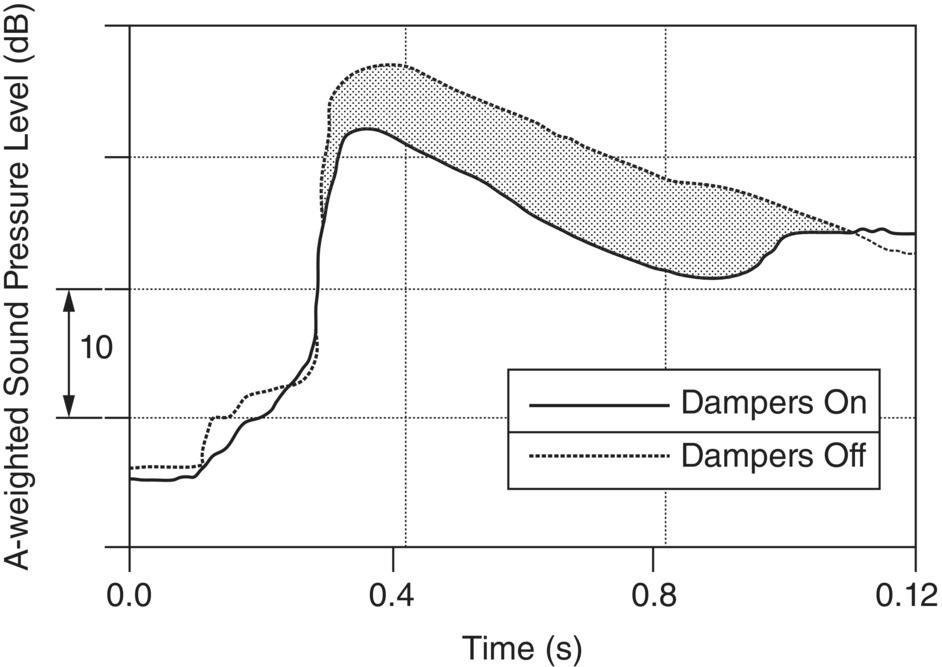
In some cases, the ringing noise can be effectively reduced by the judicious use of damping materials. Figure 11.11 shows the sound pressure level as a function of time of a damping system used to reduce the vibrations transmitted to a sheet from the impact of the shear blades during the cutting action. The damping system was designed to clamp the sheet prior to and just after the cutting of the sheet [50]. Figure 11.11 shows that a noise reduction of over 5 dB has been achieved by the installation of sheet dampers at the operator position.
Richards et al. have published extensive discussions on acceleration noise and ringing noise [51, 52]. Reference [50] discusses noise sources due to continuous metal‐cutting processes and to impulsive impact/shearing processes. The reference also covers basic theory for the noise emission caused in the cutting of metals. In addition, various noise control approaches (such as use of enclosures, damping materials, sound absorption materials, barriers, and vibration isolation) to reduce metal‐cutting noise are presented. Reference [50] reviews numerical methods to predict metal‐cutting noise and vibration as well. Research continues on reducing metal‐cutting noise
Leave a Reply