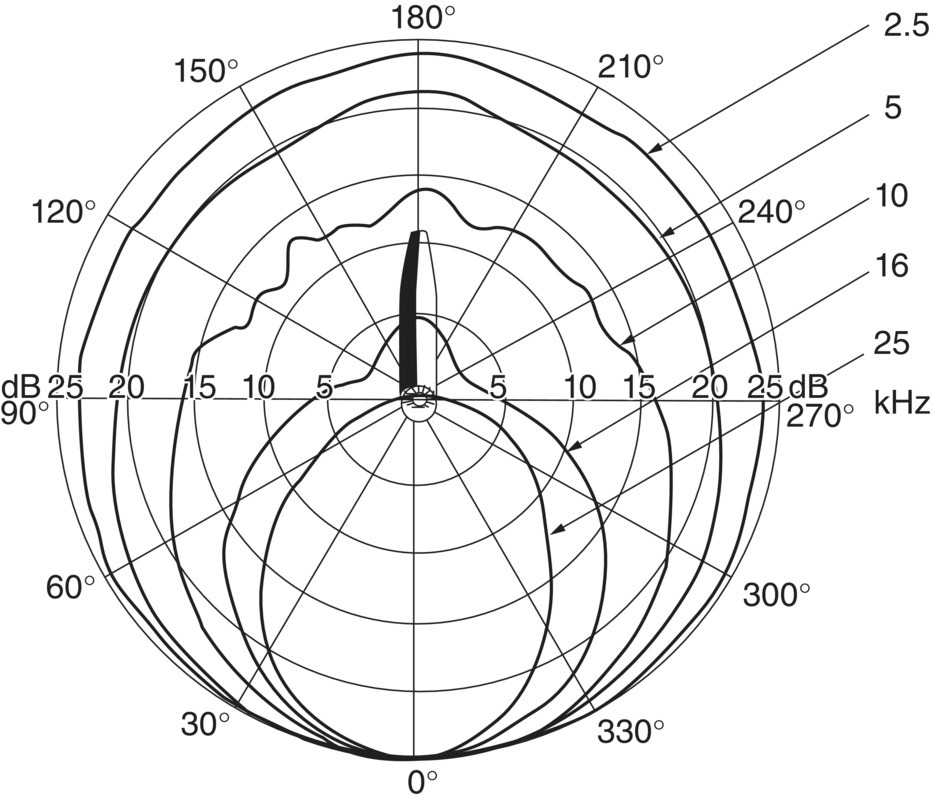
At low frequencies, for example, below about 1000 Hz, the frequency response of a microphone is independent of the angle of incidence of the sound waves. However, at higher frequencies, as the microphone dimensions and the wavelength of the sound become comparable, diffraction effects become important and the frequency response of a microphone is strongly dependent on the angle of incidence of the sound (see Figure 7.11). The effect of directivity is discussed in detail in Ref. [2] and Chapter 3 in Ref. [5].
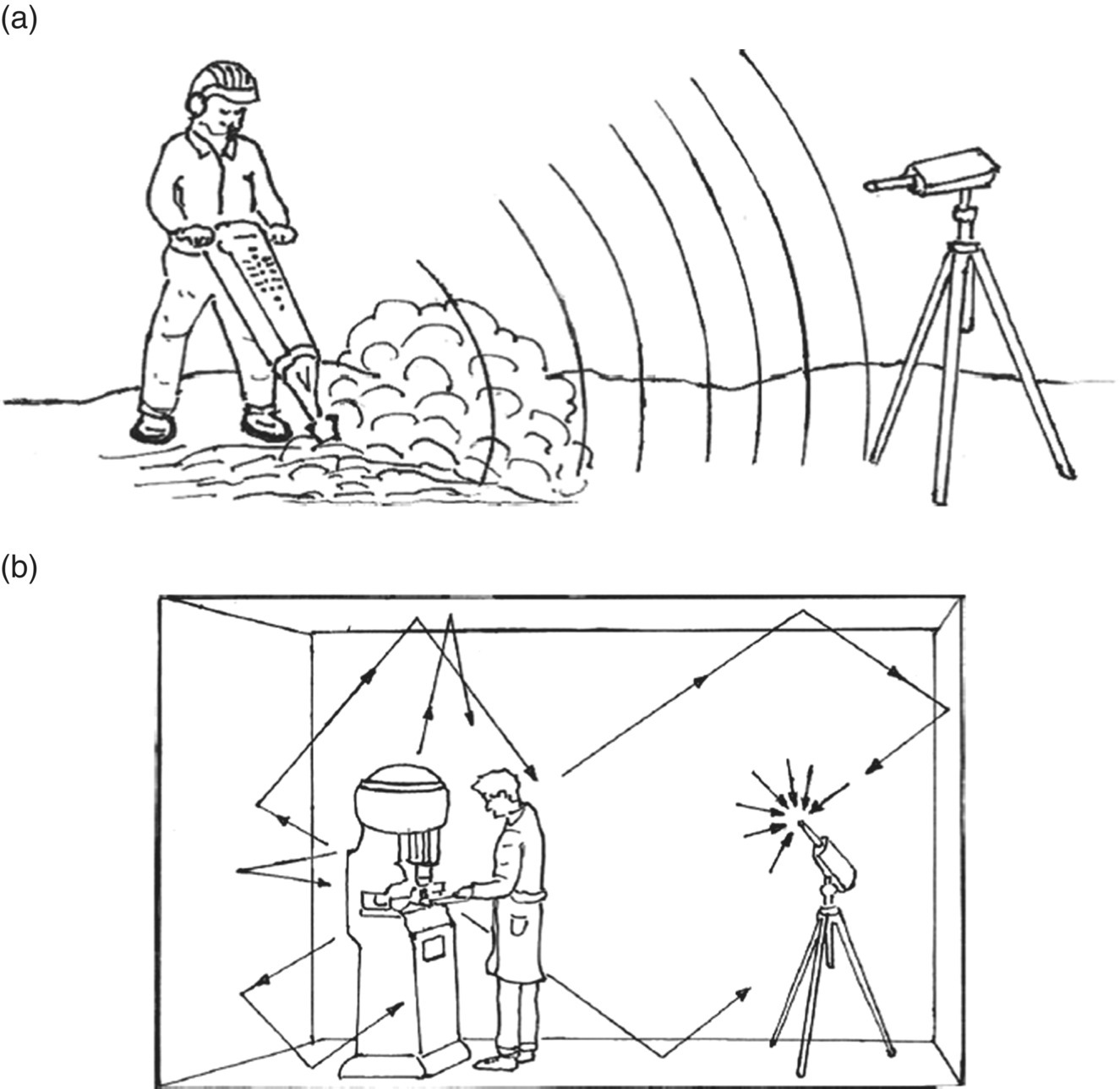
Microphones can be designed to have a flat frequency response when exposed to a free progressive wave sound field. They are usually known as free‐field microphones. Other microphones can be designed to have a flat frequency response to grazing incidence sound waves and are normally known as pressure‐field microphones. Still other microphones are designed to have a flat frequency response to random incidence sound and are known as diffuse‐field incidence microphones [1, 2]. Care must be made in ensuring that the right type is used. Figure 7.12 illustrates the use of different types.
Leave a Reply