6.15.1 Sleep Interference
Various investigations have shown that noise disturbs sleep [56–62]. It is well known that there are several stages of sleep and that people progress through these stages as they sleep [56]. Noise can change the progression through the stages and if sufficiently intense can awaken the sleeper. Most studies have been conducted in the laboratory under controlled conditions using brief bursts of noise similar to aircraft flyovers or the passage of heavy vehicles. However, some have been conducted in the participants’ bedrooms.
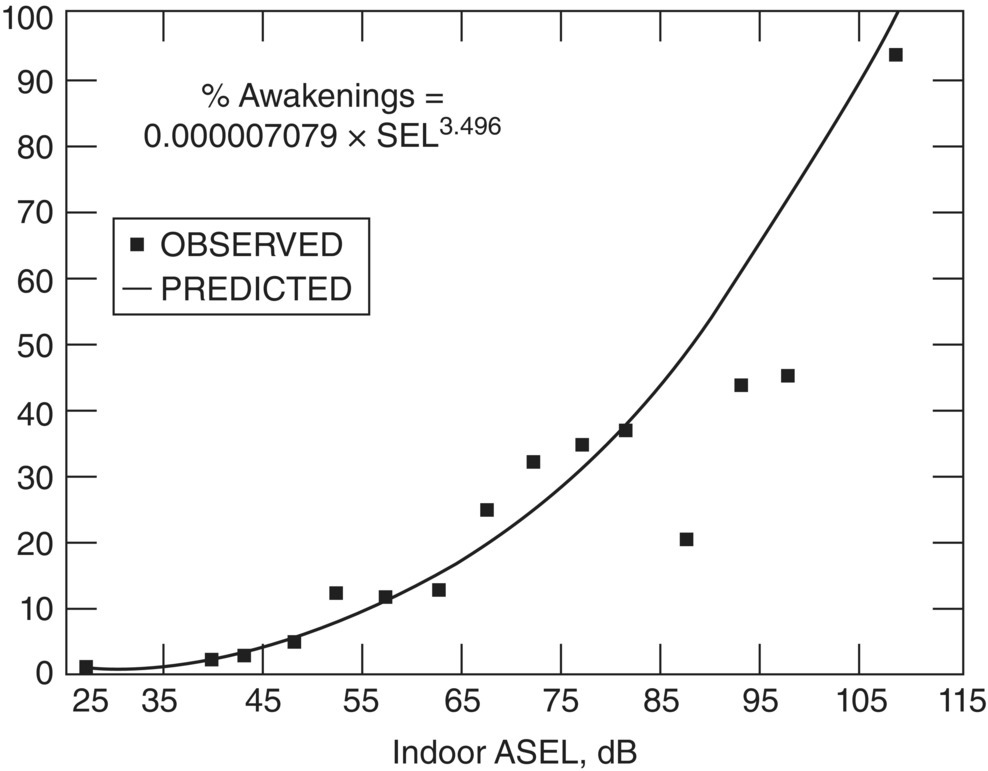
Different measures have been used such as A‐weighted maximum SPL, LAmax, ASEL, EPNL (EPN dB), and day–night SPL, (DNL (Ldn)), and most studies have concentrated on the percentage of the subjects that are awakened. Pearsons et al. [61] have reassessed data from 21 sleep disturbance studies (drawn from the reviews of Lucas [56] and Griefahn [57] and seven additional studies). From these data, Finegold et al. [62] have proposed sleep disturbance criteria based on the indoor ASEL. In the reanalysis, because of the extremely variable and incomplete databases, the data were averaged in 5‐dB intervals to reduce variability. A regression fit to these data gave the following expression (which is also shown graphically in Figure 6.16):
(6.10)
where LAE is the indoor ASEL. Although the authors recognize that there are concerns with the existing data and there is a recognition that additional sleep disturbance data are needed, Finegold et al. [62] have proposed that Figure 6.16 be used as a practical sleep disturbance curve until further data become available.
6.15.2 Annoyance
In 1978, Schultz published an analysis of 12 major social surveys of community annoyance caused by transportation noise [63]. This Schultz analysis, which relates the percentage of the population that report they are “highly annoyed” by transportation noise to the A‐weighted day–night average SPL DNL (Ldn), has become widely used all over the world as an important curve for describing the average community response to environmental noise. Since the Schultz curve was published, additional data have become available. Fidell et al. [64] used 453 exposure response data points compared to the 161 data points originally used by Schultz. This resulted in almost tripling the database for predicting noise annoyance from transportation noise. A later study by the U.S. Air Force eliminated 53 of these data points because there was insufficient correlation between the DNL and the percentage of the population that was highly annoyed, %HA [62]. The results of these two studies and the original Schultz curve are given in Figure 6.17. Finegold et al. [62] recommend a logistic fit,
(6.11)
rather than the quadratic fit used by Fidell et al. [64] or the third‐order polynomial fit used by Schultz [63]. This results in a very close agreement between the curve obtained with the 400 data points and the original 1978 Schultz curve [63]. See Figure 6.18.
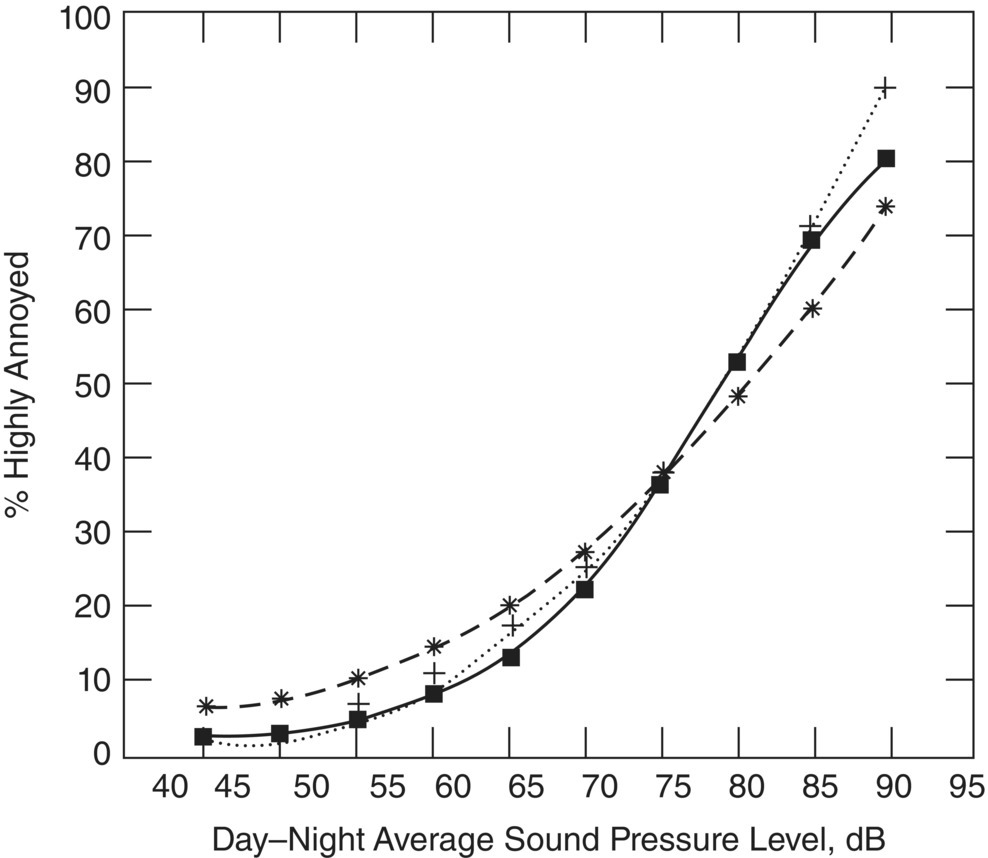
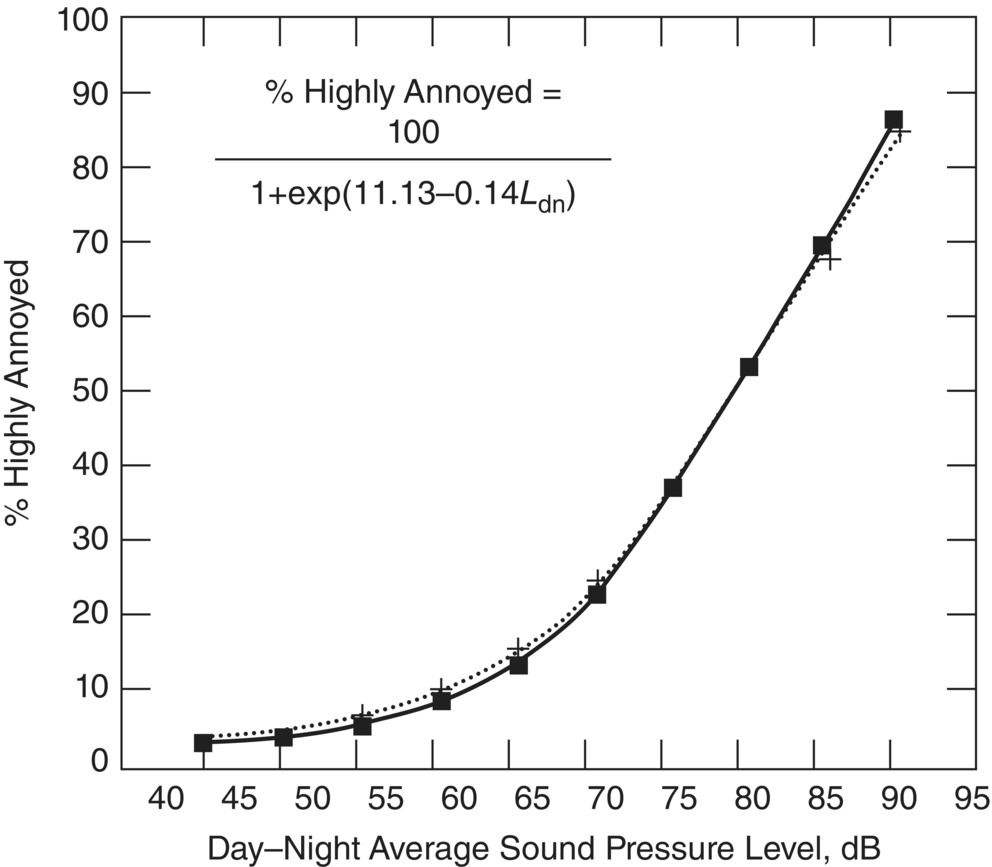
The differences between the curves in Figures 6.17 and 6.18 are not very significant; however, there are several advantages to the use of the logistic fit given in Eq. (6.11), including (i) the same predictive utility in both the original Schultz curve and the Fidell et al. curve, (ii) it allows prediction of annoyance to approach but does not reach 0 or 100%, (iii) it approaches a 0% community annoyance prediction for a DNL (Ldn) of approximately 40 dB rather than the anomaly of an increase in annoyance for levels of less than 45 dB as predicted by the Fidell et al. curve, (iv) use of a logistic function has had a history of success with U.S. federal environmental impact analyses, and (v) it is based on the most defensible social survey database [62].
EXAMPLE 6.11
Predict the noise‐induced sleep disturbance for a specific receiver due to a single nighttime aircraft flyover of duration 10 seconds and an outdoor measured A‐weighted noise level Leq of 95 dB. Assume that the average loss due to the insulation of a typical house is 20.5 dB with windows closed and 15 dB with windows open.
SOLUTION
The outdoor SEL is obtained from Eq. (6.6):

The indoor SEL is estimated from the outdoor SEL by subtracting the insulation values. Therefore,


Now, using either Eq. (6.10) or Figure 6.16, we obtain that

Therefore, the approximate percentage of people likely to awake due to this single flyover at nighttime with windows closed and open is 15 and 20%, respectively.
EXAMPLE 6.12
Suppose there are 10 aviation noise events in a period of 24 hours at an airport. Eight events occurred during daytime and two events during nighttime. ASELs of each event at a nearby residential community are 84, 93, 97, 83, 96, 93, 88, and 91 dB during daytime and 99 and 90 dB during nighttime. Determine the percentage of people highly annoyed by the 24 hours airport operation noise.
SOLUTION
We determine the day‐night A‐weighted equivalent level for 24 hours (86 400 seconds) applying the 10‐dB penalty to the two nighttime events:

Now, replacing this value in Eq. (6.11), we obtain

Therefore, almost 7% of the residents are expected to be highly annoyed by the airport noise.
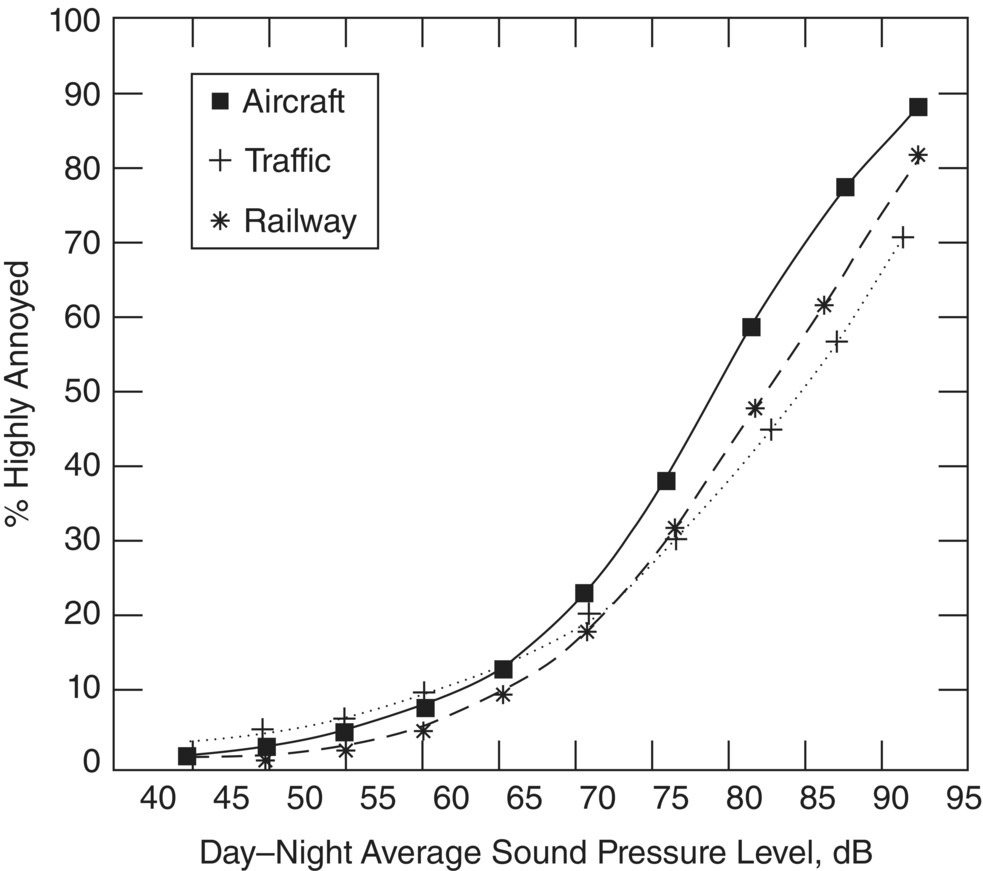
 ‐‐ railway. Curves based on data from Fidell et al. [64].(Source: From Ref. [62] with permission.)
Most community noise impact studies since the late 1970s have been based on a combination of aircraft and surface transportation noise sources. However, there has been a continuing controversy over whether all types of transportation should be combined into one general curve for predicting community annoyance to transportation noise [62, 65–71]. Some researchers have suggested that people find aircraft noise more annoying than traffic noise or railroad noise for the same value of DNL [29, 62, 65, 69].
The differences have been discussed in the literature [29, 32, 62] and can perhaps be explained by a variety of causes such as (1) methodological differences, (2) variability in the criterion for reporting high annoyance, (3) inaccuracy in some of the acoustical measurements, (4) community response biases, and (5) aircraft noise entering homes through parts of the building structure with less transmission loss (such as the roof rather than the walls). Figure 6.19 shows logistic fits to 400 final data points from a total of 22 different community annoyance surveys. It can be seen that aircraft noise appears to produce somewhat more annoyance than railroad or traffic noise particularly for the higher DNL (Ldn) values. Miedema and Vos have made a reanalysis of data from selected social surveys that also shows that aircraft noise appears to cause more annoyance than other surface transportation noise sources [65]. However, the results from the Miedema and Vos study seem to suggest that for high values of DNL (Ldn) (over 60–70 dB), although aircraft noise is by far the most annoying source, railroad noise is also more annoying than traffic noise (in contrast to the results of Finegold et al.) [62].
If the five causes discussed above can be dismissed as responsible for the apparent greater annoyance of aircraft noise, then it may be that aircraft noise is more annoying than surface transportation noise for reasons such as: (i) the higher peak levels, (ii) the greater variation in level with time, and (iii) the different frequency spectra from other types of transportation noise sources. As already discussed in the text accompanying Figure 6.14, aircraft noise does generally exhibit a much greater variation in level from traffic noise and other sources of surface transportation. If such variation is indeed more annoying and is one of the main causes of the difference in annoyance caused by these different forms of transportation noise, this suggests that it may be advisable to reexamine such measures that account for variation in level such as the TNI or the NPL discussed in Sections 6.13.1 and 6.13.2. The annoyance caused by noise is also discussed briefly in Chapter 5.
Leave a Reply