Doing SEO is much easier when your website is properly set up for SEO success. Let’s look at a few ways to do that.
Get a good domain
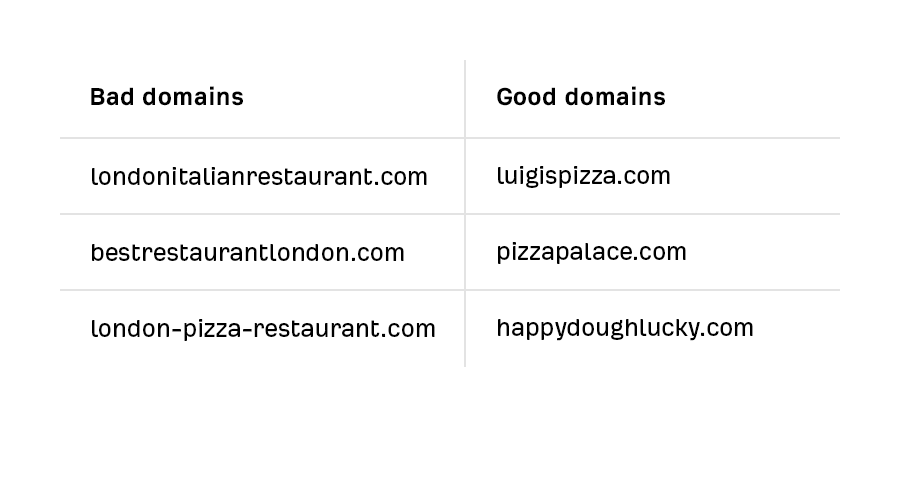
Most domains are fine for SEO, so don’t panic if you already have one. But if you’re still shopping around, keep these two elements of a good domain in mind.
Domain name
Something short and memorable is best here. Don’t try to shoehorn keywords. Your business name without hyphens or special characters is usually a good bet.
Top-level domain (TLD)
This is the part after the name, like .com. Your choice of TLD makes no difference for SEO.[1] But we think .com is best for most people, as it’s the most recognizable and trusted. For charities, .org or your local equivalent also works. If you only do business in one country outside the U.S., your country code top-level domain (ccTLD), like .co.uk, is fine too.
It’s best to stay clear of TLDs like .info and .biz that people tend to associate with spam. But it’s not the end of the world if you have one. You can still build a legit website that ranks.
Use a website platform
Website platforms let you create and manage a website with ease. There are two types:
- Hosted platforms. Everything’s done for you. They host the site, give you ready-made designs, and let you add and edit content without touching code.
- Self-hosted platforms. These also let you add and edit content without code. The difference is that you have to host and install them yourself.
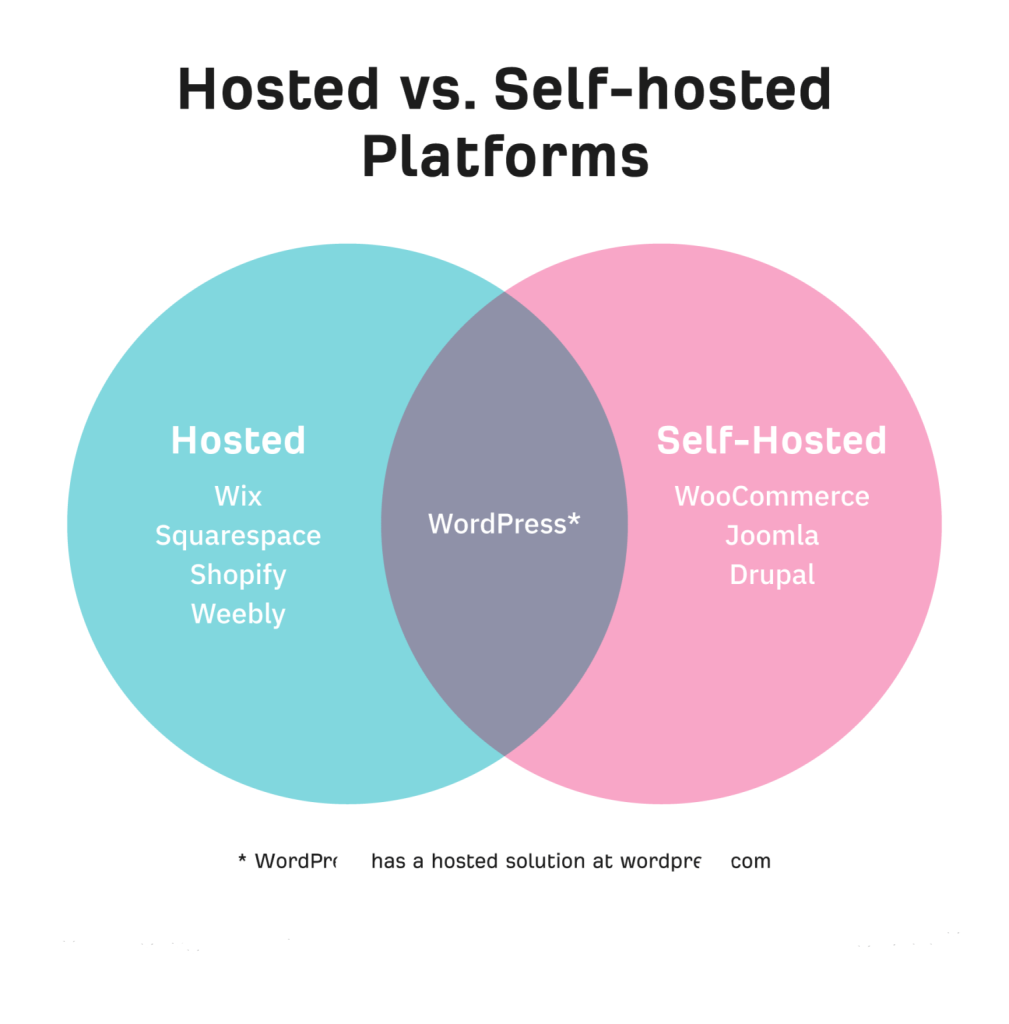
Most SEOs recommend a self-hosted, open-source platform like WordPress because:
- It’s customizable. You can edit the open-source code how you like. There’s also a vast community of developers who know the platform inside out.
- It’s extensible. There are millions of plugins for extending its functionality, including many SEO plugins.
That said, if you value ease of use and support, a hosted solution might be a better fit. All the big ones provide enough SEO capabilities for most people.
Use a good web host
If you’re using a hosted solution, you’ll need a web host. These store your site on a hard drive that anyone with an internet connection can access. Consider the three S’s when choosing one:
- Security. Make sure you get a free SSL/TLS certificate. Or, at the very least, support for Let’s Encrypt—a nonprofit supplying free certificates.
- Server location. It takes time for data to travel between the server and visitor. So it’s best to choose a host with servers in the same country as most of your traffic.
- Support. 24/7 support is ideal. Test how good their support is by asking the above before you sign up.
Leave a Reply