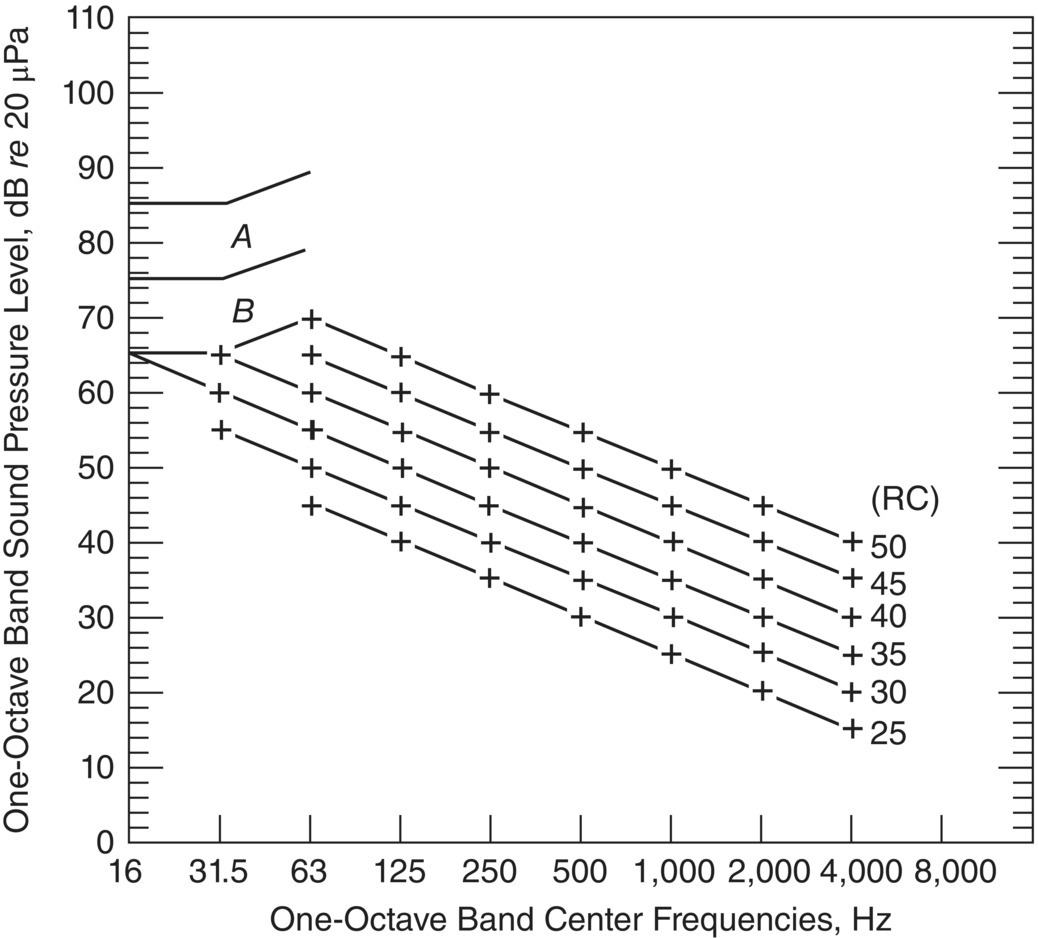
NC curves are not defined in the low frequency range (16‐ and 31.5‐Hz one-octave bands) and are also generally regarded as allowing too much noise in the high‐frequency region (at and above 2000 Hz). Blazier based his derivation of the RC curves on an extensive study conducted for the American Society of Heating, Refrigeration, and Air‐Conditioning Engineers (ASHRAE) by Goodfriend of generally acceptable background spectra in 68 unoccupied offices [25]. The A‐weighted SPLs were mostly in the range of 40–50 dB. Blazier [25] found that the curve that he obtained from the measured data had a slope of about −5 dB/octave, and he thus drew a family of straight lines with this slope (see Figure 6.9). He also found that intense low‐frequency noise with a level of 75 dB or more in region A is likely to cause mechanical vibrations in lightweight structures (including rattles), while noise in region B has a low probability to cause such vibrations. The value of the RC curve is the arithmetic average of the levels at 500, 1000, and 2000 Hz. Since these curves were obtained from measurements made with air‐conditioning noise, they are mostly useful in rating the noise of such systems.
Leave a Reply