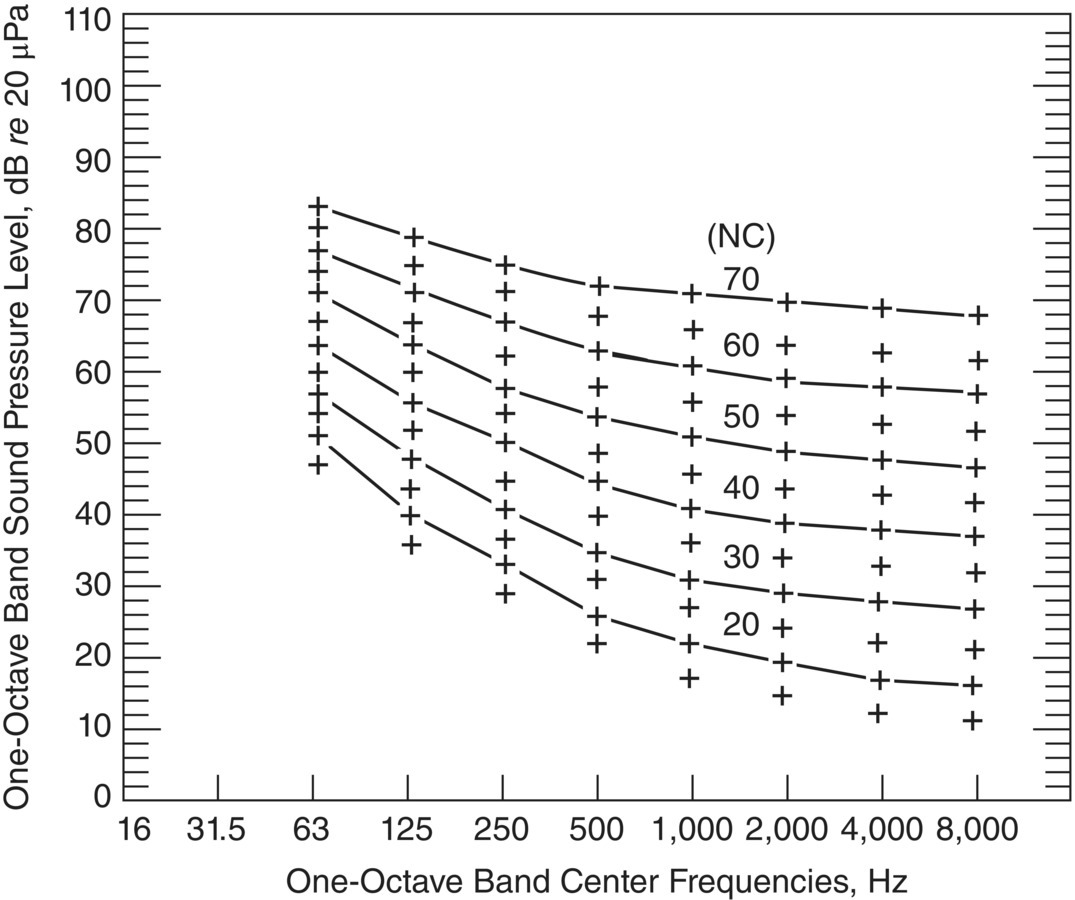
The NC curves (Figure 6.7) were developed from the results of a series of interviews with people in offices, public spaces, and industrial spaces [21, 22]. These results showed that the main concern was the interference of noise with speech communication and listening to music, radio, and television. In order to determine the NC rating of the noise under consideration, the one-octave band SPLs of the noise are measured, and these are then plotted on the family of NC curves (Figure 6.7). The noise spectrum must not exceed the particular NC curve specified in any octave band in order for it to be assigned that particular NC rating [17].
EXAMPLE 6.3
In a classroom the one-octave-band noise levels were measured to be 61, 56, 54, 50, 44, 43, 39, and 34 dB for the center frequency bands between 63 and 8000 Hz. Evaluate this room according to the NC curves.
SOLUTION
Using Figure 6.7 we can show that the furthest penetration of the noise data into the NC curves is at 500 Hz where the data are slightly above the NC 45 curve. Therefore, the approximate NC value of the noise would be a rating of NC 46. Usually, for classrooms an NC 30–40 range is recommended, so the background noise of our example would be judged as unacceptable.
Leave a Reply